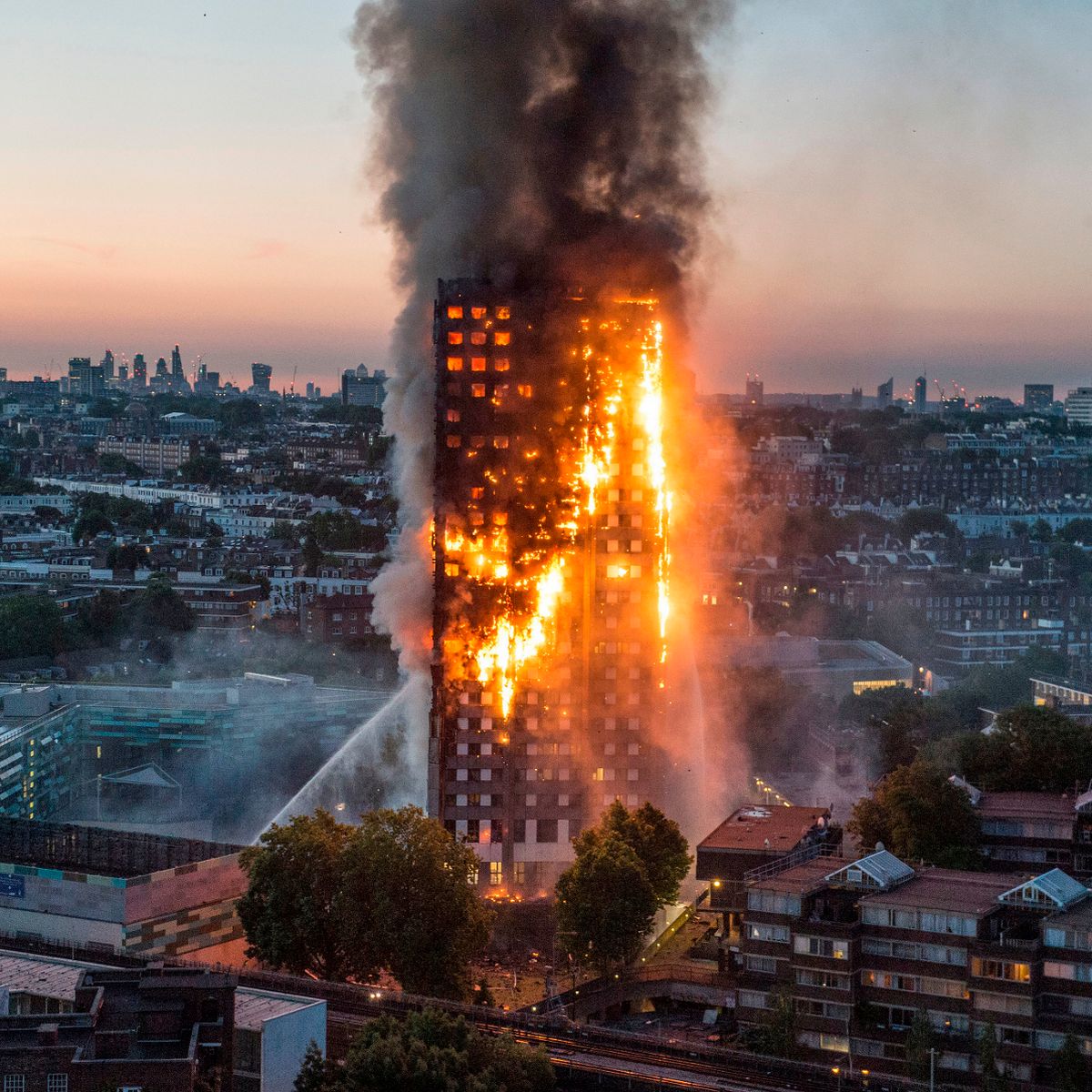
The firefighters union (FBU) has placed the blame for the Grenfell Tower inferno in June 2017 that killed 72 people, squarely on central government and political decisions made “in the service of a social and economic system driven by profit and greed”.
In a detailed submission to the official inquiry, the FBU looks at all the factors that contributed to the disaster. The union shows how starting in 1979, under the Thatcher government, policies relating to housing, local government, health and safety, testing and certification have been driven by an agenda of de-regulation, privatisation and marketisation.
Successive governments have continued to undermine health and safety, the union shows, with the public sector increasingly run down and marginalised, especially during the period of austerity from 2010, in favour of the interests of private business and corporations.
The submission references various ministers who claimed to be freeing up business from the “burden of regulation”, from “pointless and expensive time-wasting” and from an “excessive health and safety culture that has become an albatross round the neck of British businesses”.
As a result, systems of loose regulation, even self-regulation, were introduced into the building industry in particular, alongside drastic cuts in the public sector, including the fire service.
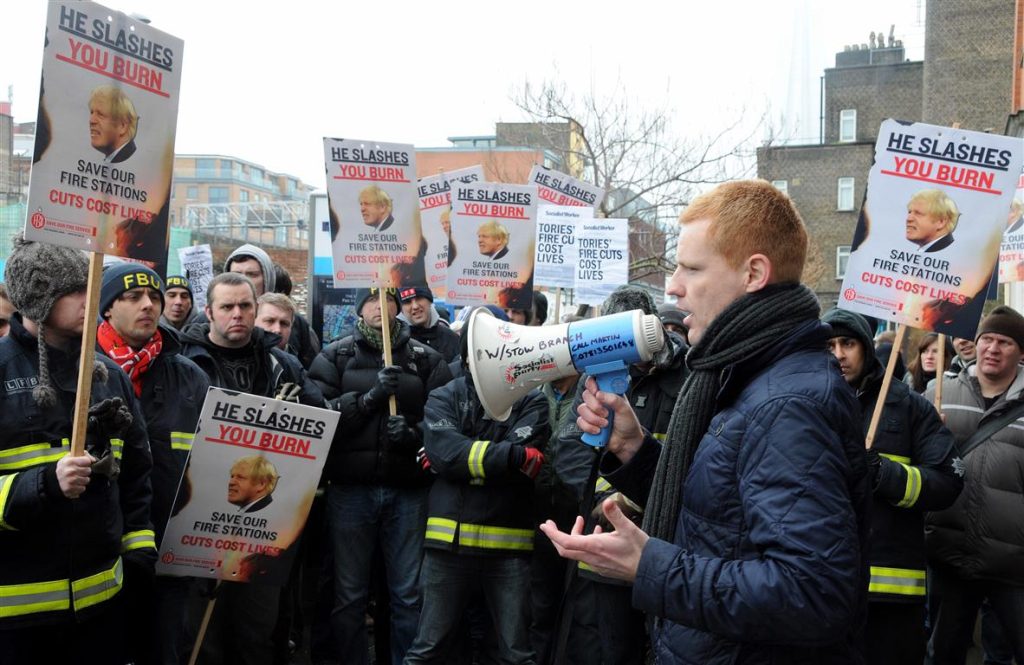
In the 10 years before Grenfell, the number of fulltime firefighters were cut by 22%. Boris Johnson, as mayor of London, had forced through the closure of 10 fire stations in London, removing 18 fire engines and 400 firefighter jobs.
“The cuts undoubtedly hampered the ability of the LFB in both the run-up to the Grenfell disaster and in their ability to respond to it,” says the union. The closure of the nearby Knightsbridge and Westminster stations would have delayed the arrival of vital resources by some minutes.”
The Building Control department of the local council, Kensington and Chelsea, had itself been hit by cuts and austerity measures, resulting in inadequate supervision because of the increased workload.
The FBU points to what it describes as a “bonfire” of previous building regulations.
In 1985 the provisions of the regulations were cut down from 300 pages to just 25, with detailed technical provisions replaced by “functional requirements”.
Furthermore, the government created a new role, a private “approved inspector” to act in competition with local government building control, resulting in confusion.
The ambiguity, confusion and lack of precision in new regulations were “ruthlessly exploited by private companies for their own commercial self-interest” during the refurbishment of Grenfell Tower, the FBU insists.
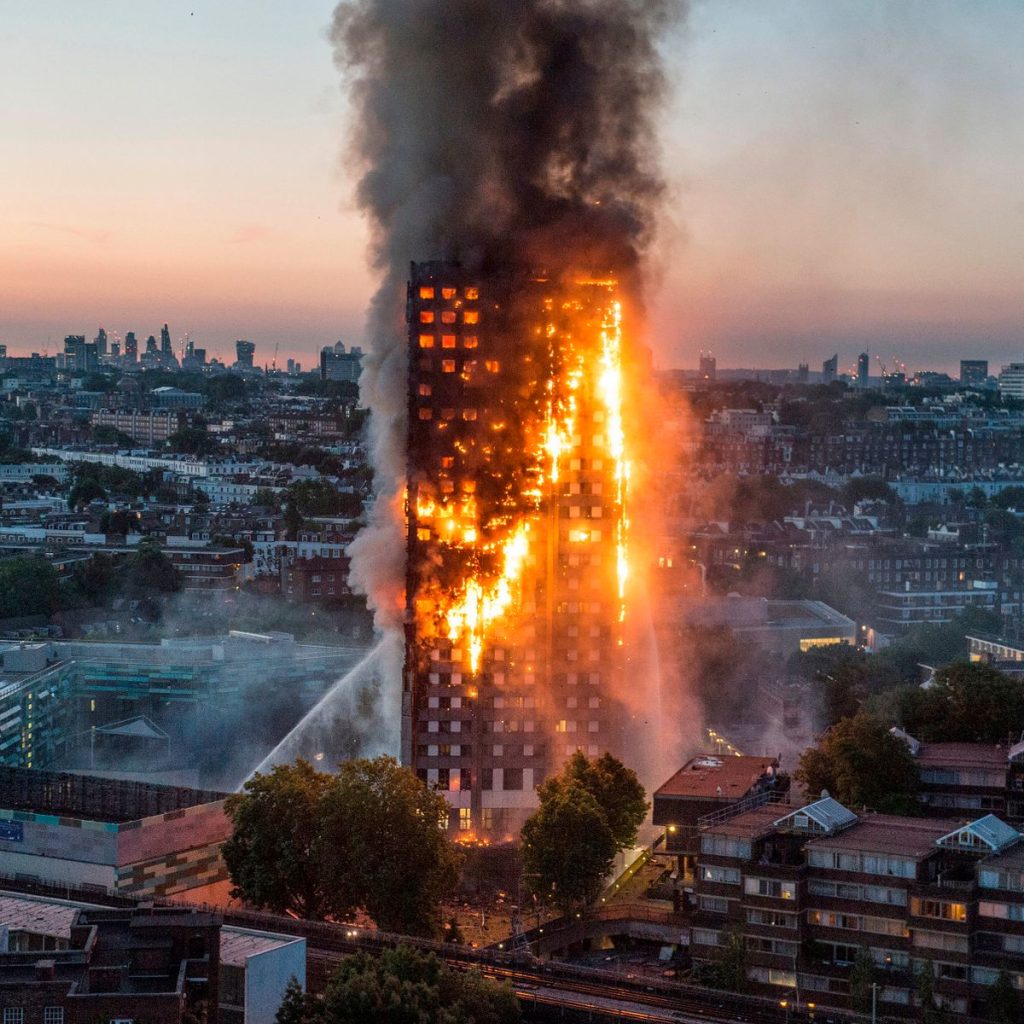
The union document states that the evidence given to the enquiry previously shows that all three cladding manufacturers involved with Grenfell Tower exploited the flexibility and potential loopholes in the testing and certification regime “to peddle the products that caused the disaster”.
It further submits that “the companies were driven to this by greed and their desire for profit which was encouraged by central government through their war on the health and safety culture which forms a core part of the prevailing economic system in the UK i.e. unrestrained capitalism.”
The FBU accuses the government of ignoring the lessons of fires in high-rise buildings previous to the Grenfell Tower disaster. It refused to withdraw the use of a particular class of cladding (class 0), in spite of evidence that it was potentially dangerous. Only after the tragedy did the government see fit to withdraw Class 0.
“What a condemnation of central government that it took such a tragedy to compel them to put the safety of our citizens … before the profits of big business,” the FBU submission states. It suggests the GTI [the enquiry] should investigate these changes to the regulations and “the extent to which they were brought about by lobbying and commercial interests at the expense of fire safety”.
Although there was information from several fires in tower blocks about the dangers of combustible cladding, including from the FBU itself and from a select committee enquiry after the fire at Garnock Court, in Scotland, in 1999, that killed one person and injured five others, no action was taken by government.
In 2009 a fire at a tower block in Camberwell, South London, killed six people. But a recommendation by the coroner that ministers review building regulations and provide clearer and simpler guidance about the spread of fire over the exterior of a building, was not carried out.
The fire service itself got the de-regulation treatment, but this time under a Labour government. Fire safety was severely compromised, the union states, by the Fire and Safety Act of 2004. National standards of fire cover were abolished, and the Central Fire Brigades Advisory Council, an important body for co-ordinating advice, policy and the enforcement of fire safety, nationally, was dismantled, leading to fragmentation of the service.
A new organisation, the Chief Fire Officers Association, was created, which the FBU says, supported de-regulation and backed austerity, imposing cuts.
“There was now no effective forum at a national level considering the lessons of major fires … this key function was left to individual Fire and Rescue services to do the best they could in the context of declining local resources,” the FBU document states.
Fire safety was further weakened in the following years with the repeal of an act of 1971 that required public and commercial buildings to hold a valid safety certificate issued annually after an inspection by the local fire and rescue service. Fire and rescue assessments became the responsibility of a “Responsible Person” within the organisation — a system of self-compliance and self-regulation.
These changes, the FBU says, also meant that the vital analysis of the procedure for evacuating a high-rise building in the event of a serious fire— “Stay Put” or “Get Out and Stay Out” — never took place, in spite of the recommendation by the coroner at the inquest into the Camberwell fire.
The coroner also recommended the government consider the possible use of sprinkler systems in high-rise residential buildings. Little or no action was taken on these recommendations, the FBU states. Had they been implemented “it might have helped avoid the disaster at Grenfell Tower … De-regulation meant they were never effectively on the agenda, with the coroner’s recommendations being effectively ignored”.
Even now, years after Grenfell, the FBU points out, there is still no guidance on the evacuation of high-rise residential buildings in the event of a fire.
The FBU also cites poor workmanship — often “appalling” — by companies, arising from what the union calls an attitude of indifference and even disrespect for those living in social housing. A “culture of deceit, cronyism and corruption” accompanied the refurbishment. Numerous examples from previous evidence to the enquiry are included in the union’s document to back up this statement.
The FBU states that the companies chiefly responsible for the testing and certification of products used on the tower were private sector companies. This led to a “woeful lack of independence and rigour and enabled companies gaming the system to deceive them with ease”.
The poor state of repair of the tower, and the use of cheap combustible cladding, was, says the FBU, due to the need to save money. This, in turn, was a consequence of central government policy restricting the funds that could be used for capital works in council housing.
“Those who have lost their lives”, the union says, “were also the victims of big business and an economic and social system that only values wealth and money. In the scramble for profits, they were collateral damage. Central Government and the economic system over which they preside bear ultimate responsibility for the Grenfell Tower fire”.
Meanwhile, bereaved families and survivors of the Grenfell fire disaster have dismissed a belated government “apology” given to the inquiry. A lawyer for the Department of Levelling Up, Housing and Communities told the inquiry it was “deeply sorry” for its failures on overseeing building safety.
Grenfell United, representing the bereaved families and survivors called the government statement “deeply offensive” in view of their role in covering up the risks of the flammable cladding.