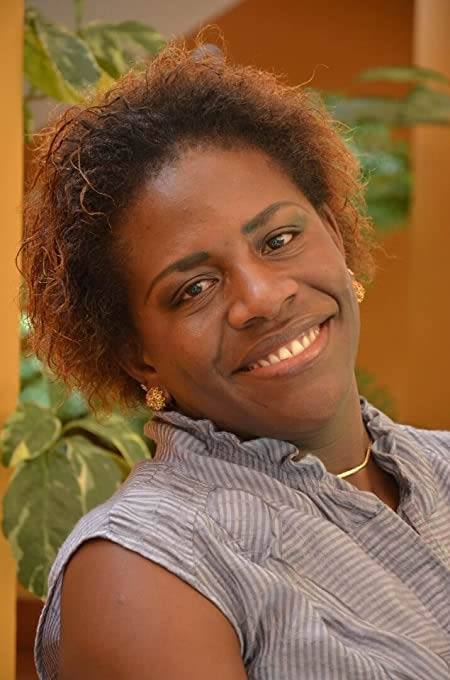
The noted poet and writer Emmelie Prophète contributes a personal view of how a perfect storm of US and UN meddling, dictatorship, and the earthquake of 2010 have wreaked suffering on the world’s first sovereign Black republic.
Prophète’s 2007 novel Blue (Testament des Solitudes), awarded the Prix Littéraire des Caraïbes by the Association des Ecrivains de Langue Française, appears in a first English translation this month. You can read a superb review by RDM contributor Lilian Pizzichini.
To understand the political disarray that reigns in Haiti today, and the complete breakdown of its government, we must go back in time a little way and examine its history.
The world’s first sovereign Black republic, in its 217 years of independence Haiti has rarely known periods of true peace, in which growth, development, and the common good were the main concerns of the political establishment or the country’s elite.
Wholly marginalized by the colonialist and slave-owning powers of the era, in 1825 Haiti found itself subjected to a severe financial penalty, known as the independence debt, which it was unable to pay off until the early 20th century, when it was occupied by the United States. This American occupation ended in 1934, but the U.S. has continued to meddle directly and abusively in Haiti’s domestic political affairs ever since, including its backing of the 29-year Duvalier regime under the pretext of protecting the island from a communist takeover like the one that occurred in Cuba.
The 2010 earthquake was a pivotal event in the downfall of the Haitian state. The national elections held in 2011 amid extremely difficult conditions, with around 300,000 dead, countless homes made unliveable, the country’s architectural heritage utterly destroyed, and rampant cholera introduced by the United Nations Mission, were grossly and visibly manipulated by the United States. The resulting political instability led to young men in deprived areas arming themselves to protect businesses and serve the illicit ends of various local factions, and ultimately to the assassination of Haitian President Jovenel Moise on July 7, 2021.
These armed men, rapidly becoming uncontrollable, have imposed laws of their own on a population made extremely vulnerable by poverty and multiple natural threats. The national police force, undermanned and severely lacking in resources, has been overwhelmed and subjugated by these unlawful hordes, with many officers suspected of belonging to criminal gangs themselves.
Today, Haiti is facing major problems of public safety, exacerbating an already dire economic and social situation. Poor governance, corruption, and indifference on the part of the elite have produced enormous inequalities, with the middle and poorest classes forced to leave the country and exist in abject poverty elsewhere. Photographs of Haitians living under a bridge in Texas, published in late September 2021, shocked many, but they are merely the culmination of a history of emigration and flight undertaken merely to ensure the survival of oneself and one’s family that has marked the entire 20th century and still endures today.
The Haitians who ended up under that Texas bridge originally set out for Chile, Brazil, and Guyana between 2010 and 2016, but were unable to obtain legal permission to work. People like them are deported back to their home country every day, where they often have nothing left, having sold everything they possessed to finance their travels.
The motivations of these asylum-seekers, except during the period of the Duvalier dictatorship, when political persecution was very real, are generally economic, with Haitians fleeing multifaceted conditions of insecurity. The breakdown of government institutions and the absence of public policy in every sector pose a constant physical and mental threat to every Haitian citizen: kidnappings; inability to access health care, education, or justice; lack of electricity and means of transport. Haiti is one of those rare countries in which many citizens do not even possess an ID.
I have already mentioned the middle and poor classes, but in the past two years, the wealthy have begun to leave as well, emigrating mainly to the neighbouring Dominican Republic—partly for fear of being kidnapped, but also because social life is no longer possible in Haiti. Confrontations between rival gangs, and the constant presence of these gangs principally in the northern and southern extremities of the country, are constantly preying on a population left to fend wholly for itself.
Crime has become its own industry. Abductions and imprisonments for ransom occur by the dozens every day, and the sums demanded are astronomical. Some families find themselves facing financial ruin and lasting trauma overnight, as they are forced to take out loans or sell their possessions to secure their loved ones’ freedom. There is no attempt made on the part of the law to find the culprits responsible for these crimes. The justice system, rotten with corruption, is utterly powerless, and the administration of the late president, Jovenel Moise, made no provisions for its repair and restoration. Supreme Court judges implicated or suspected of complicity in attempted coups d’état were sent into retirement and not replaced.
Starting in 1994 and continuing to the present day, the United Nations has deployed several peacekeeping missions in Haiti. It cannot be said that the international institution has been dazzlingly successful in diplomatic terms since its creation in 1945, and Haiti, as one of its founding members, should stand as proof that the UN’s role should be reconsidered as we move further into the 21st century, with unabashed racism and extremism on the rise. The UN mission in Haiti, known as the United Nations Integrated Office in Haiti (BINUH), established in 2019, was extended for nine months on October 16th of this year, after heated negotiations between the United States and China, the latter of which opposed the extension in view of its mediocre results in the country.
BINUH’s mission is unclear. It seems to consist of implementing American policy in Haiti, and its head, the American diplomat Mrs. Helen La Lime, does not appear to have a fair and unbiased understanding of what is happening in the country.
It is impossible to talk about the Republic’s flaws without mentioning its political establishment, whose sole interest is to gain power. Its actions over the past four years have made the country utterly unable to function, worsening Haiti’s already endemic social and economic crises and driving the middle classes into poverty with disasters including the famous “peyi lok” lockdown, which paralyzed the country’s economic production to such an extent that Haiti was unable even to celebrate its national holidays.
These actions, greatly exacerbated by disinformation, hate speech, the open financing of counterproductive measures, and campaigns of intimidation against educators and businessmen, meant that no leader and no ideas emerged that could have served the common cause of equality, the quest for a better life, and the reform and rebuilding of the country. There were no successful attempts to find a common ground. Calls for the resignation and replacement of Jovenel Moise from 2018 to his death remained unheeded. Arrangements proposed since July 2021, including the one made by the acting Prime Minister himself, Doctor Ariel Henry, for the holding of elections preceded by a period of transition, or the peaceful sharing of power, have proven impracticable under current conditions, or have not found the backing necessary to come to fruition.
This is not a battle of ideologies. There are not even any true enemies. Those who disagree most vehemently in the media are often friendly in private; public antagonism is an absurd, testosterone-fueled manner of waging politics and battling for personal and factional interests. Haiti is a country abandoned by its elites and its political establishment, drowning in the blood of its own citizens.
This inability to talk to one another, to put the common good above personal ambition, has been a cancer gnawing away at Haiti for too many years to count, and it may eventually cause the downfall of the most beautiful experiment humanity has ever attempted: the forging of a new nation after the liberation of its men and women from the yoke of slavery.
Against this backdrop of permanent sound and fury, of the crushing of spirits and institutions, Haiti—vulnerable to hydro-meteorological threats and to the lowest rate of vaccination against Covid-19 in the entire Western hemisphere—is crumbling beneath the weight of unrest, poverty, and arrogance. But there are men and women who continue to believe that life here is still possible; that the guns, and the tongues crying failure, may yet fall silent.
Translated by Tina Kover

An award-winning Haitian novel about silence, beauty, and the solidarity of tears
>>> Read this superb review by Lilian Pizzichini <<<