
Forty years ago, in October 1983, the small Caribbean nation of Grenada was invaded by a massive US force, bringing to a halt a revolutionary experiment that had begun four years earlier. There are crucial lessons to learn from this tumultuous period that offer a microcosm of the problems faced by attempts to create popular democracy and transform the state from capitalist to socialist.
The smallest of the Windward Islands won independence from Britain in 1974 but its first prime minister Sir Eric Gairy became more and more autocratic and bizarre, even messianic, with his own private army of enforcers. There was growing resistance to his rule, which blocked any development and left Grenadians facing poverty, unemployment and lack of education. In 1979 members of the New Jewel Movement, a coalition of opponents to Gairy led by young people born in Grenada but many of them educated abroad, removed him from power in a bloodless coup and established a new revolutionary government.
The New Jewel Movement’s young leaders included Maurice Bishop, a lawyer trained at the University of London, whose father had been killed by Gairy’s gang as he protested against the despot’s rule, and Bernard Coard, whose PhD thesis “How The West Indian Child is Made Educationally Sub-normal in the British School System”, has had a lasting influence.
Committees of residents, women, youth and workers began taking charge of developments in villages, schools and workplaces. Workers’ co-operatives took over enterprises run down during the Gairy years. An agricultural co-operative was established. Where crops were wasted during gluts, they were preserved and transformed into products for export. Unemployment, poverty and illiteracy began to fall.

Grenada is a beautiful island with beaches and a wonderful climate with potential for tourism. The new government decided to build an international airport to support its development. With help from Britain, Libya and Cuba the government began work on an airstrip which in the end became one of the excuses for the US invasion, with claims that it would be used to facilitate Soviet air power in the Caribbean.
The tiny island began to change for the better for its poorest people. But internal strife, fomented by US and British intelligence, led to a growing crisis for the young government. There is no doubt that the remnants of the old regime were collaborating with these outside neo-colonial and imperialist forces, setting about attacking the economy and staging provocations.
There were shocking incidents of terrorism – for example a mysterious bombing which was supposed to kill Maurice Bishop, killed instead three schoolgirls at a rally. It has recently emerged that Britain had already put together a plan for an invasion before the NJM took power, when it became clear that they were gaining support and might replace the colonial puppet Gairy.
But it is too simplistic to say that the provocations of the CIA and MI6 were solely to blame for the problems faced by the NJM. Also present in the movement’s political life was Stalinism in the shape of Moscow’s influence. While Bishop addressed massive rallies of young people and students in the USA and Britain, finance minister and deputy leader Coard was touring the Soviet Union and Eastern Europe.
He adopted the Stalinist concept of the party, what historian Richard Drayton describes as “a reductio ad absurdam of Lenin’s idea of the vanguard party”. Bishop and others, influenced by CLR James and other anti-Stalinist thinkers, saw popular assemblies of the people having a significant role in government and the state.
But Coard was a powerful figure in the NJM, a thinker and planner with big influence. The result of this was that when he and his supporters in the army initiated a coup against Bishop, the NJM had just 100 actual members, while the thousands of active supporters, those carrying through the policies of the revolution, had been kept at arms length from actual political or state power.
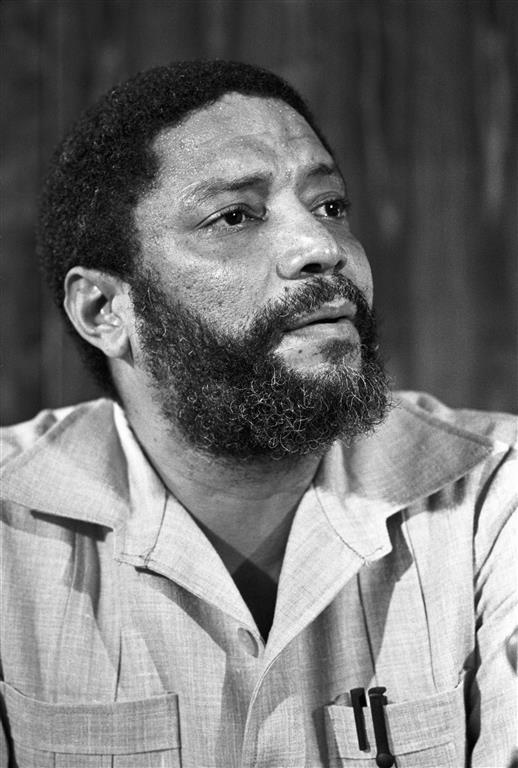
Says Drayton: “The NJM, which had come out of CLR James’ de facto anarchist idea of the assemblies of the people, a mass party in motion, was turned by Coard – with Bishop’s toleration and help it must be said – into a cadre party. In 1983, four years into the revolution, there were only about 100 full party members in an island of about 100,000. Coard, for whom Snowball in Animal Farm might have been a model, was through his supporters determined to wrest the party from Bishop who was dismissed as petty bourgeois and populist.”
In 1983 a group of the military tried to force Bishop to resign or to share power with Coard. Initially Bishop agreed but then withdrew from the deal. Bishop and a group of his supporters were seized and put under house arrest. A huge crowd marched on his place of imprisonment and demanded his release.
The army agreed to that but in fact they secretly took him, his partner Jacqueline Creft, the Grenadian Education Minister and six others including leaders of trade unions, to a deserted fort where they were murdered almost immediately. It is still not known what happened to their bodies. Coard was eventually tried for their murder and spent nearly 25 years in prison.
A study of what happened in Grenada is a microcosm showing the extent to which any movement for fundamental change needs to put the creation of popular democracy and people power at the heart of the matter. And it also needs to set about dismantling the old corrupt state as a priority, rather than attempting to convert it to somehow serve the people.
Blocking the old channels whereby their rule and their ideology is transmitted into the revolution is what “dictatorship of the proletariat” is really about. It requires a massive process of political transformation of both form and content of social organisation and the constitution, plus political education and a genuine transfer of power.
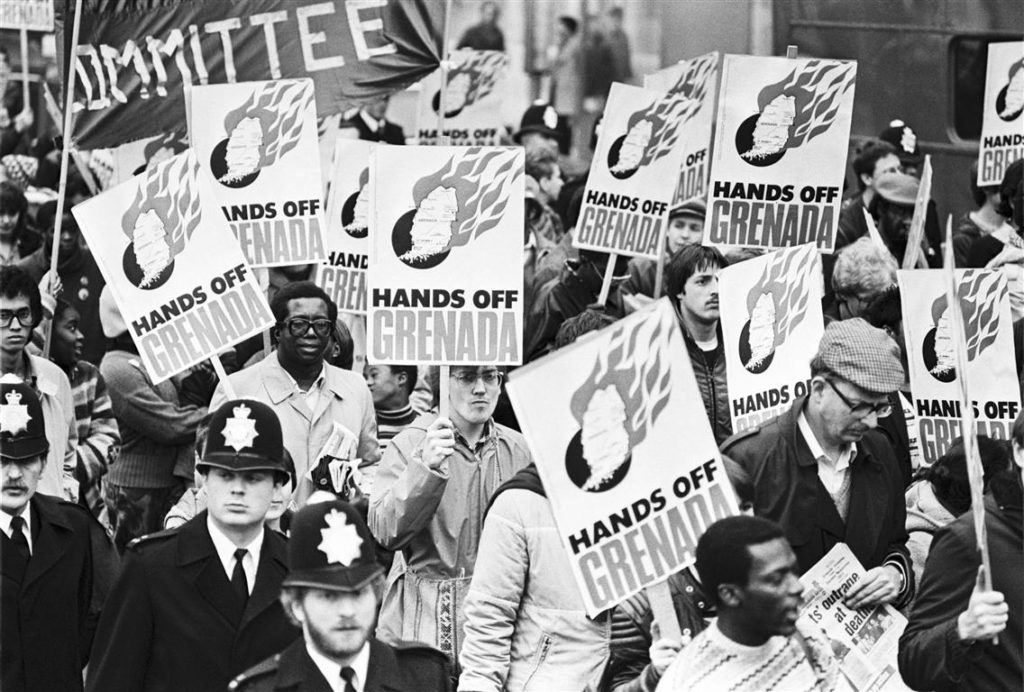
The chaos that followed the Coard coup and Bishop’s murder created the conditions for the US invasion with Britain’s colonial representative, Governor General Paul Scoon, a key figure. He secretly asked the Organisation of Eastern Caribbean States to intervene and they in turn enabled the Americans. President Ronald Reagan’s most public excuse was that he feared for the safety of 600 American medical students who were training on the island in a private medical college.
On October 23 the US sent two army battalions, an airborne division, Marines, Delta Force, Navy Seals and a rapid deployment force – altogether 7,600 personnel. There were also troops from Jamaica, one of its most shameful moments. The majority of Americans would have been very shocked to know this massive force was invading an island with a population of just 90,000 people, about the same size as Buckeye, Arizona or, for UK readers, the Yorkshire town of Halifax. Yet Reagan had built the island up to be some kind of military threat to the United States.
The New Jewel Movement and the Grenada experience continue to be studied by young people particularly in Africa, not only for its failures but also because of the achievements of the revolution. It is also worth noting that the notorious airport used as part of Reagan’s justification, is now renamed Maurice Bishop international airport.