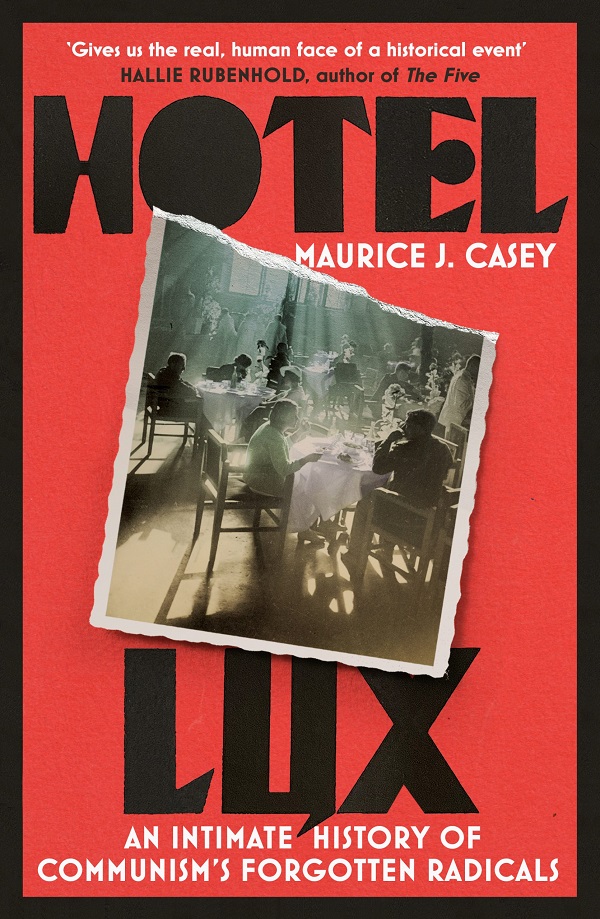
Maurice Casey has woven the life of Irish woman May O’Callaghan and her web of relationships into a thrilling and moving tale of life in revolutionary Russia and beyond. If every detail were not backed up by meticulous reference to his sources, his story could have come straight out of a fictional fantasy. In this book, truth is indeed stranger than fiction.
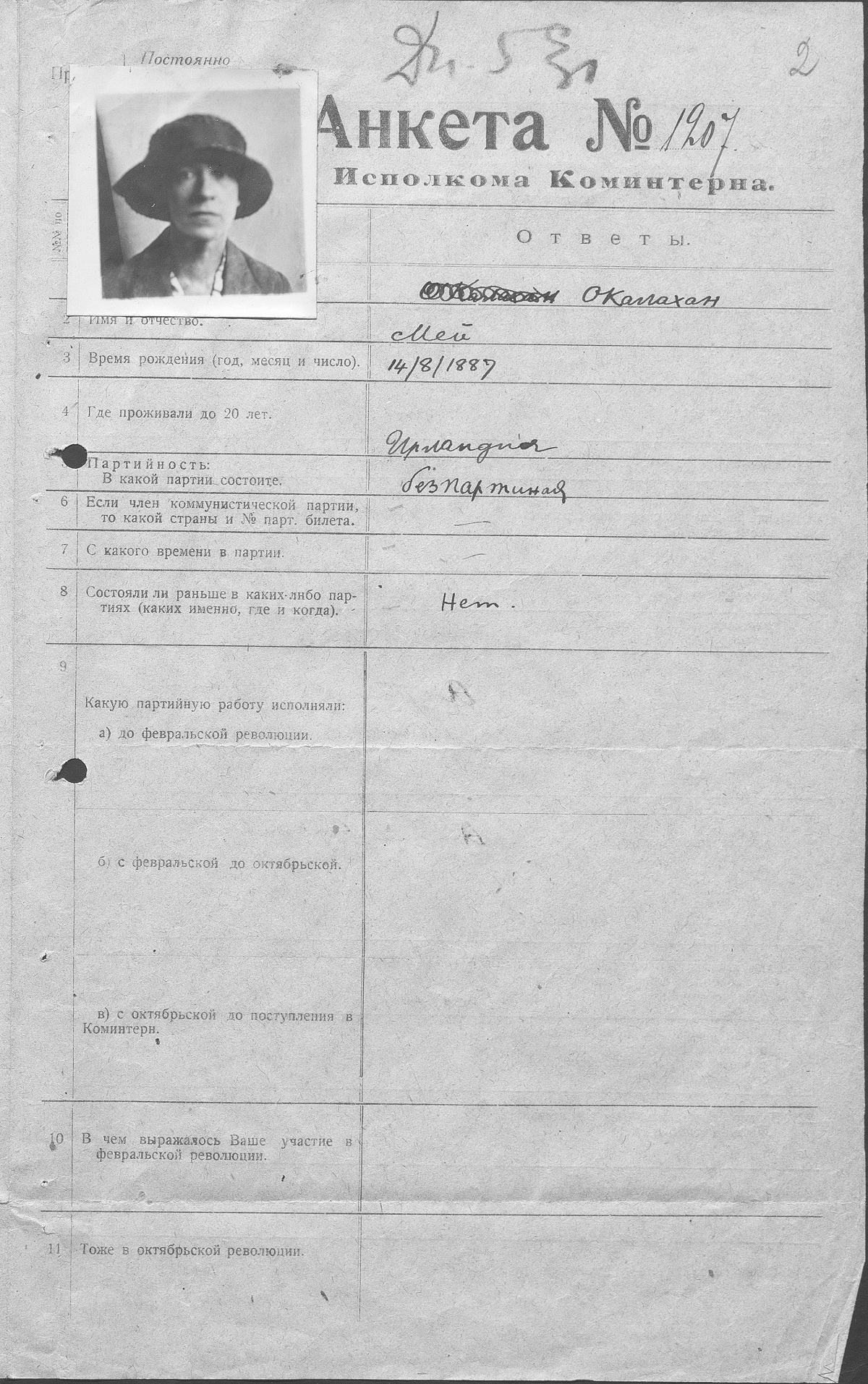
May O’Callaghan (1881-1973) was a Wexford-born linguist-translator who would “rise higher in the Comintern apparatus than any other … Irish person”. The Comintern (short for the Third Communist International)1 was the international organisation founded in 1919 by leading Bolsheviks, Lenin, Trotsky, Christian Rakovsky and others to advance socialist revolution internationally.
Having unearthed documents in far flung places in the UK, Ireland, Russia, Spain and the United States, Casey traces O’Callaghan’s long life and those of her close friends. We follow May from Ireland to London and then Moscow in 1924, the rise of the Stalinist counter-revolution, fascism, World War II, right through to her death in 1973.
O’Callaghan, or “O.C,” as her friends called her, whilst never joining the Communist Party was indispensable to the Third International thanks to her language skills. She was fluent in German, French, Spanish and Russian. “She had a very awe-inspiring job then at the Komintern as Director of the French, English and Spanish translation services,” wrote her life-long friend, Emmy Leonhard, in a letter that Casey discovered in a Cotswolds home in 2017.
We learn of complex love affairs in which political intersected with the personal. Early on, sometime around 1916, O’Callaghan joined two Jewish girls, Rose and Nellie Cohen, in seedy digs in Grays Inn Road near King’s Cross station. They were all working for Sylvia Pankhurst, who rejected the suffragette truce of World War I and welcomed the Russian Revolution, helping produce journals, which included the feminist Women’s Dreadnought. Twenty-one-year old Nellie Cohen became Pankhurst’s secretary.
A few years later we meet them again in the run-down, crowded and often insalubrious spaces of the Hotel Lux in Moscow, which provided rooms for international revolutionaries working for the Comintern.
Casey’s meticulous research, couched in an entertaining style, allows us to experience at close hand May’s life and the motley crew around her. He shines a light on people who hitherto have remained in the background of momentous historic events, providing glimpses of how in the young Soviet Union the lives of women and gay people were transformed. Abortion became freely available, and the stigma of illegitimacy flew out of the window. Women became legally free and equal citizens for the first time.
“Among the Tsarist-era laws abolished after the Revolution, one was criminalising sex between men,” he notes. Amongst the cosmopolitan staff working on the Moscow News, queer relationships were open topics of discussion during the 1920s. By March 1934 however, “the USSR became the first state in modern history to re-criminalise homosexual acts”. Many who were suspected of homosexuality were swept up in police raids and sent to labour camps.
Casey’s sources include the recollections and letters of a number of talented Americans. Amongst them were the poet Joseph Freeman, librarian Ruth Kennell and journalist Millie Bennett. In 1936, Freeman published his Moscow memoirs, An American Testament: A Narrative of Rebels and Romantics, to considerable acclaim. It was populated by the personalities who had lodged at Hotel Lux. The book was full of “sympathetic depictions of communists who sided with Leon Trotsky”. But 1937 was the year of Stalin’s Great Terror.
Viktor Gollancz, director of Britain’s Left Book Club, defied pressure from Moscow to halt publication as Freeman’s book came under minute scrutiny. The book was put “on trial” by a special commission of the Stalin-controlled Comintern in March 1937. The bulging file that tells this chilling story was dug out for Casey during his research in the Comintern archives.
Stalin’s most profound critic and political opponent, Leon Trotsky, appears at multiple moments in the narrative, given that a good number of O’Callaghan’s friends were supporters of the Left Opposition. May herself was rumoured to be a Trotskyist even though she never joined the party or opposition.
It’s fascinating to read how in 1931 Emmy Leonhard wrote to the exiled Trotsky in Istanbul, asking for help in finding a German publisher for the opposition revolutionary Victor Serge. Trotsky was, Casey writes, “happy to help”. He also asked Emmy for an update on the conflicts within the German Trotskyist movement. She responded with a 16-page letter. Her letter survives because Trotsky kept it while in exile.
Some of the most delightful chapters tell of how “two precocious girls produced almost certainly history’s first ever fortnightly illustrated journal of anti-fascist exile”. The Alpenpost and La Guingette were edited, written and illustrated by Elisa and Alida, the daughters of Emmy Leonhard and Edo Fimmen, a Dutch anti-fascist trade union leader. Casey describes it as possibly the “only child-produced source of its kind that still exists in a complete form.”
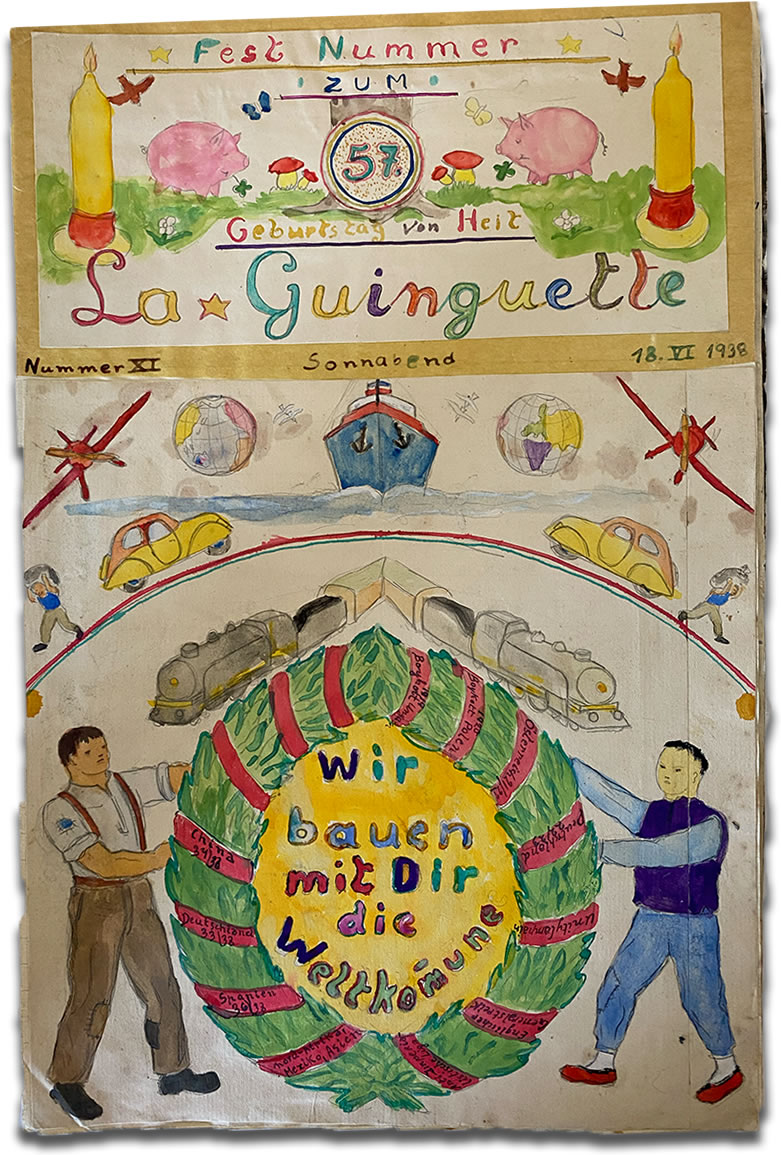
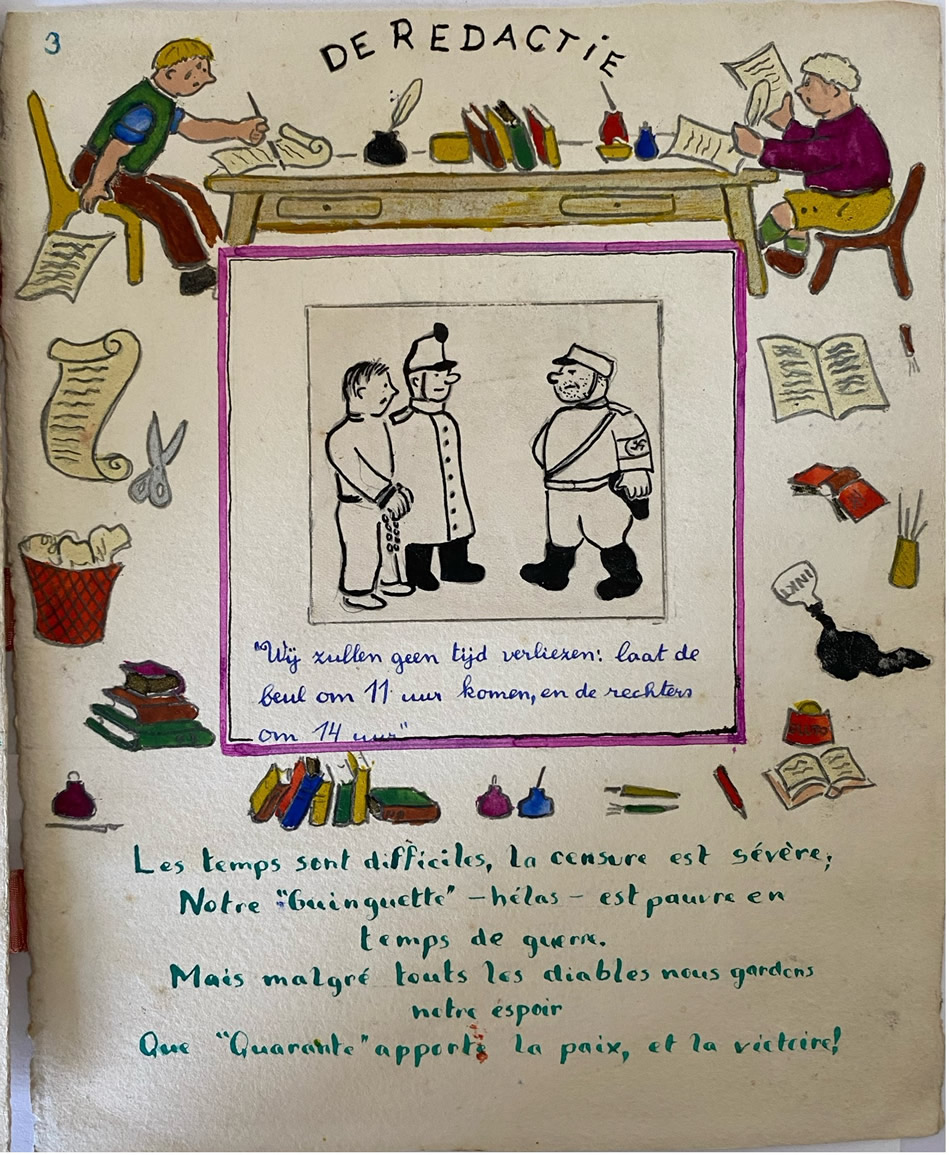
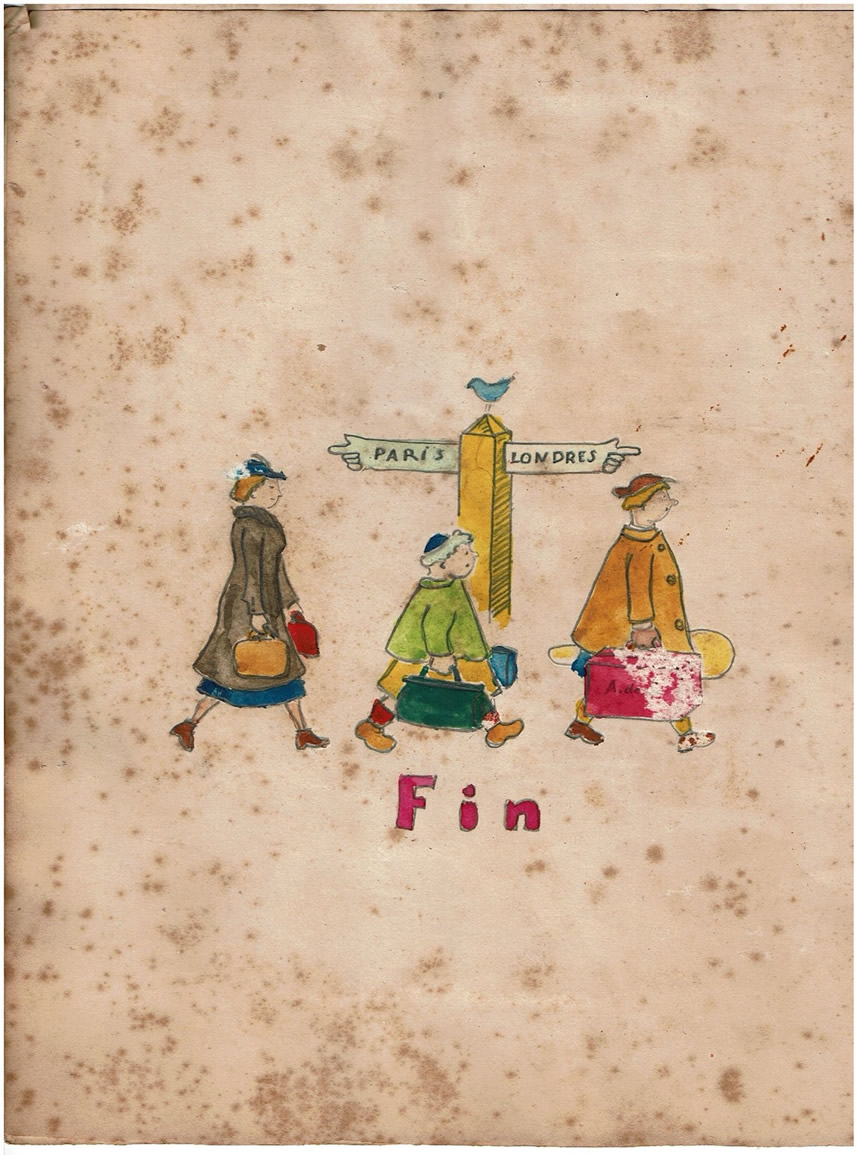
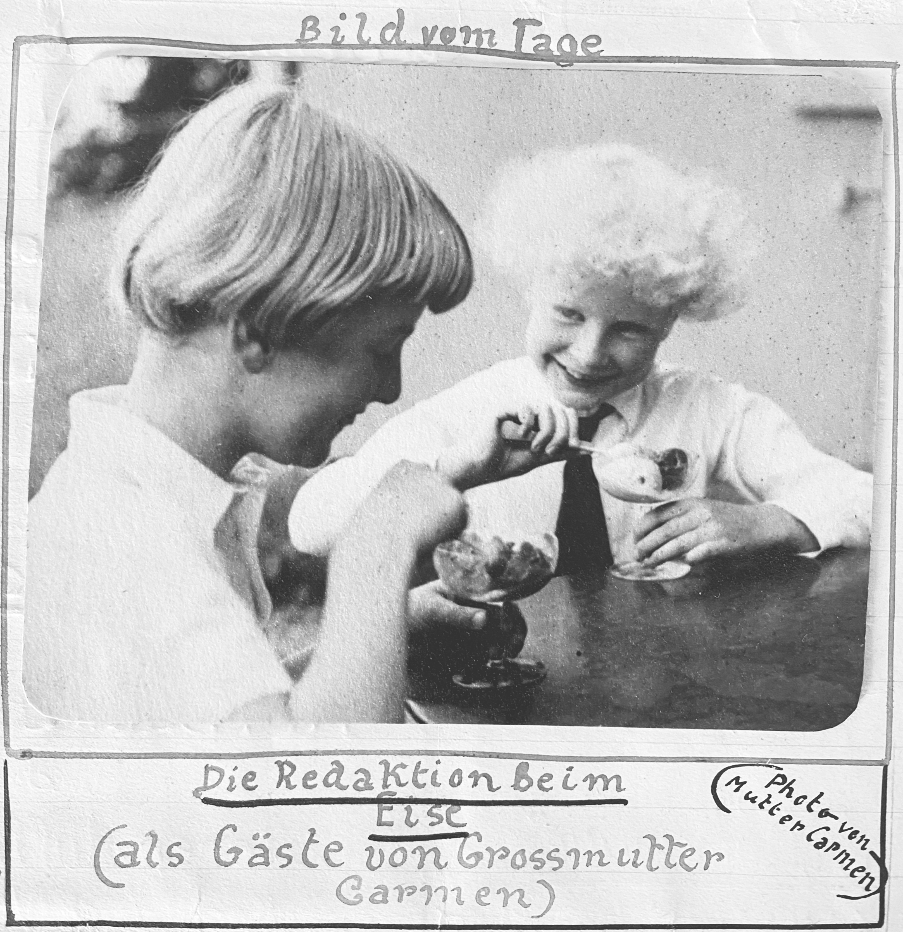
Through Casey’s chequered cast we can view history from the inside. The lifelong friendships between O’Callaghan, the German revolutionary Emmy Leonhard and the Cohen sisters and their daughters’ love affair are the beating heart of this story.
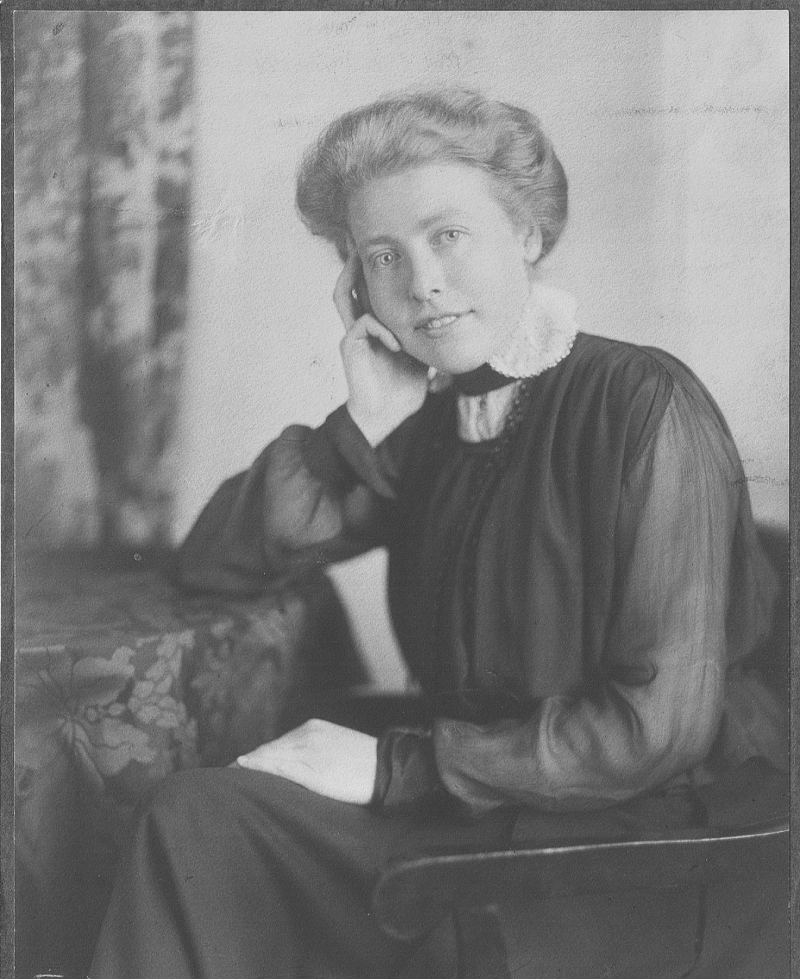
Their lives were shaped by momentous historic events to which they reacted in their own ways. Unfortunately, however, the major political issues at stake are referenced but not sufficiently explained and at one point political differences are described as “tribalism”.
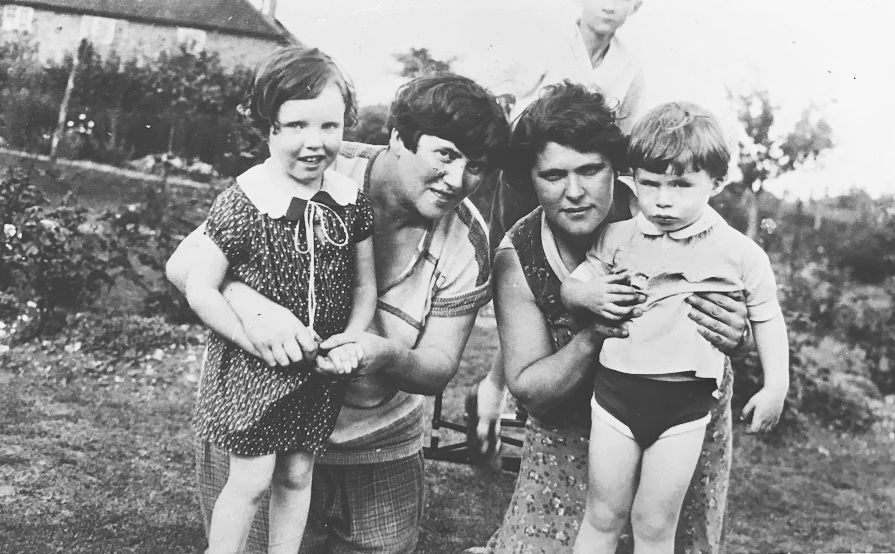
Rose Cohen, who had married David Petrovsky, a leading Ukrainian-American Jewish revolutionary, and top Comintern official, was arrested by Stalin’s secret police on 13 August 1937 on trumped up charges of spying for British intelligence. She was executed three months later, shortly after her husband, along with an estimated one million others that year. Nellie, who had by now returned to England, seemingly unaware of events in Moscow, wrote to her sister from Cornwall the day after Rose was arrested. The only reason that Nellie’s letter survived was probably because Rose’s Moscow apartment was empty and the letter was likely returned to sender.
While chasing archives in Moscow, Casey was asked by a Russian academic if he was for the Bolsheviks or the Tsars. Unprepared, “I mumbled something about how, as a leftist, I was for the Bolsheviks, though there were some complexities to my position”. This spurred him to explain himself to the reader:
“… I consider all those emancipatory projects {such as the Soviet experiment] a part of my political ancestry. This is a messy inheritance, one that includes revolutionaries embracing each other and former comrades sentencing each other to death in service of their cause… The Bolsheviks sought what I seek: equality. Therefore, when presented with this choice and within this context, I am for the Bolsheviks.”
Ukrainian poet Oksana Maksymchuk opens her verses of her Blank Pages with these words by German philosopher Hegel: “History is not the soil in which happiness grows. The periods of happiness are the blank pages of history”.2 This sentiment is echoed by O’Casey, who observes that tracing people’s relationships through correspondence inevitably omits their most intense and important moments: when they are together.
The expression “blank pages” was also used by Soviet historians and journalists who, during Gorbachev’s Glasnost period of the late 1980s, began to recover hidden history, the “deleted” lives of countless victims of the Stalinist counter-revolution. After decades of silence, locked archives were opened and a process of rehabilitation and new histories could be written. That process has once again been interrupted.
Like a film played backwards, Hotel Lux unreels lives drawn by the magnet of a successful revolution and how these lives filtered down to the next generation. That process of unravelling continues into our time. Other historians, such as Brigitte Studer3 and Benjamin Nathans4, are “bringing back” the experiences of those who were repressed by Stalinism, not only in the 1930s but right through to the Gorbachev era and even beyond.
Casey’s extraordinary trawl through the archives of the Comintern in September 2018 was only possible for a short time, circumscribed by the Stalinist-Brezhnev era and Putin’s clampdown following Russia’s invasion of Ukraine. Returning to Moscow in October 2021, Casey was present at a screening organised by Memorial, the human rights organisation devoted to recording the crimes of Stalinism, now banned by Putin. The event “was interrupted by a mob”, followed by a police raid on Memorial offices, he writes.
In conclusion, Casey writes: “We are not heading inexorably towards something better. The obstacles we face are terrific. But it would be a fatal misreading to interpret the histories of those who struggled before as a series of reasons to stop trying. Because we live in the shadows of their failures, we inherit the task of achieving what they could not do.”
Hotel Lux: An intimate history of communism’s forgotten radicals by Maurice Casey, is published by Footnote Press 2024
References:

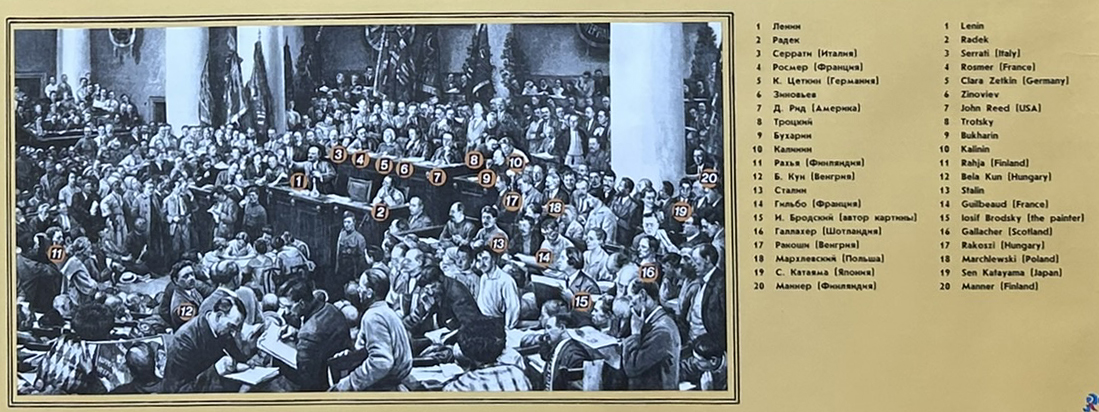
- Isaak Brodsky. The ceremonial opening of the Second Congress of the Comintern. A canvas painted from 1920 to 1924 by Brodsky on the basis of more than 300 sketches which he made of delegates attending the Comintern Congress. The canvas was not on view from 1927 to 1989 because many of the delegates depicted on it were subjected to unlawful repression in the 1930s and were rehabilitated only in 1989 and 1990.
2. Still City: Diary of an Invasion by Oksana Maksymchuk, Carcanet Poetry 2024
3. Travellers of the World Revolution, A global history of the Communist International by Brigitte Studer, Verso 2023
4. To the Success of Our Hopeless Cause, the many lives of the Soviet dissident movement, by Benjamin Nathans, Princeton University Press 2024
Pingback: The Alpenpost: A Girl’s Guide to Fighting Hitler and Stalin. Review. – Tendance Coatesy