
Hungary, wedged between Russia and the rest of Europe and with a unique language, has always struggled to survive as an independent state. The country was a part of the Austro-Hungarian empire until declaring independence in 1918, at the end of World War I.
The first post-independence government quickly collapsed, and for a few months a revolutionary Soviet government was established, but that too collapsed. What followed was the White Terror, a period of antisemitic pogroms and the hunting-down of communists and supporters. It allowed the extreme right to taste power.
The Romanian army entered Budapest, to the humiliation of all Hungarians, and with the Treaty of Trianon that followed, Hungary lost half of its land. This became a grievance for all political parties in the country and determined, to a large extent, its foreign policy in the years 1920-1939.
Hungary was sucked into the orbit of the Axis powers, ending up as a fighting ally of Nazi Germany. Adam Le Bor, in his new book The Last Days of Budapest, recounts the disastrous path taken by Hungary`s leaders as they divided the people with discriminatory laws against Jews. Admiral Miklos Horthy, who had led the coup against Hungary`s short-lived 1920 revolutionary Soviet regime under Bela Kun, was an authoritarian nationalist. As Regent of Hungary, he tolerated the White Terror without actively supporting it. And he determined to keep Hungary neutral by appeasing both the fascist regimes and the democratic countries of Europe.
His government brought in increasingly severe anti-Jewish laws over the years, from as early as 1920. Hungary had the highest number of Jews of any country in Europe. They were very well integrated in Hungarian society. But now, with a series of laws over the years, they were gradually isolated with more and more restrictions, as the idea that they were not really Hungarians took root. The way was being prepared for book-burnings, internment camps and eventually ghettoes, deportations and massacres, even before the Nazi invasion in 1944.

The Jewish Councils, composed of community leaders and rabbis, were given the job of carrying out Nazi orders for deportations, housing arrangements and conditions in the ghettos. The role of these councils remains one of the most contested and controversial aspects of Holocaust history. Their critics “accuse the council members of collaboration in the slaughter of their own communities, sometimes to save themselves and their families”, Le Bor writes.
As Horthy pondered the possibility of changing sides, Budapest became one of the largest hubs for spies and agents. Apart from British and Germans, there were Poles mainly concerned with helping their countrymen escape from occupied Poland, and Zionists encouraging Hungarian Jews to escape to Palestine, and others as well from Europe, Russia and Turkey.
Side by side with the formal history, the author follows the stories of a wide cast of characters ‒ spies, aristocrats, resistance fighters, journalists, smugglers, document forgers, a famous actress, ordinary people too ‒ real people caught up in the slow slide to war on the Nazi side. Amongst them was the 14-year-old boy soldier, Ervin Galantay, who got trained in how to use a rifle and machine gun, becoming a runner for a Hungarian battalion. We follow his dangerous adventures.
Extremely lucky to survive the war, he left Hungary in 1948 and became a renowned architect, who lectured urban warfare to military audiences. Most of the characters highlighted were supporters of the Jews and on the side of the allies as participants ‒ giving the reader a vivid close-up seat to events as they unfold. But it was a confused picture. Some of the spies were working for both sides.
The horrors of the period, alongside the often-heroic actions by individuals to warn and save people, come to vivid life seen through the characters’ eyes. Painstaking research into diaries, letters, notes, libraries and other sources of information, together with interviews with survivors and their families, form the basis for Le Bor’s re-construction in vivid descriptions of life and death in the ghettoes, the massacres and the search for food.
Horthy`s hesitant plan to switch sides was well known to the Germans. Romania had already changed sides and joined the Allies, so Hitler took the decision to invade. Most generals sympathised with the Germans.
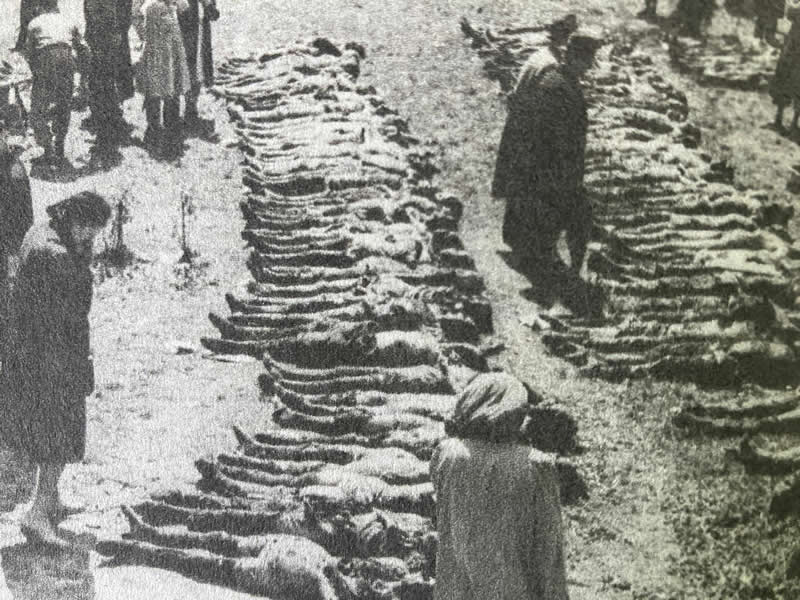
The Arrow Cross party, Hungary`s own home-grown fascist outfit, staged a coup, took power with the support of the Gestapo and instigated a reign of terror against the remaining Jews and the citizens of Budapest. Among other atrocities, they executed thousands of Jews and others at a spot near the parliament on the bank of the Danube, so that the bodies fell into the river.
They eventually fled as Soviet armies occupied the country. Attempts to overthrow Stalinist rule in 1956 and create a democratic, socialist Hungary were crushed by Soviet tanks. Today, the country is ruled by right-wing populist Viktor Orbán. That’s another story and another book, however.
The Last Days of Budapest: Spies, Nazis, Rescuers, and Resistance, 1940-1945 by Adam Le Bor. Publisher: Head of Zeus. £12.99.