Manifesto
Intro
Assemblies
Economy
Nature
Culture
Under the populist guise of “levelling up”, Arts Council England has cut total funding by around 30% since 2010, undermining the work of world-class institutions as well as less-recognised centres of art. The devolved countries have fared little better, with both the Scottish and Welsh governments having recently announced further cuts to the arts of about 10%. The Arts Council of Northern Ireland has lost 40% of its funding since 2010.
The crisis is made worse by the cuts to the arts budgets by local authorities, which until now have been their biggest funders. Bankrupted English councils, including those in Norfolk, Birmingham, Bristol and Nottingham have cut all funding. Sky-high prices make visits to the theatre, concerts, exhibitions, heritage properties, museums and the cinema prohibitive for the many. Affordable workspaces for artists are ever harder to find.
Education
The national curriculum for schools tends to stifle all excitement and love of learning, and with it the enjoyment of school life. Focussed narrowly on reading, writing and maths plus a British-centric view of history, the natural curiosity of children is blunted and there is little concern for teaching practical life skills. Teachers’ views, as expressed through their unions, are consistently ignored by governments. Schools, colleges and universities are forced to become businesses, with pupils, students, and teachers turned into “customers and providers”.
Young people are railroaded into a destructive, nerve-wracking, competitive exam routine, leading to mental health problems which increased seven-fold in the decade up to 2021. With funding cuts to all learning institutions, universities have become increasingly reliant on the fees of overseas students for their survival. With fewer foreign students enrolling in British universities, numbers are falling. Universities around the UK are making severe cuts as a result. At Goldsmiths University, London, celebrated for its radical courses, management intends to cut 17% of staff with its English and sociology departments taking hits of 50%.
Sport

Sport too is now seen as an opportunity for big money, especially at the elite level. A gulf separates the old ideal of sport from the new realities of ownership, sponsorship, merchandising and control of big sports clubs. Premiership football clubs are mostly owned by billionaires who run them for profit and as playthings for themselves and their friends (or in the case of Manchester City and Newcastle United for the purpose of “sports-washing” the autocratic states of Abu Dhabi and Saudi Arabia).
Players earn absurd salaries that isolate them from their communities. They are bought and sold as commodities on the global market. Fans are sidelined, useful only for providing atmosphere at the matches and paying over-the-odds for tickets that many can no longer afford.
Other sports, such as golf, snooker, boxing and tennis at the elite level are slowly being sucked into the vortex of Saudi Arabia`s Public Investment Fund, which offers even more money to even fewer of the best players. World athletics has announced that gold medal winners in the 48 athletic events at the Olympic Games in Paris in the summer will get $50,000 each, thus consigning what was left of the Olympic ideal of amateur competition to history.
Liberating Culture
Artists must be allowed to create free from the diktats of narrow class, political or sectarian interests. Musicians, sports people, scientists, technicians, filmmakers and thinkers of all kinds already play key roles as influencers and role-models. The challenge is for this to be for the better. Culture can only be truly liberated as part of a transformation towards a co-operative world economy in which the surplus value created by all workers is re-directed away from the billionaires towards the ordinary people of the world.
The arts belong to all humanity. Every individual has the right to freely express themselves through creative endeavours. Our ideal is a world where art and culture are treated as common heritage, belonging to all, rather than as commodities to be bought and sold for profit, and hoarded by billionaires.
Artistic creations must be accessible to everyone, fostering cultural exchange and enrichment. Creators must be celebrated as essential contributors to society and have recognition and ownership of their work. We call on artists, sports people and supporters of the arts to envisage a future where creativity flourishes free from the constraints of profit-driven systems. We endorse the Museum Association’s Manifesto with its emphasis on museums’ role in bringing communities together, helping to understand our past, and to “shape a fairer and greener future”.
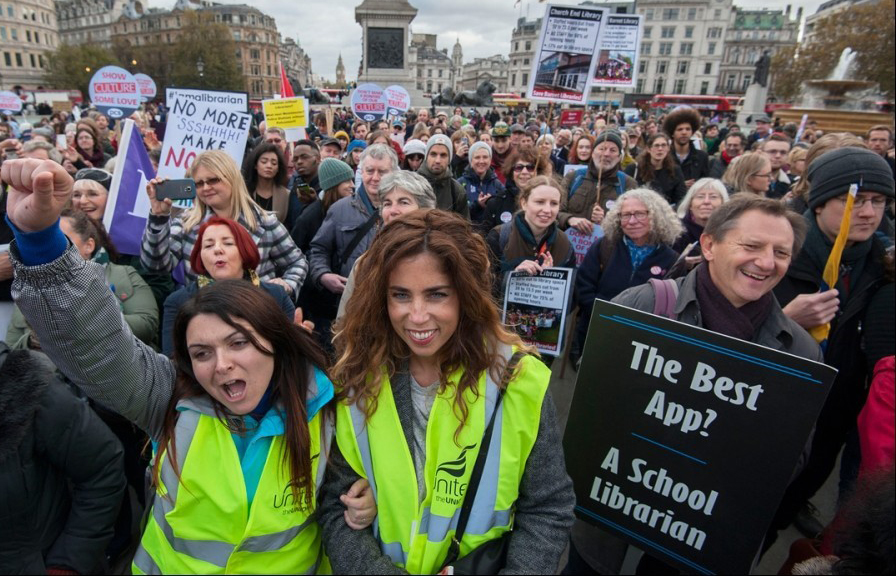
Revolutionising education
The purpose of education is to encourage independent thought, to solve problems and to develop an understanding of the individual as part of universal humanity. Pupils and students will not be cogs in a machine, but social individuals with multiple and varied talents and abilities. Education will aim to equip the next generations with the knowledge and skills they will need to find solutions to the multiple crises affecting the planet.
Inspirational examples of new ways of learning, such as Jacob Mitchell (aka MC Grammar), a North Croydon rapper who made grammar fun for millions of children, show how education might be transformed. The curriculum and teaching materials will be reviewed to counteract colonial, misogynist and pro-capitalist mythologies. The aim will not be to erase or “cancel” past histories but to understand, disprove and contextualise them. In place of one-sided intolerance, a spirit of open inquiry and diversity of views will be the norm.
The extraordinary potential of “AI”, aka ”machine intelligence” – which is human intelligence – will be used to facilitate new forms of learning, making it available to all. Non-hierarchical and non-conventional forms of education will encourage deep learning rather than simply working to pass exams or gain degrees. Education fees will be abolished, with lifetime learning available to all regardless of class or income.
Schools, universities and other learning institutions will be run democratically, taken away from government, and put into the hands of the teachers, parents, pupils, students and the community. Private schools will be incorporated into the new setup, but no longer as places of privilege.
The Vision for Sport
Everyone will have the opportunity to participate in sport, with local activities encouraged and supported. Most local sports clubs are already democratically owned and managed by fans, players, communities and other interested parties. The private sports clubs will be incorporated into this general scheme, with billionaires, oligarchs, corporations and moneymen excluded.
One model for professional football clubs could be Wimbledon AFC, which re-formed itself after the defection of its owner with the playersto Milton Keynes in 2002. Local fans, suddenly without a football club, reformed it with a new constitution whereby fans became the new owners, each with a stake in the club.
The capitalist marketplace for elite sport will be shut down. The marvellous skills of the players will be undiminished of course, but elite players will be paid less and encouraged to help with the coaching of the new generation of talented sports people. Sports clubs will again become centres of their local communities. It will be illegal to sell off parks and playgrounds or privatise sports centres.
All planning and development will prioritise the provision of public spaces, parks, sports areas and playgrounds. A People’s Olympics will replace the current profit-orientated model, where the corporations such as MacDonalds and Pepsi-Cola make a killing while the taxpayers pay for the stadiums.
Not only sport, but leisure activities, such as walking, fishing or relaxing in a public space or a natural environment will be understood as a right. Instead of 90% of land being privately owned as is the case today, common, public ownership with protection for and education about fragile eco-systems and cultural goods will be the norm.
Priority Actions
The Arts
- build on existing voluntary, publicly-funded, community, as well as private, institutions such as museums, theatres, galleries and sports clubs to encourage open access and democratic ownership
- reinstate and expand courses in the arts, languages, history, music and the humanities
- encourage skills training in diverse, high tech as well as traditional crafts, including repairing, recycling and up-cycling
- provide local communities with resources, the space, and encouragement for artists to thrive
- reduce admission fees for cultural venues.
Education
- support initiatives campaigning for high quality, free education, with a high level of support for those with additional learning needs
- provide universal free lunches and free kindergarten places
- encourage pupil, student and teacher decision-making in association with parents, community and educational experts – a non-hierarchical approach to teaching
- offer a wide choice of subjects in secondary schools, including languages at an early age
- expand education opportunities for people of all ages and encourage inter-generational skill-sharing
- public schools to be open to all with modest fees and subsidies for those who cannot afford them as part of a phasing-out process towards their integration into the new system
- student accommodation to be affordable and re-organised in tandem with the community, with options for student co-ops, house shares and social housing, with subsidies if needed.
Sport
- support initiatives for supporter and community-owned football and sports clubs
- encourage self-organised park runs, marathons, non-commercial charity runs, softball, village cricket and football
- campaign for sport to have a key role in all schools
- support community groups defending sports grounds and facilities
- encourage the concept of sport for all
- encourage professional sports people to assist in coaching and sports clubs
- recognise and develop the huge pool of potential talent and enthusiasm for sport
- transform the Olympic Games into a People’s Olympics.