This is a year of anniversaries – 100 years since the General Strike, 90 years since anti-fascist workers blocked Cable Street against Oswald Mosley’s Black Shirts and nine decades as well since the unemployed of Jarrow set off on their unemployment march to London.
In Russia, it’s the 70th anniversary of the historic speech by Nikita Khrushchev denouncing the murderous rule of Joseph Stalin. The same year, 1956, Hungarians revolted against their dictatorship and set up workers’ councils only for Soviet tanks to invade and put an end to their uprising.
September 2026 was the 40th anniversary of the financial collapse that propelled the Labour government – in the middle of its annual conference – into the arms of the International Monetary Fund. Chancellor Denis Healey was in the departure lounge at Heathrow, bound for an IMF meeting in Washington, when he was instructed, instead, to ask for a loan.
What followed was an austerity programme of cuts demanded by the IMF as the price for an historic bail-out. Trade unions mobilised against the government, leading to the Winter of Discontent in 1978-9, In May 1979, James Callaghan’s government was defeated, and Thatcher won her first general election. The rest, as the saying goes, is history.
Prime minister Andy Burnham apparently harks back to the 1970s as a period when governments allegedly had more leeway, before neoliberalism took over in earnest and narrowed the focus of state power. Burham’s grasp of British post-war economic history is a little shaky, to say the least, as the crisis of 1976 shows. Privatisation and deregulation, aka Thatcherism, took off on the back of the failure of state-managed capitalism.
Neoliberalism is itself now in crisis, unable to revive the growth levels seen in the early years of the century. Yet, the forces of capital remain predominant. Global, transnational corporations determine economic direction alongside an electronically-driven international financial system. Powerful hedge funds, investment banks and other institutions remain dependent on the rapid turnover of money to coin a profit.
Richard Roberts from the OMFIF research group, writing about September 1976, noted: “And there are intriguing rhymes and resonances with the present, including austerity and the public finances; sterling depreciation; Labour party wrangling between the left and centrists; and, in the background, Britain’s June 1975 referendum on membership of the European project,”
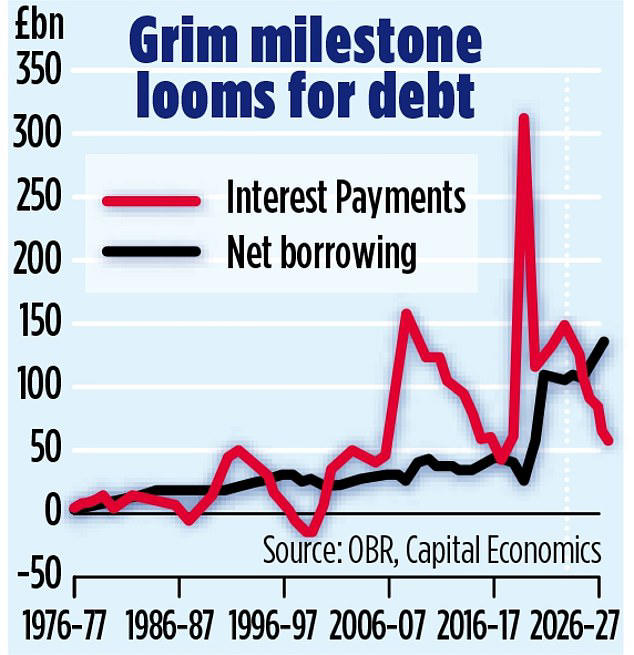
Ironically, the present chancellor is also called Healey. John Healey confronts borrowing costs that are at record levels. Debt interest payments now account for £8 of every £100 the Burnham government spends. The interest bill is due to rise from £109 billion in 2025/26 to £117 billion in 2027/28. At the end of September, the government borrowed £4.25bn for 10 years at an interest rate of 5.38%, the highest for 29 years.
In his speech to Labour’s party conference, Healey acknowledged: “The cost of the nation’s debt is not just a number in a chancellor’s Budget. It’s the money that we can’t spend on the NHS, on schools, on housing, on social care. On policing our streets, on controlling our borders, on defending our country.” He is due to deliver his first Budget on October 28.
Rising rates are a feature everywhere after a period when they were close to zero. Long-term borrowing costs in the US have risen particularly sharply, despite government efforts to calm markets. Washington now pays 5.6% to borrow for 30 years, an interest rate not seen since 2002, driven by Trump’s war against Iran which has pushed up inflation.
Nearly 80% of borrowing by governments in the major economies will go to refinance existing debt. It’s like using a global credit card to raise cash to pay your debts. Borrowing at this rate is clearly not sustainable, at either personal or state levels.
Patrick Foulis, a Financial Times contributing editor, noted: “After two decades of a fiscal dreamland, reality is well and truly back. It is a messier reality than in the 2000s. Global public debts are larger, there are wider gaps between rich nations, and in a predatory world the stakes are higher. Countries with excessive debt now endanger not just their economic stability, but their social fabric, military deterrence and geopolitical power.”
The authorities led by the Bank of England are especially concerned that borrowing by AI corporations – it’s running at twice the levels of 2025 – could precipitate a financial crisis because one or more are certain to go bust as the competition hots up. Andrew Bailey, BoE governor, said that regulators “cannot stand aside” and assume the AI industry will resolve the risks it presents to the stability of the financial system, including the most advanced models going rogue or being used for cyber attacks.
So, while Burnham considers cuts in pensions and benefits to balance the books, and rues the fall-out from the Manchester City scandal, the markets are as unstable as they’ve ever been. In reality, the system is broken and another financial crash is a greater threat to humanity’s future than rogue AI agents could ever be.
Global capitalism is the problem, not the solution. To begin reshaping the economy requires a new democratic political power in place of a political system that is essentially a proxy for big business and financial markets, even when they plunge into crisis. Capitalism has held us hostage for long enough.