
Review by Heli Kaatrakoski
The first-ever translation of Alexandra Kollontai’s portrayal of the early socialist movement in Finland and its relations with Russia brings this revolutionary period to vivid life.
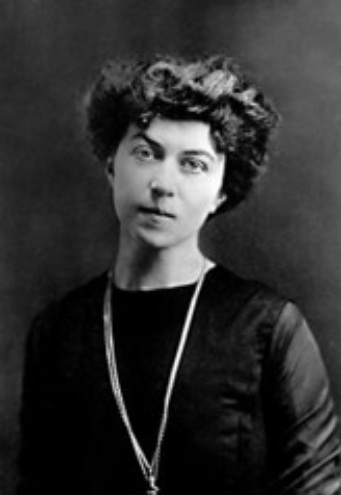
Born in 1872, Alexandra Kollontai had a Finnish mother, and her father, who was of Ukrainian descent, was a general in the imperial Russian army. She soon became an influential feminist and a widely-read socialist writer, the only female member in the first Bolshevik government and later a respected political figure in the Soviet Union. She participated in Soviet-Finnish Winter War (1939-1940) peace negotiations. Towards the end of her political career, she served as Soviet Ambassador to Norway, Mexico and Sweden.
Kollontai’s political journey had its ups and downs. The Tsarist authorities banned Finland and Russia, her 1906 book of essays, and issued a warrant for her arrest. Her activism, radical writings and views led her to flee Russia soon after publishing in 1906. It was considered dangerous for its political analysis of socialist movement and capitalist oppression. Kollontai called on Finns to revolt against oppression within the Russian Empire and for unity between workers in Finland and Russia.
Introduction
Cathy Porter, who is renowned as a translator and biographer of “blazing meteor” revolutionary Larisa Reisner, introduces the texts, which are complemented by vivid photographs of people, places and events of workers and social activism in Finland.
Porter paints a rich portrait of Kollontai’s (1872-1952) life, activism and writings. Born in St. Petersburg to a Finnish mother whose family ran a timber mill and a Russian father from a noble family, Kollontai grew up observing the harsh conditions of servants in her household. These experiences sparked her commitment to improve women’s and workers’ rights. Kollontai wanted to make a difference. She began her political and feminist activism by studying Marx and Engels, and August Bebel. She worked with Russia’s Political Red Cross and volunteered in a library to teach literacy to workers – while discreetly sharing socialist ideas.
During her career, Kollontai was a productive writer. Porter describes her writings as having a “witty sharply argued political style, Kollontai style“. She also highlights Kollontai’s sympathetic, nuanced portrayal of Finland and its people, which come through in these essays.
Porter concludes that Kollontai’s “de-escalating anti-fascist diplomatic work” is still relevant today and she draws parallels to contemporary issues such as the war in Ukraine and anti-Trump rallies in the US.
Essays
The two essays were written four years apart. Kollontai wrote the first during the so called ‘Bobrikov era’, the first wave of Russification in Finland (officially Grand Dutchy of Finland) and discussed both tensions between Finland and Russia and bourgeoisie and workers in Finland and Russia. The second was written after the assassination of Bobrikov and focusing on the 1905 strike movements in Finland and Russia.
One of Kollontai’s objectives was informing Russians about Finland and Finnish people. She boldly sets Finland in a global context and compared the situation in the Transvaal in Africa and Finland. She described how the people in Finland had been conquered with Tsarist manifestos instead of guns and fighting.
She also paralleled Finnish people, explaining how they were not used to brutal confrontations, with the aim of showing the shared goals of Finnish and Russian workers and the need for them to unite. She highlighted the importance of learning from each other to advance justice and equality and stand against the Tsarist regime. She explained that in Finland, both bourgeoisie and workers demonstrated against Tsarist power, but at the same time the bourgeoisie remained wary of the growing influence of the working class. Conflicts were internal and external.
She portrays Finland as a developed society with a unique history and functional system of government – unlike Russia at the time. Although Finland had long enjoyed autonomy, tensions gradually arose as Russia sought to integrate Finland more tightly into the empire. In this context, she describes the development of the workers’ movement in Finland in some depth.
In the aftermath of the June 1904 assassination of Governor-General Bobrikov, which weakened Russia’s influence in Finland, Kollontai praised Finland for having “fought to win back its lost constitutional rights, impressing other more advanced nations of the world with its charter for a new democratically elected people’s government, based on universal suffrage”.
Kollontai has an engaging style and offers insights into imperialism as well as socialism and workers’ rights in Finland and Russia. Her writings provokes you to think what we can learn from Kollontai about the current world order.
Not just a place to hide from Tsarist police
For me, as a Finnish reader, the book was a journey through Finland’s history but also an eye-opening look at how Finns and Finland were portrayed in Russia over a century ago. As a highly developed and civilised country, Finland was more than a place to hide from Tsarist police; local peasants and factory workers were not easily fooled by Russian authorities. Kollontai was convincing and it would have been interesting to learn how the Russians welcomed her message.
It was fascinating to see how she embraced Finland’s calm, peaceful and non-violent traditions and described them with warmth and respect. Cathy Porter does not exaggerate when she praises Kollontai’s sympathetic yet observant style of describing underprivileged people’s fight in Finland but also in Russia.
Porter’s introduction complements the essays with an excellent portrait of Alexandra Kollontai’s life and interests. She highlighted her revolutionary passion for women’s rights and liberation and sexual revolution suggesting that there is still much more to explore and learn from her writings.
Designed by Ott Kagovere, the book is richly illustrated with archival images depicting the early years of workers movements in Finland.
Alexandra Kollontai: Finland and Socialism – two essays. Translation and introduction by Cathy Porter.
Published by Rab Rab press Helsinki 2025
Editor’s Note:
Shortly after the Russian Revolution of October 1917, Finland adopted a resolution declaring its independence from Russia and appealed to the Bolsheviks for recognition. Finland had been an autonomous part of the Tsarist empire since 1809 after Russia defeated the country’s historic rulers, Sweden. On December 18 (31), 1917, the Bolsheviks Decree 101 said:
“As the answer to the appeal of the Finnish Government to recognise the independence of the Republic of Finland, the Soviet of People’s Commissars, in full accordance with the principle of nations’ right to self-determination, HAS DECIDED: To propose to the Central Executive Committee that:
a) The independence of the Republic of Finland as a country is recognised, and
b) A special Commission, in agreement with the Finnish Government, comprising members of both parties, should be instituted to elaborate those practical measures that follow from the partition of Finland from Russia.”
Among the signatories were Lenin and Trotsky, co-leaders of the revolution.

Hienoa työtä, Heli! Kiitos!
Terveisin
Yrjö