Another must-see exhibition in London, celebrating the National Gallery’s Bicentenary. It offers a once-in-a lifetime opportunity to view works that took the curators eight to ten years to compile, all displayed atmospherically. Upon entering this extensive exhibition, my first impression was the small size of some works; many are intimate, while others are monumental.

The dawn of the Renaissance, which defined Western painting for the next 500 years, began in the early 14th century. Drawing from outstanding collections and private loans, the exhibition features more than 100 works, including sculpture, metalwork, textiles, and paintings—primarily egg tempera on panel. Many of these panels have been reunited after centuries apart.

During this period, new painting techniques emerged, capturing drama, emotion, grief, anger, joy, and intimate gestures, all within the two-dimensional surface of the artwork. These pieces served as the picture books of their time, created for those who could neither read nor write.

They are adorned with dazzling gold and iconic imagery, produced before the advent of photography. Early techniques of perspective, light, and shadow engage viewers with emotional narratives. The detail in the metalwork framing these pieces is exceptional. The motifs used are typical of the time, as the Church was the leading patron of the arts, reflecting the strength of Catholicism and the intensity of religious devotion present in the imagery.
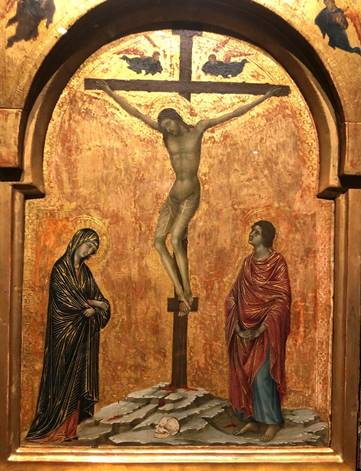
Be sure to visit the Siena exhibition, which runs until June 22nd, 2025, to gain insight into the cultural foundations of the Western world. It promises to be an uplifting experience.
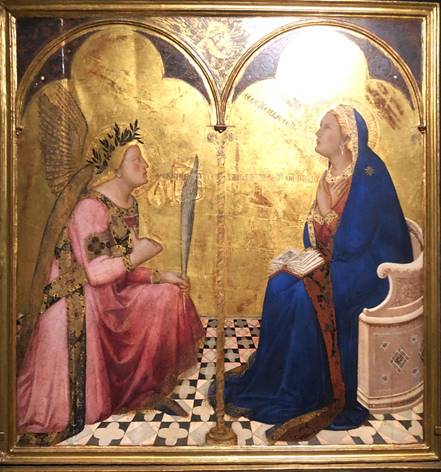
(All images taken on the author’s iphone.)
Peter Clossick is a past president of the London Group. His article is shared on the London Group Newsletter. Corinna Lotz provides a glimpse into the historical context, also on this site.
SIENNA: The Rise of Painting 1300 – 1350 AD National Gallery, London