The one show I wish I had not missed. It’s been haunting me ever since I heard about this extraordinary art-political event at Amsterdam’s De Balie cultural centre during August and early September.
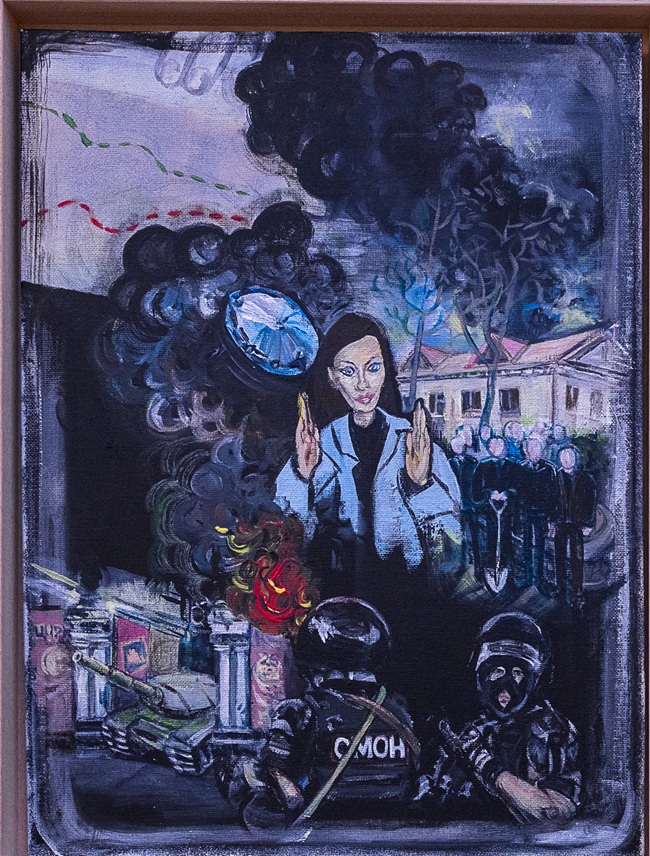
I am writing this only days after Russia’s total military losses in Ukraine reached 1,500,870, according to Ukraine’s General Staff. This staggering figure is higher than the “combined toll suffered by Russian and Soviet forces in all wars and conflicts during the second half of the 20th century and early 21st century”.
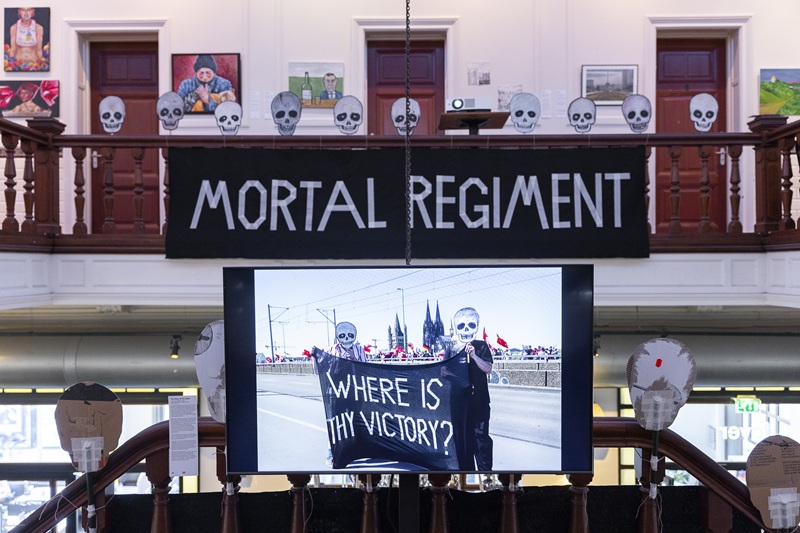
There are many who feel that Russian citizens are all complicit in the Kremlin’s war on Ukraine. But that view was powerfully challenged at Memory Remains: Artists against the Kremlin III.
The third such event, it was co-sponsored by the Moscow Times, Prometheus Art and De Balie. Memory Remains drew thousands of visitors with extensive media coverage in the Netherlands and elsewhere, but, strangely enough, not in the UK. A five-part exhibition, it was a multi-media gathering, involving artists, film makers and musicians, with over 70 anti-war art works, as well as talks.
Amongst the performances was Pussy Riot, the notorious feminist punk rock collective. There were also talks and screenings, including Mama, motherland, Lenin, by Crimea-born Vladlena Sandu who grew up in Grozny during the Russian-Chechen wars of the 1990s*.
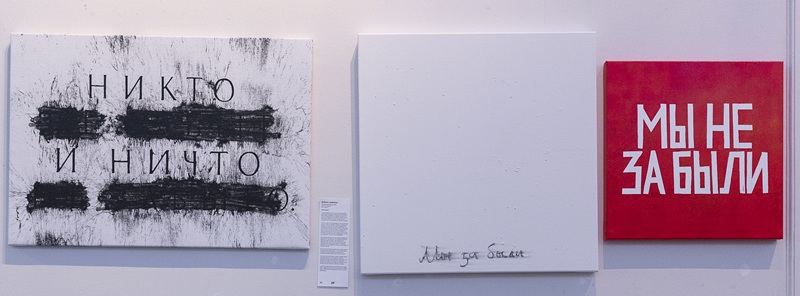
Everything was underpinned by the following powerful message:
“Artists Against the Kremlin seeks to preserve truth when truth is under attack, protect memory when memory is being erased, and remind us that behind every headline are individual lives, choices and acts of courage.”
Artists Yuliy Rybakov, Slava Ptrk, Linor Goralik, Masha Trebukova, Artem Loskutov, Pavel Krisevich, Sasha Skochilenko, Aya Demina, Milada Kopeliovich, Ivan Dubyaga, Anita Turadzhanova, Nika Nikulshina contributed works.
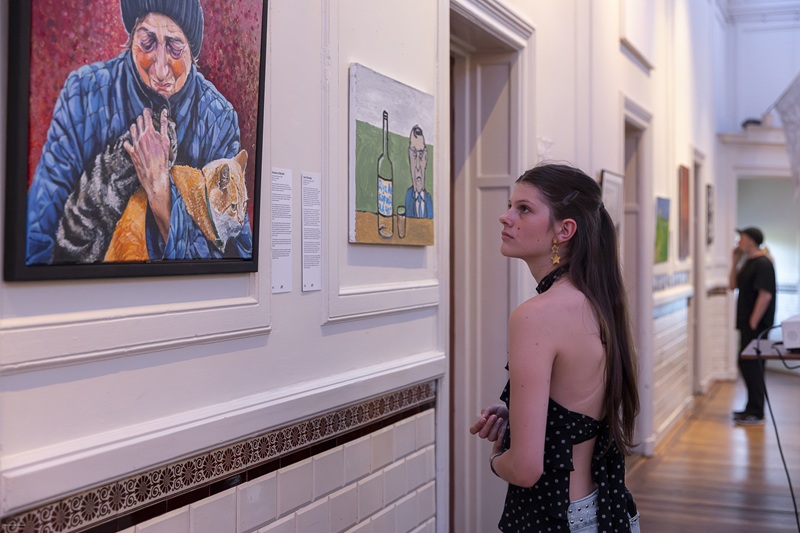
Credit is due to the De Balie arts and journalism centre for bringing together these young creatives, most of whom are in enforced exile, with older campaigners who have spent decades resisting not only Putin’s brutal rule, but of earlier times. Those whose stories are told in multiple ways, with texts, letters and artefacts, suffered imprisonment and even death during the Stalin and post-Stalin eras.
Artworks by contemporary Russian artists surrounded objects and documents painstakingly preserved and collected by those who spent years in Stalin’s prisons and gulags.
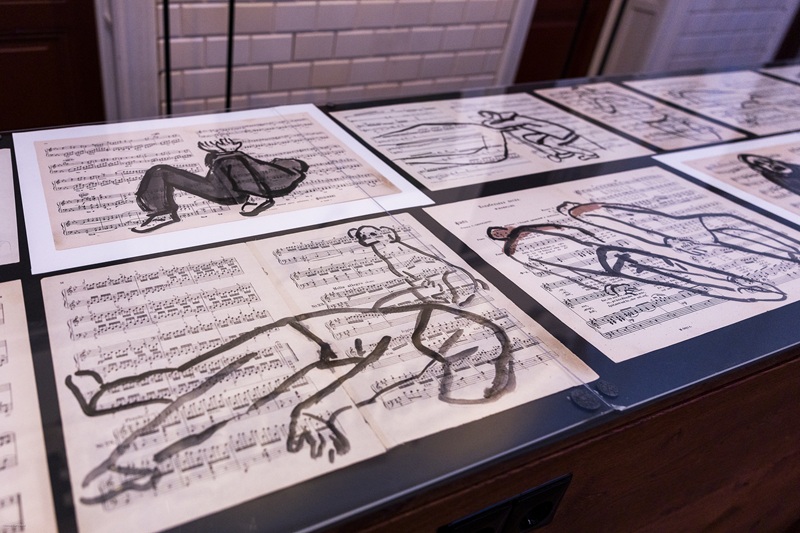
MEMORIAL: 35 Years of Struggle for Historical Truth and Democracy
It was the first showing in the Netherlands of the archive collected and preserved by Memorial, one of Russia’s oldest human rights organisations. The Memorial organisation was founded during Soviet leader Mikhail Gorbachev’s glasnost years. in 1987 human rights activists Arseny Roginsky, Lev Ponomaryov, Yuri Samodurov, Vyacheslav Igrunov, and Dmitry Leonov proposed building a complex to commemorate the Victims of Stalin. Nuclear physicist Andrei Sakharov, became the first chair in 1989.
In its own words: “sweeping political and social change, combined with strong public support, allowed Memorial to establish itself and expand rapidly. Branches were founded across the Soviet Union. After the USSR dissolved and 15 independent states emerged at the end of 1991, Memorial branches continued their work beyond Russia, to Ukraine and Kazakhstan.”
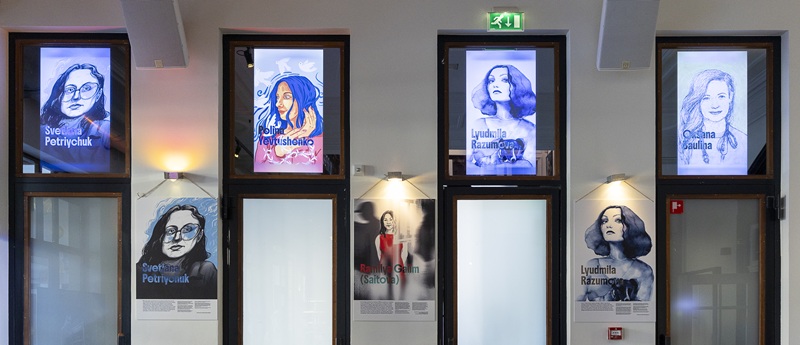
Russian courts labelled Memorial (along with the Moscow Times) as a “foreign agent” in 2016, shut down its key branches and banned it completely in April 2022. That same year, Elena Zhemkova accepted the Nobel Peace Prize on behalf of the organisation, along with Belarussian Ales Bialiatski and the Ukrainian human rights organisation, the Centre for Civil Liberties.
In 2023, “Russia opened a criminal case against former Memorial members on charges of “rehabilitating Nazism” and searched their apartments, targeting Memorial’s database of victims of Soviet political terror.
Along with Memorial The Sakharov human rights Centre and Moscow’s Gulag History Museum were banned after the start of the Ukraine war, making the display in Amsterdam doubly important and poignant.
Refusing to forget: the other Russia
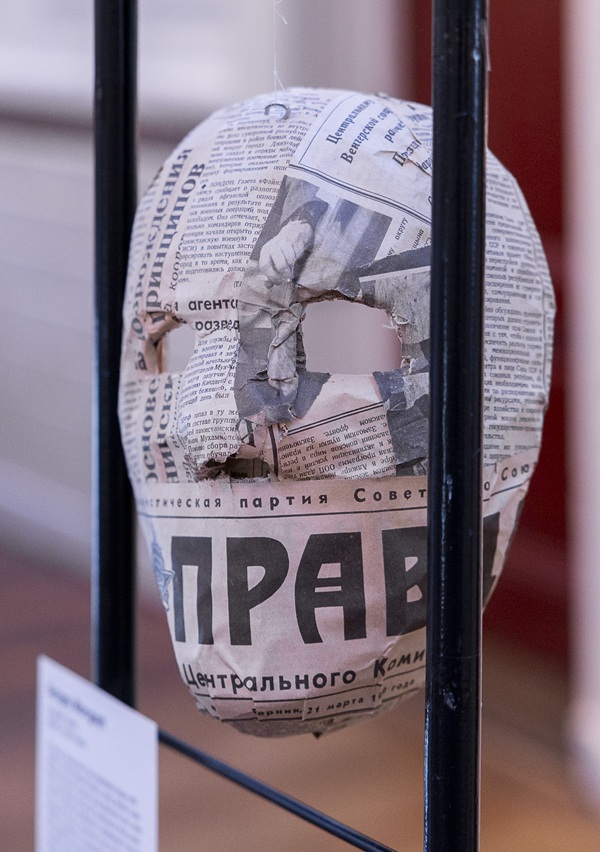
Here was the physical evidence of the indomitable will not to forget, to tell their stories, often through the simplest and strangest of things. One case contained a handmade cord with handles for cutting bread, made by Friedrich Krause at the Karaganda Corrective Labour Camp, Kazakhstan, 1942–1950.
Another heart-breaking object was an evening dress that had belonged to a young art historian Valentina Antonova (Bukhanevich). She was arrested during Stalin’s terror of 1938 whilst at a theatre performance. This dress was her only piece of clothing during the year of her imprisonment, moving from Butyrka Prison to the NKVD Internal Prison and the Taganka Prison.
Given the devastating attacks on Ukraine and the resistance of its people, we can only hope that an institution in the UK will have the will to stage a similar event in the near future.
- See Isa Jacobs’ conversation with Sandhu in e-flux magazine.
Artists Against the Kremlin III: Memory Remains was at De Balie cultural centre, Amsterdam, 14 August to 6 September 2026.
Curated and concept by Prometheus Amplifying Values and the Moscow Times. Since September 2023, Prometheus has organised over 25 exhibitions of anti-war and critical art worldwide, welcoming more than 10,000 visitors and reaching over 10 million through media coverage.
The Other Russia: 35 Years of Struggle for Historical Truth, organised by Zukunft Memorial opens in Leipzig, November 12 and runs to 24 January 2027. University of Leipzig. Bibliotheca Albertina, Beethovenstraße 6, 04107 Leipzig
Photo credits: Viktoryia Kharytonava
Thank you, Patsy. Greatly appreciated
Thank you, Patsy. Greatly appreciated
What a brilliant and important article reflecting the terrible tragedy of the repetition and fragility of recognizing what goes on: the commonality of people everywhere wanting peace and instead of kings and emperors, we have extremist governments led by madmen driven by money, greed, power grabbing, and ego.
What a brilliant and important article reflecting the terrible tragedy of the repetition and fragility of recognizing what goes on: the commonality of people everywhere wanting peace and instead of kings and emperors, we have extremist governments led by madmen driven by money, greed, power grabbing, and ego.