We’ve seen the plunder of the material world for capitalistic gains – the colonisation of India, Africa, and the Americas; the invasion of Iraq to protect US oil interests and more recently, exploratory work in the polar regions for more fossil fuels.
However, novel to the late 20th and 21st century is the plunder of the person for capitalistic gain. Our political, emotional, and social lives are increasingly the targets for monetisation by companies for profit. In other words, our beliefs, suffering, and social lives are now spaces where we “labour” for the corporations that run the world. Our time outside of work has been co-opted into a different form of working.
The world economy is running out of physical space to exploit – fossil fuels are becoming harder to reach, land more expensive, and labour more prone to mobilisation. As a result, options for exploitation that do not require any of these things are being explored – the non-productive, non-physical; the personal.
This trend for social exploitation can be seen starkly in the recent exposé by former Facebook employee Frances Haugen, who blew the whistle on the company’s hidden, dark, practices.
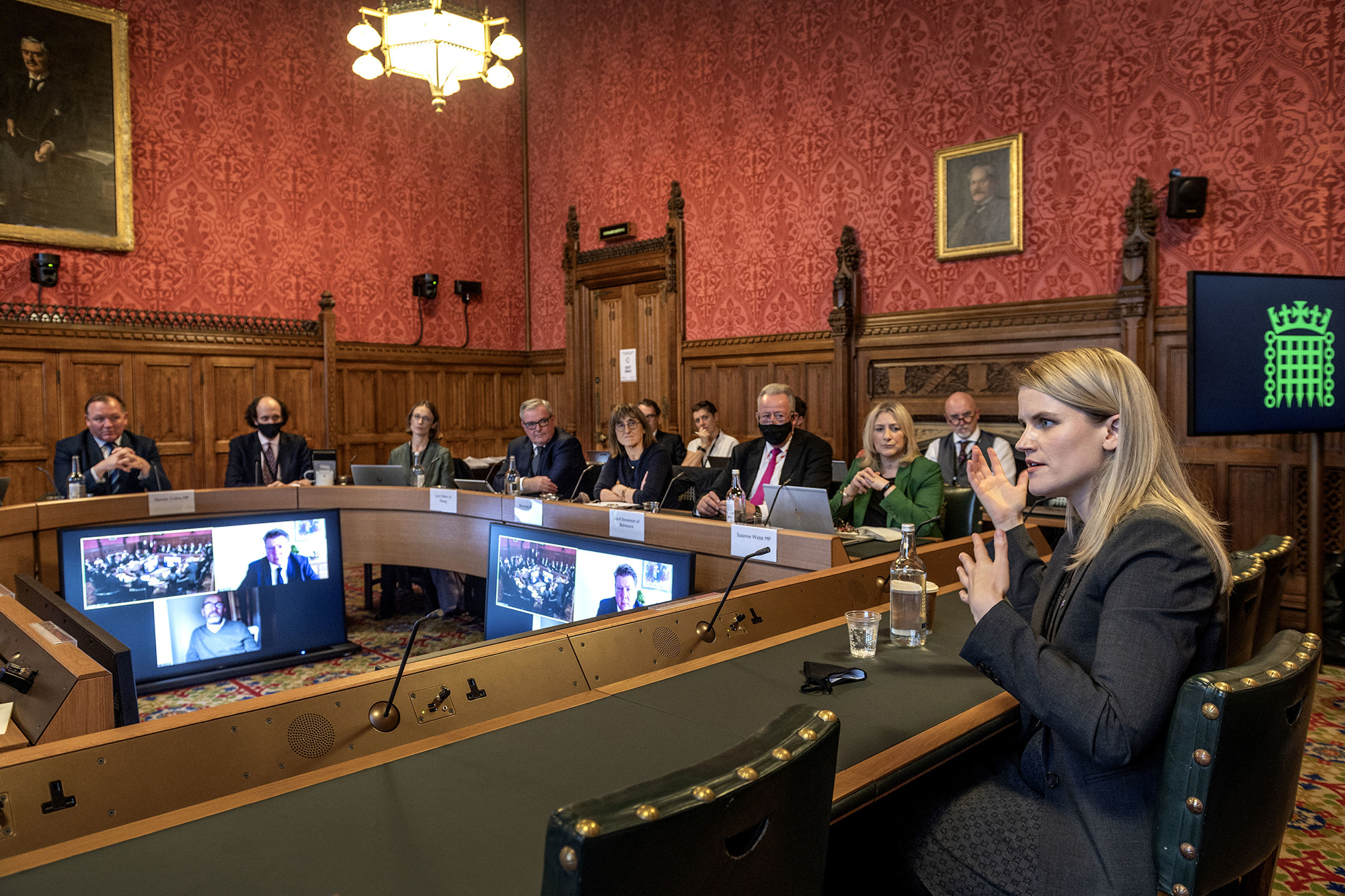
In late October, Haugen, testified before the US congress and the UK parliament about a series of internal memos and documents which she took with her after quitting the company.
The documents, along with Haugen’s testimony, provide a damning assessment of Facebook’s (now ‘Meta’s’) work culture, incentive structure, and attitude toward their role in society.
In a nutshell, when altering their algorithm, Facebook consistently prioritised profitability over all else, including teenage mental health, political violence and polarisation, and socially toxic content. Profits were, and still are, generated at the expense of users’ mental wellbeing, political safety, and relationships.
These decisions were consistently made in profit’s favour because the decisions on how to alter the algorithm are made by the same person who profits from them – the controlling shareholder, Mark Zuckerberg. As Haugen put it, “the buck stops with Mark”.
In this way Facebook is an ultimate realisation of the so-called Friedman Doctrine, the sacred ethos by which modern directors absolve themselves of any guilt for their destructive actions: I’m just an employee, I don’t make the decisions. I just maximise the profits for those who hired me. I act in their best interests, and if what I do is wrong, then they’re the ones at fault, not me.
Facebook, in its exploitation of our social lives, is simultaneously destroying them. Just like the extraction of fossil fuels from the Canadian oil sands, or the Hei Dai Gou coal mine in China, eventually there will be nothing left to exploit.
We will be left desolate, alienated not just from our planet, our physical surroundings, but also those around us, and ourselves.
The examples of this process of destruction are almost self-evident. The Brexit campaign in the UK has conditioned the relationships between people here for generations to come. Families torn apart, lifelong friendships smashed to pieces, cultural unity obliterated between England and Scotland. For the sake of more clicks, scrolling, ads. Profit.
The US capitol riot, the Ethiopian ethnic violence. Facebook may not have invented hatred, but, as Haugen puts it, Facebook “expands upon the concept” massively.
Is there a solution to this malaise of destruction?
So far, the solution has been one of “self-regulation”. The social media giants are supposed to somehow develop a conscience and decide for themselves when it is worth sacrificing profit for the wellbeing of society. But we seriously need to look at the logic here because this makes precious little sense. To see why, we only need to ask one question: who are the companies accountable to? Who do they act for?
Companies are owned by shareholders. Shareholders control what a company does, and get paid dividends based on how much profit their company makes. So, companies are only accountable to a small group of people, and act in their interests.
Companies are not accountable to society, and so will not act in society’s interests. If given a choice between acting in their shareholders’ interests, and any other option, companies will always choose the former.
So how are companies supposed to self-regulate? Companies cannot act outside of the interests of their shareholders, and their shareholders are only interested in profit. The only way they could possibly self-regulate is if their shareholders decided to charitably give up their profits for other goals, and there are myriad reasons that will never happen.
The argument that companies will “self-regulate” is the economic and political equivalent of saying “I don’t know what the consequences of this company’s actions will be, and I don’t care”. This is a problem when companies’ actions are as horrifically destructive and abusive as Facebook, or Shell, or Exxon Mobil. When the people who are accountable to society do not act in their interests, then society will suffer. People will suffer.