Gerry Gold marks the 50th anniversary of the collapse of the post-war economic arrangements known as the Bretton Woods agreement.
Half a century ago, on 15 August 1971, US president Richard Nixon, shocked the capitalist global economy by severing the exchange relationship between the dollar and through it all other currencies and gold.
Nixon’s impossible but unavoidable act marked the end of the 27-year post-war period of the 1944 Bretton Woods Agreement and eventually ushered in the present epoch of neoliberal capitalism.
At Bretton Woods in the United States, the 44 Allied Nations agreed the Keynesian international cage of controls intended to revive, stabilise and contain the wilder excesses of capitalist production after the orgy of “creative destruction” in World War II.
The agreement established a system of fixed exchange rates between currencies, and the price of gold was set at $35 for an ounce. Controls on the export of capital were put in place.
Two global institutions – the International Monetary Fund and the International Bank for Reconstruction and Development (later the World Bank) were set up to oversee the system, maintain trade balances and assist countries that got into trouble.
It was meant to avoid a repeat of the experiences of the previous 15 years – the Wall Street Crash, the Great Depression, the rise of fascism, a second World War and the deployment of weapons of mass destruction.
For a while at least it seemed to work. But by 1968 the agreement was no longer tenable. The dollar was devaluing and countries were beginning to abandon the system.
A multi-national banking system had developed which bypassed controls on capital movement and facilitated speculation on changing currency exchange rates. The system of capitalist production and its ever-expanding need for finance was breaking out.
When Nixon announced his decision, it was the start of the only period in 4,000 years in which humanity has not consistently based its currency on metal, specifically gold, a substance of real value.
When he got to hear about it, Arthur Burns, chairman of the US central bank the Federal Reserve declared the announcement “a tragedy for mankind”. And so it has proved.
Nixon’s shock was intended to deal with the immediate inflationary crisis brought to a head by the massive printing of dollars needed to fund the long, ruinous war in Vietnam, Laos and Cambodia.
The quantity of dollars in worldwide circulation had ballooned to four times the gold that supposedly backed the currency.
Breaking the connection opened the road to a new epoch, encouraging the dominant rule of the market and unfettered expansion of production – and of profitable growth – at the expense of everything else.
It became known as neoliberalism. Today, in retrospect we call it the capitalocene.
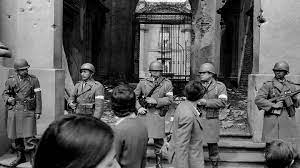
In 1973 the elected Allende government in Chile became the first victim, overthrown by a coup which had been long prepared by the Nixon government and the CIA. The first experiments in the application of neoliberal policies developed by the US-trained economists known as the “Chicago Boys” were enacted by the murderous Pinochet dictatorship.
The role of the IMF changed from maintaining stability to being a steamroller for globalising capital, imposing “structural adjustment”, forcing privatisation, debt, austerity and deregulation on countries throughout the world which were obliged to open their economies to multi-national corporations.
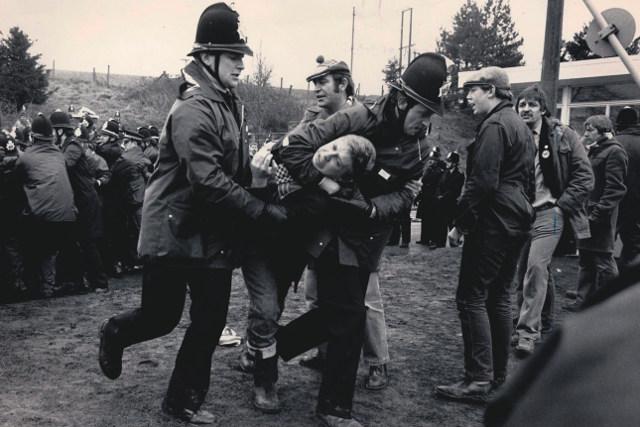
In the US and elsewhere, productivity soared whilst wages stagnated or declined. Reagan in the US and Thatcher in the UK took on and weakened or destroyed the unions. Widening inequality became normalised.
Simultaneously with the Nixon shock, in the summer of 1971 – the Club of Rome presented the conclusions of its soon to be published first report – Limits to Growth. Its early mathematical models of the world system projected “overshoot and collapse” by the mid- to latter-part of the 21st century if exponential growth in “population, food production, industrialisation, pollution, and consumption of non-renewable natural resources” were to continue.
That forecast became a reality early in the 21st century, as the pandemic and climate chaos have conclusively demonstrated
If lessons can be drawn from Bretton Woods and Nixon’s shock, it’s that epochal adjustments to the capitalist system could be made but their successes were not only short-lived but massively damaging to the majority of the world’s population.
The horrific consequences of global overshoot are all around us.
Now it is time to bring the epoch of capitalist production to its conclusion. Before it’s too late.