
“Mommy it’s my birthday, am I going to die on my birthday – they’re bombing.” That’s what Fatimah Gilliam, a Black American schoolgirl, asked her mother on 25th October 1983 as a massive force of American troops invaded the tiny island of Grenada.
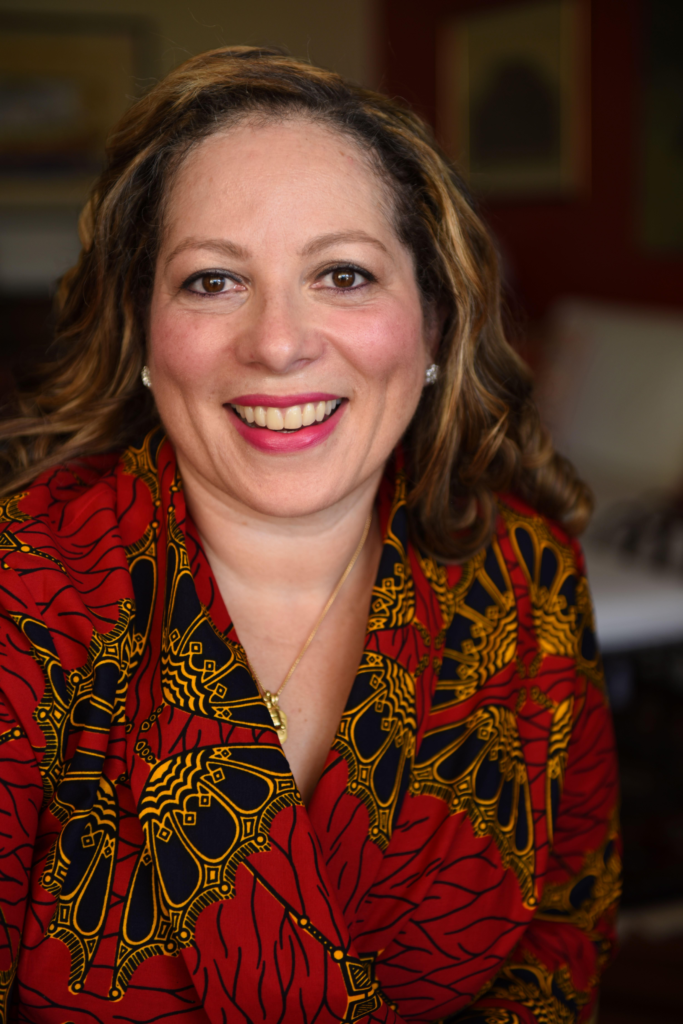
Today, Fatimah is a lawyer, a consultant and the author of Race Rules: What Your Black Friend Won’t Tell You. Some 40 years on she wants the invasion to be remembered “for a multitude of reasons”, and so has shared her childhood experience of these dramatic events.
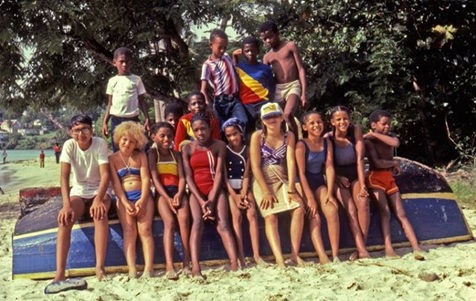
She told us: “I grew up in Berkeley, California and my mother produced the kind of documentaries you would hear on public radio. She and a partner decided to make a series of documentaries about the Caribbean, and she chose to make Grenada our home base. I was there for a year with my three sisters. My experiences there formed my politics irrevocably. Even though I was so young, it was my political awakening.”
Fatimah saw the changes that the New Jewel Movement, with its young leadership including the London-trained radical lawyer Maurice Bishop, had brought to the impoverished island after it took power in 1979. It expanded literacy, unemployment went down, there was free health care and education, and the economy was improving. Women used the opportunity to liberate themselves in all sorts of ways and improve their lives. Bishop was in favour of equal pay for women and paid maternity leave.
“But Bishop’s alignment with Cuba made the US uncomfortable and it was the height of the Cold War. After the invasion, that momentum for positive change ended with a series of puppet governments.”
Fatimah says: “I was not just a passive bystander, hanging out at home. I was absorbing all the things that were happening around me. I was there when Maurice Bishop was freed from house arrest. I was on my way to school with my sisters – I’m the youngest – but that day nobody was going to school – they were marching to Maurice Bishop’s home. We were drawn into the energy of the crowd, thousands upon thousands of people were chanting ‘free our leader’.”
At his house, the military fired shots but eventually they agreed to free him. He was to go to the marketplace to give a speech. But instead, he was taken to a fort with a group of his supporters, and assassinated.
“I was separated from my sisters and I remember it as the longest walk home ever with truckloads of soldiers tearing past on the road.
“The US is a superpower with the largest military force on the planet and what we choose to do in other countries doesn’t only impact what happens in those countries but across whole regions and the US’s geopolitical position. And the US military is around the world right now – we were in Iraq, we were in Afghanistan, we were in Vietnam and of course what we did in Grenada impacted what happened there for years to come.”
Fatimah adds: “We’ll never know what the CIA does abroad but I wouldn’t be surprised if they had a role. There have been suggestions that US diplomats in other countries were talking about the coup well before it happened.”
She continues: “The coup and the assassination were in Reagan’s [US president Ronald Reagan] best interest. It is a joke to say Grenada could have any military impact – it’s a small little island, what could they do against the might of the United States? The reason they were viewed as posing a threat was partly because of the affiliation with Cuba but also because it was a country with a vocal black leader.
“Listening to the articulate Maurice BIshop, who is attractive, and has a presence, the kind of real gravitas few politicians achieve, meant that he could speak to Black American people and be heard by them. He spoke about the struggle, about oppression, about white supremacy and he did it in their language.”

The process of evacuation showed that Reagan’s claim that the invasion was all about saving US citizens from harm was a fraud. Fatimah recalls her mother had to call the US representatives numerous times before they would get them out. This may have been because they were living in an ordinary township area, not an expat enclave, or it might just have been because they were a Black family. “The coup did not put us in danger,” she says, “but the invasion did.”
Looking back Fatimah recalls that, poor as the community she lived in was, Grenada was a fabulous place to live in as a child and in particular to have the experience of a predominantly Black community. Schooling in Grenada came with a heightened degree of responsibility because it was a poor country where it really mattered.
From being a laid back and indifferent student she became more engaged and interested. “I couldn’t come home and play around and then finally get down to a bit of homework, because there was a good chance there would be no power after dark. So, you came home and got down to it straight away.” She is still in touch with some of her childhood friends.
The invasion taught her some truths which she “absorbed with a young person’s mind” but which for her, still hold true. “After the evacuation back in the US, I turned on the television and saw what was being reported and what politicians were saying, and I knew these were bold-faced lies.
“So that was the lesson – politicians lie and there is always an additional story you need to pursue. You can’t trust what they say and take it at face value. I am an exceptionally political person as a result. Much of what I have done both personally and professionally has been informed by this experience, and the fact that I am writing a book about racism is also part of this understanding.”
She believes it is important to recognise how race plays a role in American geopolitics. “When the US considers whether to make a decision that advances imperialism and racism, or whether we’re going to step away from that, nine out of ten times we will make the decision that upholds white supremacy.
“The US clamping down on a tiny little island is ridiculous. But a tiny little island of Black people? When the US shows up with its military, we are most of the time showing up in places that don’t have white people. So those who end up being oppressed by our decisions are people of colour. And I see this as upholding racism not only in other countries but in my own country. These are the things that are important to me.”
[You can pre-order a copy of Fatimah’s book here. ]
Read part II:
Forty years ago, in October 1983, the small Caribbean nation of Grenada was invaded by a massive US force, bringing to a halt a revolutionary experiment that had begun four years earlier. There are crucial lessons to learn from this tumultuous period that offer a microcosm of the problems faced by attempts to create popular democracy and transform the state from capitalist to socialist. Read more…
This Guardian article talks about the ongoing inspiration of the New Jewel Movement to young Black people.
A speech by the current young prime minister of Grenada Dickon Mitchell on the anniversary of the birth of Maurice Bishop.
Increíble. El gobierno de USA, le está pidiendo al gobierno de Grenada, autorización para colocar equipos electrónicos de control relacionados con la ocupación silenciosa del Caribe. La excusa falsa es el narcotráfico, pero es público y notorio la presión y las amenazas que mantiene sobre Venezuela. Lo más triste es que el gobierno de Grenada dice que ” lo está estudiando” Esto es un insulto a la memoria de Maurice Bishop, y un irrespeto al pueblo de Grenada