
The value of money is melting away. It’s the flip side of soaring prices which started taking off in 2020. The impact on wages, held down and declining in value for more than 30 years, has provoked a sudden resistance globally.
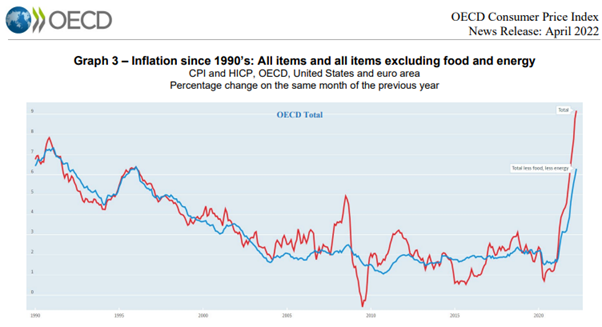
Just over a year ago with UK inflation rising to a worrying 2.1% economists were predicting that ‘inflation will continue to increase until it peaks in early 2022 and then comes down again. The peak may be above 3% but is unlikely to exceed 4%’.
Now its headed for 11% and the Bank of England says it can’t do a thing about it. It’s out of control.
Most official forecasts try to persuade us that it will peak soon and decline. It’s called ‘managing expectations’ as they try to head off industrial action by workers just trying to catch up with declining real incomes.
Trade unions are recruiting for the first time in many years. Strikes have erupted worldwide. Rail workers, barristers and baristas have common cause with those in the postal service, on trams, in fast food and airlines.
People can’t make ends meet. No longer choosing between heating and eating, many can no longer afford either. Food banks are getting busier and busier while donations to them are declining.
Theories and explanations and proposed solutions abound. But they’ve mostly been superseded by the emerging prospect of the seemingly impossible combination: simultaneous inflation and recession. Alongside and interacting with the life-threatening climate crisis and Putin’s pitiless war on Ukraine.
The source of rising prices has been building and fermenting for decades as governments and central banks have taken on debt and issued immense quantities of credit like morphine to ease the pain of a system in an accelerating crisis.
Since the 2007 crash and to avert the threat of economic collapse, trillions were added in the form of quantitative easing (QE) with the hope that it would be invested in new productive capacity. But it wasn’t. Falling profitability meant that the vast sums of credit were deposited in bank accounts – even those offering negative interest; salted away in property, yachts, cryptocurrencies and tax havens; and poured into stock markets where share prices soared.
Meanwhile, with the economy already in a downward spiral, along came Covid and yet more credit action to keep the economy afloat, followed swiftly by the war.
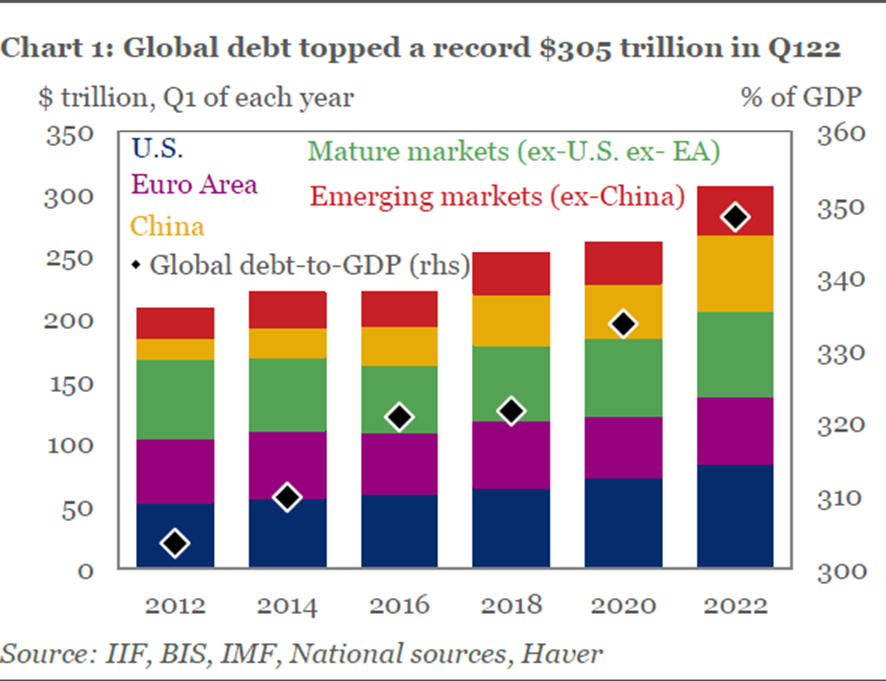
Globally debt has soared past $300 trillion – three and a half times the global value produced annually (GDP).
Now quantitative tightening has replaced quantitative easing, they’re searching for ways to simultaneously pump in more credit whilst stifling inflation with interest rate increases. Pushing up the cost of servicing existing debt threatens bankruptcy for ‘zombie’ companies – an estimated 15 to 40% of the total. https://www.bis.org/publ/work882.pdf
In the UK, interest rates are moving up, making it harder for people to repay mortgages and loans while the Tories mobilise against public sector wage demands and prepare to use agency workers to break the RMT rail union. The Tories are leading the way in preparing for trade wars, breaking agreements reached with the EU over Brexit.
As one court worker put it – ‘the system is in crisis’. She was talking about the justice system, but it’s true on a grand scale. The so-called cost-of-living crisis is, in fact, the morbid symptom of capitalism heading for meltdown.
We should support demands and actions for:
- Inflation-proof wage claims
- An open accounting of the profits of the corporations
- Development of plans for a democratically owned and controlled economy by citizens’ assemblies
- Co-ordinated strike and civil disobedience action to bring down the corrupt, authoritarian Johnson government.