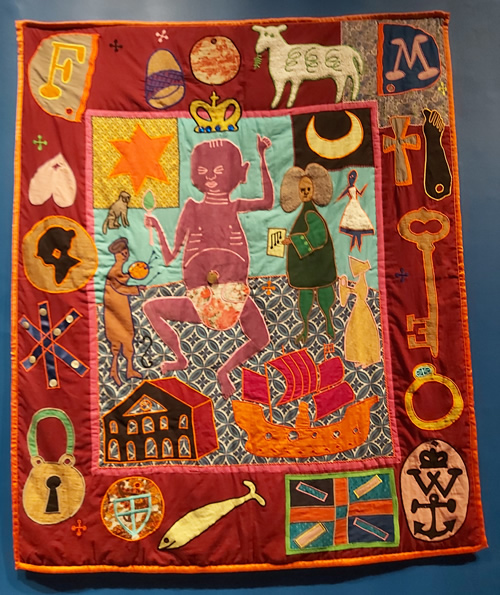
You could easily pass by this unremarkable building around the corner from Russell Square Station in Bloomsbury. But walk up a few steps, step inside the Foundling Museum and a 300-year-old story of maternal heartbreak, rescued babies and centuries of childcare unfolds.
This winter, a special exhibition traces how Coram’s hospital not only saved children from destitution and death, but sought to nurture them in association with natural surroundings.
It’s an unexpected place to discover what happened to children in London’s past but also work by contemporary artists, including Grayson Perry, Tracey Emin, Yinka Shonibare and Lemn Sissay.
Today’s museum building was built on the location of the original Foundling Hospital, established in 1739 by sea captain and philanthropist, Thomas Coram. It looks out over the majestic plane trees of Brunswick Square and a green space called Coram’s fields.
Thanks only to efforts by local residents, led by a Mrs Bedford and Janet Trevelyan, seven acres of the original grounds were saved from development in the 1920s and 1930s. It remains an oasis. But there’s a nice catch: you can only enter Coram’s fields if accompanied by a child.
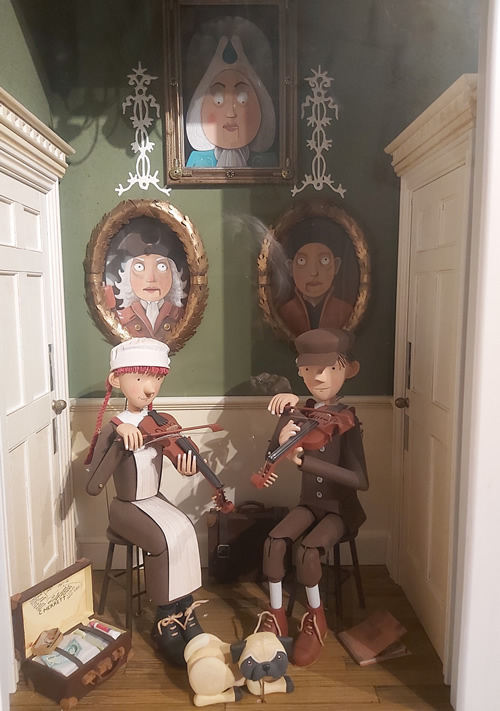
A delightful sense of play greets you in the Museum foyer, where two doll-like figures, possibly depicting orphans, play violins in a Georgian style drawing room.
But the story begins during a grim period for mothers and babies. At a time when London’s wealth grew thanks to colonial extraction, enslavement and early industry, its population rose from 575,000 to 900,000 between 1700 and 1800. But despite all the affluence, countless children were dying from extreme poverty or terrible maladies.
According to a 2007 study “Mortality peaked in the middle of the eighteenth century at a very high level, with nearly two-thirds of all children — rich and poor — dying by their fifth birthday.”
The museum’s website explains that:
“Economic migration from the countryside had led to a population explosion, which put parish-based poor relief under immense strain. Mothers unable to care for their children as a result of poverty or illegitimacy had few options, leading to some abandoning their babies on doorsteps, outside churches and even on rubbish heaps. It is estimated that around a thousand babies a year were abandoned in London alone.”
Shocked by what he saw in London streets Coram campaigned to establish the Foundling Hospital. Thanks to his 17-year struggle and donations from “ladies of rank”, a piece of land was obtained in Lamb’s Conduit field.
The artist William Hogarth, of Gin Lane and Rake’s Progress Fame, composer George Friderich Handel and other artists lent strong support. Hogarth’s sympathetic portrait of Coram still hangs in the museum, alongside paintings by Gainsborough, Francis Hayman and Richard Wilson. Their work forms part of the UK’s first public art gallery, which remains to this day.
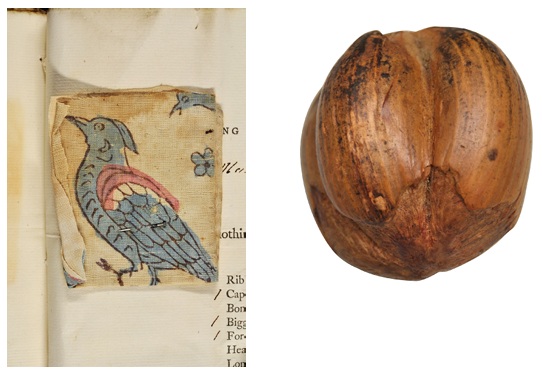
Histories of lost and found babies and children are told through “tokens“. These were scraps of textile, embroideries, objects such as acorns and hazelnuts, cut-through coins left by bereft mothers, in the hope of a future reunion. There are ancient ledgers with lists of names, each one documenting a moment in the life of a child, noted in old scripts on yellowing paper.
After Parliament voted in 1756 that the hospital had to take in every baby brought to its door (instead of an earlier selection process), over 15,000 children were accepted. Of them some 10,000 died. Between 1741 and 1885, the over-stretched hospital cared for some 22,000 children, according to research in children’s charity, Coram’s digital archive.
While creating the hospital was a great improvement for mothers in impossible situations, as in many institutions for children or those needing care, life could be harsh. Governors at the Foundling Hospital “decided to end institutional care in 1954, 10 to 15 years ahead of thinking”.
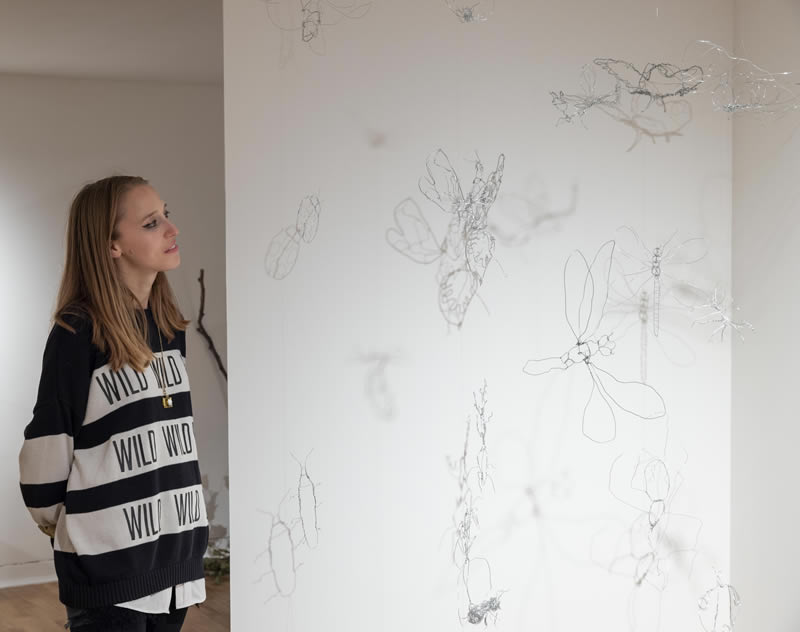
The displays in Where We Grow are child-centred, trying to recreate what might have been the sensory experiences of children who grew up in care. Searching through original collections curators found records of seeds that were grown in the hospital gardens. Gardeners’ books from the 1790s list many plant varieties tended by the children, aged 9 to 13, who worked there seven hours a day.
The Friedrich Froebel connection
A postcard of an early kindergarten points to the influence of German educationalist Friedrich Froebel. He set up the first kindergarten in Blankenburg in 1837, believing that children could learn best through play and nature, providing them with plots of land to tend together and individually. His hope was that it would “sprout a new spring for humanity“. The Prussian state Germany soon saw kindergartens as a “socialist” political space and outlawed them in 1851, although the ban was later lifted.
The Froebel Society, which set out to advance Froebel’s child-centred, play-led philosophy, established its headquarters at Bloomsbury Square in 1896. Curator Kate Forde has tracked down records in the London Archives suggesting that teachers trained in Froebelian methods were working on the Coram’s Fields Playground site before it was formally established in 1936.
Kindergarten literally means “children’s garden”. Froebel invented the idea in Germany in the nineteenth century, and it became hugely influential in Britain, America and around the world. He believed children learned through play and nature, and gave them plots of land to tend individually and together.
Putting together Where We Grow care leaders and artists worked with children to highlight that we are part of an ever-changing world and part of nature in an ongoing relationship, so crucial for a sense of belonging. Young people with experience of care who are current participants and alumni of the Foundling Museum’s Tracing our Tales trainee programme helped create the exhibition.
Opening the exhibition, museum director Emma Ridgway said that right from its foundation, the Foundling hospital sought to make the case that nurturing children was vital for a healthy society. Accessing the abundance of nature was vital for all children, including those who were disregarded.
Where We Grow, curated by Kate Forde and Lucy Shanahan, is at the Foundling Museum, Brunswick Square, London WC1B 1AZ until 18 April 2027.
Thanks to Alison Wright, Kate Forde and Joanna Bolitho for kind help with this article.
.