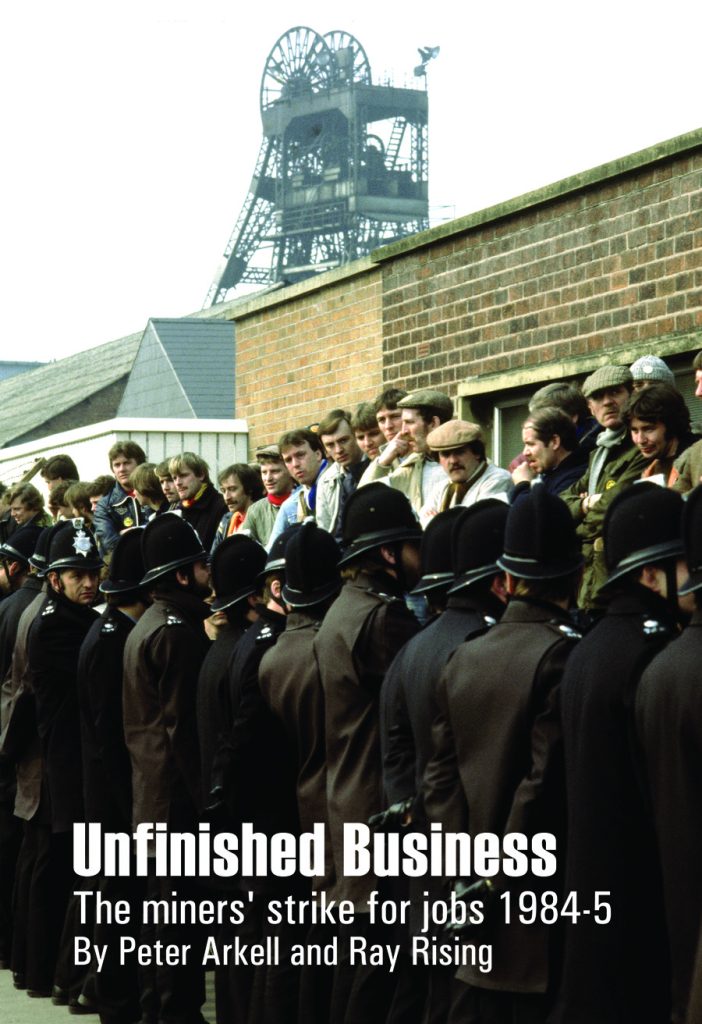
Artist and filmmaker Steve McQueen’s current show “Resistance”, at Turner Contemporary in Margate is crucial viewing and shows how photography has shaped our understanding of the changing nature of Britain over the last decades. One of the images included is a photo by Peter Arkell, a photographer whose work offers a unique record of major class conflicts of the last half century. Penny Cole asked him to reflect on why he chose to be this kind of photographer and the turning points and events that inspired him.
Right now, I can think of three transformational events in my life.
The first was reading George Orwell, when I was in my third year at university. I was unsure of myself and what to do in life, very insecure and timid. I was searching to understand the world, and the society I lived in. Orwell, like me, had been to a private school, and spent the rest of his life feeling his way towards a socialist outlook, clashing on the way with the Labour Party and the Communist Party. For those who did not support the status quo, at that time, as far as I knew, it was either the Labour Party or the Communist Party. Reading Orwell I understood that both these parties had become counter revolutionary in their different ways, and that set me on the road to find a true communist party. Certainly, I was on the long road to become a socialist.

The second turning point was joining a revolutionary Party and the third was the miners’ strike of 1984-5.
I became a photographer because the Party newspaper, the Workers Press (later News Line), needed more inputs. I could take pictures, and I had an interest in photography, starting from when I was at university. And so, when I joined the Workers Press, I trained to become a news photographer, covering all kinds of events and even, eventually, sport.
In 1972, there was an extraordinary offensive underway by the working class against the Tory government of Edward Heath – and vice versa by the government against the working class. I found myself standing outside the newly-created National Industrial Relations Court which the Tory government had set up to punish trade unions, their leaders and their members.
Also at the court was my father, a Tory albeit a liberal one. He was a lay judge and adviser to the court President, John Donaldson. He was asked to take on this role with this new court because he was a director at the BBC, with a reputation for dealing with unions and for achieving a compromise. Compromise was not on the agenda at this time, however.
As it happened, my father was on duty, when the dockers, who had been on strike to protect their jobs, were charged with illegal picketing and put on trial. The clear expectation was that they would be found guilty – in fact that was the whole purpose of this new court established by the government.
I was tasked to get a photo of the secret industrial spies, paid by the dock bosses, who had been collecting information against the dockers who worked in the Royal Docks in London. Uncertain how to handle this, I went into the courtroom to see if I could spot them, but of course no photos were allowed in court.
I waited for the lunch break but didn’t see them coming out of the main entrance. I thought, well, of course they wouldn’t want to be seen. So I went round the back of the courthouse and lay in wait behind a wall. Sure enough, I saw them coming down the street. They hadn’t caught sight of me, so I slotted in behind them and just as they were about to enter the back door of the court, I shouted as loud as I could:” Excuse me!”. They all turned round, and at that moment I clicked the camera button.

They dropped their fancy briefcases and started to chase me down the street. But I was always a fast runner and fit, so they had no chance of catching me. I got a nice picture, and it proved important because the dockers were able to see who was spying on them. It turns out these people had been pretending to be delivery drivers, while hanging around and identifying people and getting names of union organisers and members and so on. The informers got short shrift the following morning and were expelled from the docks.

That was my first taste of the reality of the class struggle. The Tory government had openly declared war on the unions and working class. It showed that there was not one British nation, but two nations, with entirely opposing interests. Those years were really a sort of uprising on the part of the trade unions. And of course, at that time the unions were extremely powerful. Their limited objective was to defend their members’ jobs and wages. But because the Tory government had decided to intervene on the side of the bosses, the only way to defend their members’ conditions was to take on the government.
There was at that time as well as the dockers strike a big miners strike and the power these two unions exerted did in fact bring down the Heath government but there was no aspiration to fundamentally change the way the economy worked or how state power functioned.
When 5 dockers were sent to prison as scapegoats and to give a lesson to the whole working class, there was a threat of a general strike to get them released. There were strikes in the big car factories; the printworkers walked out and none of the papers were published.
Hundreds of dockers were outside Pentonville prison day and night in continuous noisy protests. When one of the dockers was released he jokingly said he’d never got a wink of sleep the whole time he was in there because of the racket.

It was a bit strange for me to be outside the court, as a photographer working on behalf of the workers, and see my father strolling up, to work on the side of the bosses. We greeted each other of course, but it was awkward, like a microcosm of class struggle. And it is interesting too that there were many people in those days with similar backgrounds to my own who were turning their backs on their more privileged lives and joining the other side. I sometimes think my encounters with my father outside the court would make a good play.
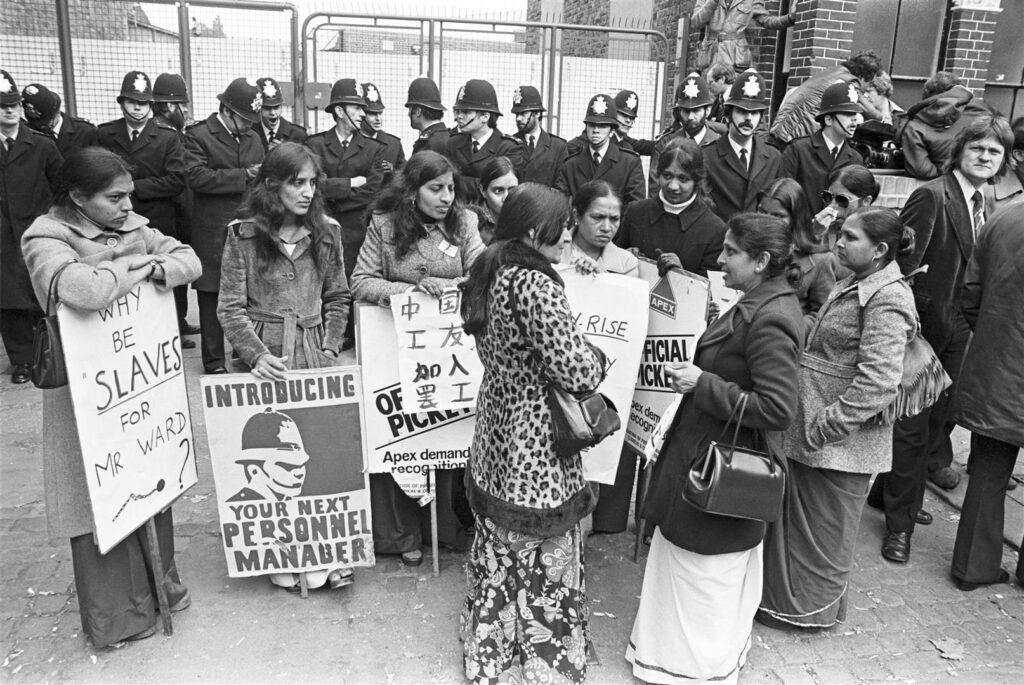
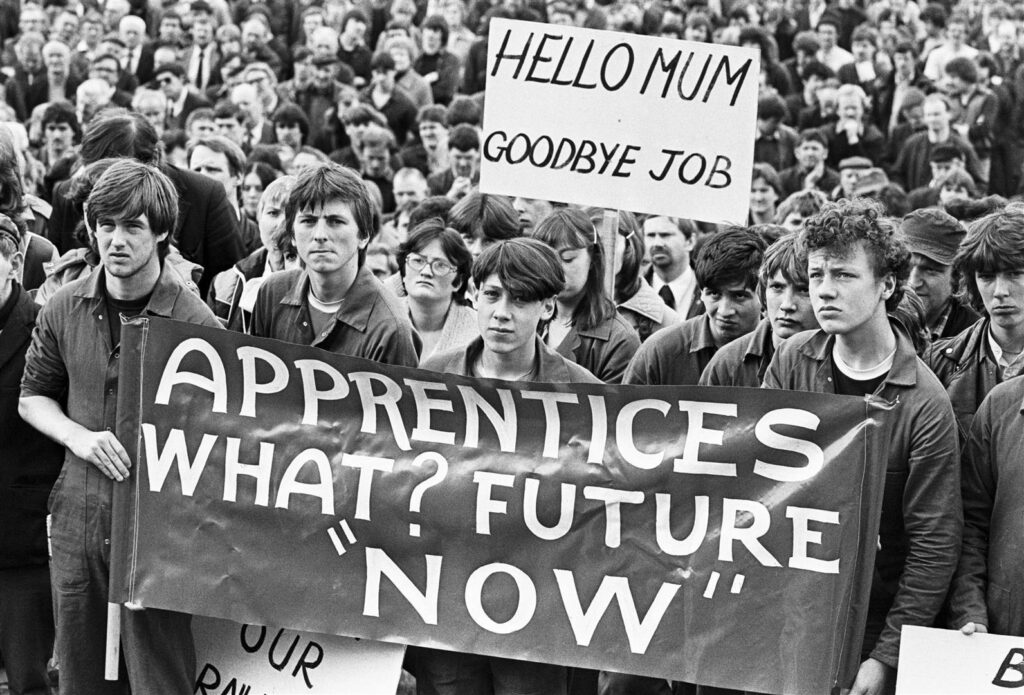
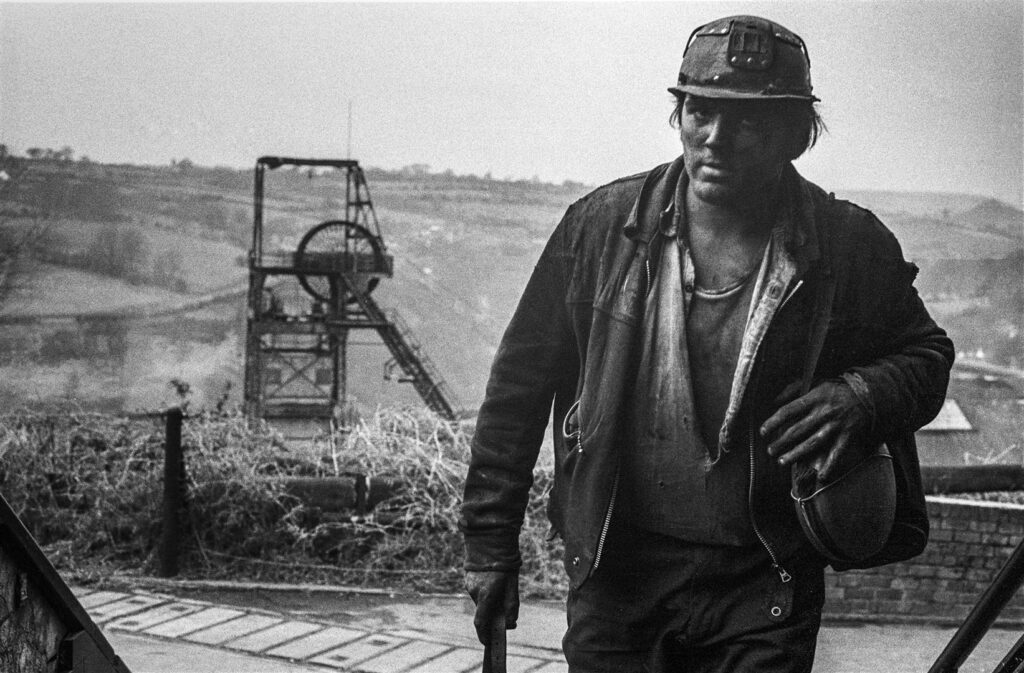
The third transformational moment in my life was the miners’ strike, where I saw the comradeship, the friendliness, the generosity of the miners. They were not fighting for money, but for their communities – to keep their way of life. It was a most extraordinary year, and I was photographing not only pickets and protests but also the daily involvement of whole communities and every family in this fight. They held out for a whole year and this experience consolidated my belief in the necessity of transforming our lives into a classless society without exploitation.

The strike was under brutal attack by the state, from the police to the secret state and of course it had no support from the trade union leaders, who were scared to challenge the government and have their money taken away under Thatcher’s anti-union laws. And of course, the Labour Party leader Neil Kinnock was totally hostile to the National Union of Mineworkers and the strike. But ordinary people from every part of the country rallied round to sustain the miners and their families.
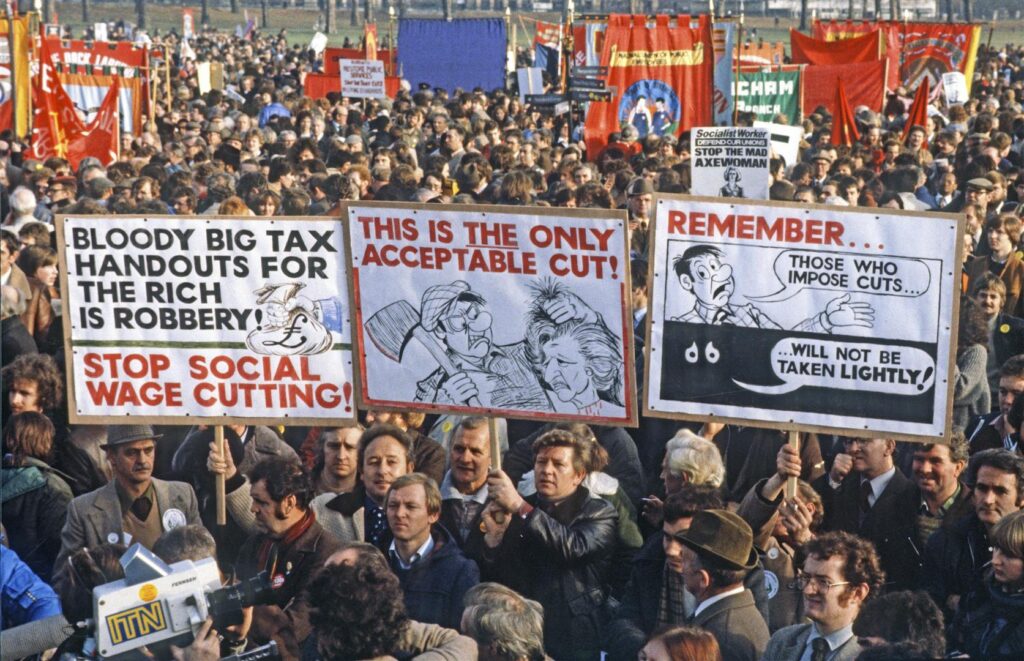
I learned from these experiences that the state has an appearance of stability, but it will always be challenged. However, the issue is what is the purpose of these challenges. It is not enough, I’ve learned, to simply to try to improve conditions within the existing state. Any gains made in that way are always subject to being pushed back and lost again – as we can see now with the destruction of the standards of living of so many people.
Someone who is active amongst former miners told me recently the shocking fact that many of them are now supporting Farage. This is not because they have overnight stopped being socialists and become fascists. It is because Reform UK can cash in on people’s despair.
So, we need to organise and come together in communities to develop a genuine alternative. The next challenge to the status quo can only succeed if it has more of an understanding on the part of people about the necessity for fundamental change. In fact, the struggle for solidarity and for real democracy is the only possible antidote to the horrors of the far right.