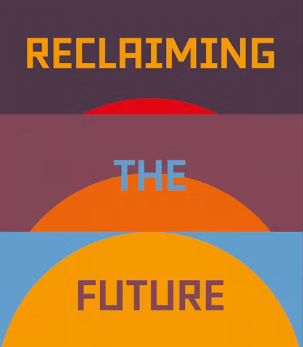
‘Our society is sick. It is unsustainable, volatile and violent, producing a devastating ecological crisis. We have built a world where corporations and business dominate and exploit us to enrich the wealthy and powerful who control the economy. Capitalists exploit people and planet.’
Simon Hannah’s sharp focus is to answer the question of questions: “How can we dismantle this dystopian nightmare and build something better?”
It’s a book in two parts. The first explains succinctly what capitalism is, how it came into existence, and how it operates, brutally extracting value from our work to enrich a tiny minority. He goes on to explain how capitalism’s internally contradictory dynamics drive the system to deepening global crises – arriving at the potential for extinction from the widening ‘metabolic rift’.
For Hannah and for those seeking fundamental system change the answer begins with a revolutionary movement that will break up the social relations of capitalist society that tie workers to employers, that protect the property rights of the super-rich – the private ownership of capital. It’ll mean taking on and overcoming the organised violence of the state. He explains with examples from history why anything less, any more tentative, less confrontational, reformist approaches lead inevitably to defeat and a return to the predominating system of exploitation. And he discusses the kind of organisation needed to bring it about.
As Hannah explains, the key changes necessary to overthrow and move beyond capitalism, are fourfold: to establish social control over investment and production, to institute a participative democracy, to abolish the social division of labour, the abolition of commodity production.
These, as with all the arguments, are unpacked for new and more experienced readers using easily understood concepts distilled from the two-century history of socialist thought and experience.
At the heart of the book is a detailed consideration of how a socialised, planned economy could emerge in the process of dismantling capitalist society, and the battles to be fought along the way. Not least will be the emergency planning and action needed to deal with the climate crisis.
The second part presents and responds to some of the arguments and debates from the capitalist camp and elsewhere that frequently confront advocates of a planned economy as the answer to the unfolding global apocalypse.
There’s the ‘human nature’ argument that insists – against all the evidence – that all human beings are selfish and individualist. Then there’s the argument that the economy is far too complex to be subject to planning on a big scale, even despite the promising achievements of big data and AI of recent years and their use by corporations in their own, if limited, market oriented, long-term planning.
Hannah goes on to examine and explain what went so badly wrong in the Soviet Union, so often, wrongly, used as the historic example for the impossibility of socialist planning. Then there are the arguments for and against proposals for socialism-lite, ideas that are rooted in socialist thought, but fall short of a fully implemented socialist system, like Universal Basic Income, so-called market socialism, workers control and co-operatives operating within or alongside capitalist structures.
In closing there’s a brief consideration of the advantages and problems with the proposals of the Green New Deal and for degrowth, and the beguiling prospect of ending the commodification of everything offered by Hannah’s preferred ecosocialism.
The contemporary political and economic context makes Hannah’s arguments even more pressing in terms of demanding action. The post-war capitalist state form of liberal democracy has broken down, giving way to right-wing, authoritarian regimes in several European nations as well as the US. In the UK, the early failure of the Starmer government is hastening the break-up of the two-party parliamentary system.
Alongside this crisis of the state, the global economy remains essentially debt-driven while driving inequality to new levels and exacerbating the climate crisis. In other words, the social system – aka capitalism – is at an historic turning point. Under these conditions, it is important to discuss the concrete form a transition beyond capitalism – in its political and economic appearance – can take. These should include the potential of popular assemblies in the development of a dual power challenge to the present state.
Reclaiming the Future, A Beginner’s Guide to Planning the Economy
Simon Hannah
Foreword by John McDonnell
Published By Pluto Press
ISBN: 9780745350202
A very good review:
“He explains with examples from history why anything less (than overcoming the organised violence of the state), any more tentative, less confrontational, reformist approaches lead inevitably to defeat and a return to the predominating system of exploitation. And he discusses the kind of organisation needed to bring it about.”
Examples from history in the UK include The General Strike of 1926 and the Miners strike of 1984, both serious (largely unconscious) challenges to the state, which both resulted in a return to the “predominating system of exploitation”. Both events nearly took us into new situations where the key issue of revolutionary understanding and action could be learned quickly by the many. Next time….. I`d better buy the book.