The first food bank in the UK was launched in Salisbury in 2000 by Paddy and Carol Henderson after being contacted by a desperate mother who was having to send her children to bed hungry because she couldn’t afford to provide sufficient food. Little did they suspect how their numbers would mushroom..
They had returned from Bulgaria to fund raise for a project they were involved in there helping to feed homeless children who were living, or rather surviving, in the main railway station in Sofia, under the auspices of the UN food aid programme.
They had not thought that back in prosperous Britain they would become engaged in a somewhat similar programme. Becoming aware of a rising need for food aid right around the country and with a legacy left by Carol’s mother Betty Trussell, the trust bearing her name was born.
That was then. Two decades later and there are a further 1,400 Trussell Trust and over 1,1700 independent food banks, with the total rising all the time. In March, it was estimated that 2.1 million people in the UK lived in household which had used a food bank in the previous 12 months.
All are necessary because of the abdication by the state of its duty to provide the means by which everybody should be able to have at least the basic necessities of sufficient nourishment, shelter and freedom from the fear of debt, penury and insecurity.
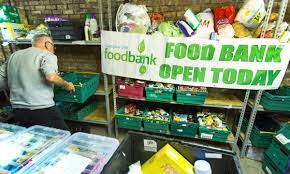
This dereliction and the imposition of cuts to welfare and other punitive measures imposed in order to keep the neoliberal capitalist system running happily along, means that charities such as food banks and soup kitchens are all that stand between thousands of people right on the brink from tumbling into extreme poverty.
People in work, but just a pay cheque away from hunger, privation and bare cupboards, as well as those without paid employment, asylum seekers waiting sometimes for years for a judgement on their cases, form the bulk of those relying on food banks.
But there are other categories also, people on long term sickness benefits now being increasingly pressurised into seeking work or having their benefits removed. Those living on the streets often with addiction problems and mental health issues also come to the doors of our food banks and the need is increasing.
The food banks are run in the main by volunteers though there a number also of paid food bank managers and other personnel who over see the running of the Trust.
This is charity which is always top down and with all the connotations of the ‘deserving’ versus the ‘undeserving’ poor and nobody wants to have to rely on charity. The distrust of those who do have to do so by the government and local authorities is self-evident. They reject giving people direct aid in the form of cash rather than vouchers so they can buy what they need themselves including fresh fruit and vegetables which food banks by and large cannot provide owing to their perishability.

But food banks themselves are questioning their own existence. Emma Revie, the chief executive of the Trussell Trust, has described them as ‘a sticking plaster’ and aspires to see the end of the need for them but that need appears to be growing particularly in the wake of the Covid pandemic, during which food banks kept going with all the necessary precautions to keep people fed.
The Trussell Trust and some independents as well, also stock non food items so that nobody needs to go without detergents, toothpaste, soap, feminine hygiene articles, nappies and so on that people need in order to live with dignity as well as being able to put food on the table.
Up to very recently food banks have been able to rely for the most part on the generosity of the British public who have kept those bins seen in many supermarkets full to overflowing, only buying in the non-food items described although sometimes they too find their way into the big bins.
In the past year however these donations have been falling, not that people are less generous but with the rise in the cost of living, budgets are tighter leaving food bank staff needing to dig into the resources of the Trussell Trust to a greater extent.
In conclusion we need to organise to end this vile system that rewards greed and penalises need and organise around a system of mutual aid and not charity. Mutual aid empowers while charity disempowers. Mutual aid also encourages solidarity and community while charity, necessary though as it continues to be, tends towards dependency and reliance on the kindness of others which can be fickle.
For the foreseeable future, however, food banks will have to continue to do what they need to do and those bins will continue to be a familiar sight in our supermarkets.
Why can’t people in need just walk into a foodbank to obtain urgently needed help? I was outraged to learn that they have to suffer the further hassle and humiliation of getting vetted and given a special bit of paper before they can get help. Can’t the blighting bureaucrats just keep out of this process?
On the button. George Orwell, way back in the 1930s, wrote about the misery of chronic poverty, unemployment, homelessness, and hopelessness felt by the “down and outs” in London and Paris. They were forced to accept charity to survive, but despised the Salvation Army and others who provided it. The modern food banks are somewhat different–they don`t force people to attend religious services and readings for a start–and are necessary. But alongside them one can hope that communities will set up Mutual Aid groups that will take responsibility for looking after each other without the top-down implications of charity, that are anti-hierarchical, and that look for political solutions for change. These kind of groups could morph into or become part of local popular assemblies for change.