
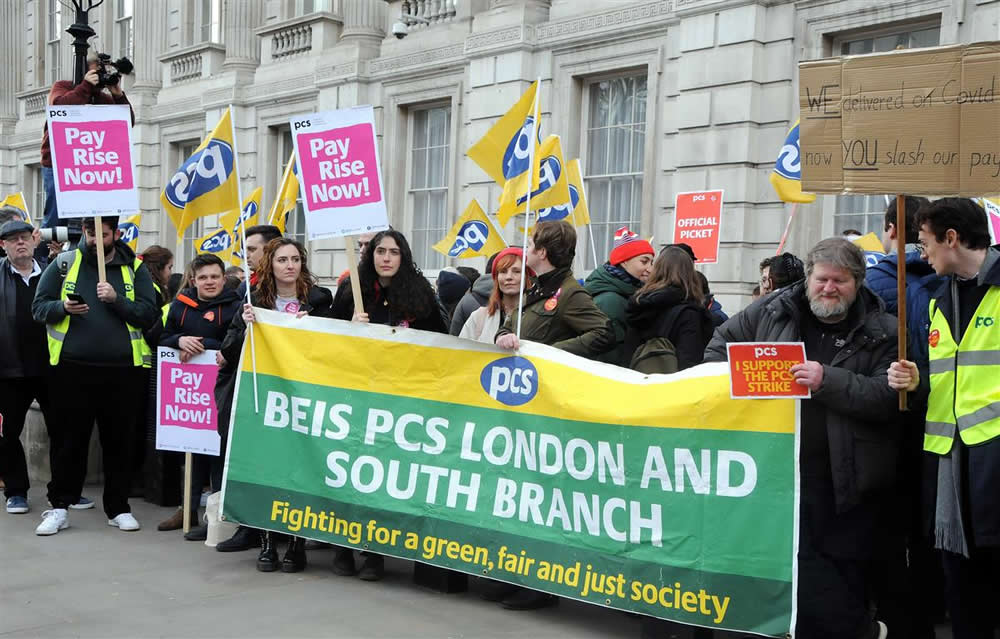
Whitehall was taken over by teachers, civil servants, university staff, train drivers, border force staff and many others on February 1 as over 500,000 trade unionists took action in support of pay claims and against understaffing and worsening conditions.
Teachers are also striking in two parts of Scotland – Clackmannanshire and Aberdeen – as part of rolling industrial action. In London, marchers, who were joined by former Labour leader Jeremy Corbyn, staged a rally addressed by union leaders at the junction of Whitehall with Downing Street
About 200,000 teachers in the National Education Union and 100,000 civil servants joined the strike day. The University and College Union said it had been overwhelmed by the support of thousands of students on their picket lines across the country. Some 23,000 schools were affected by the walk-outs.

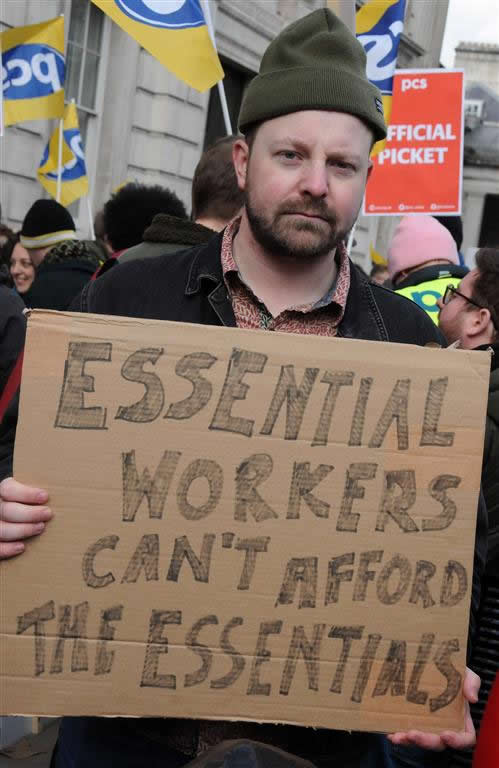
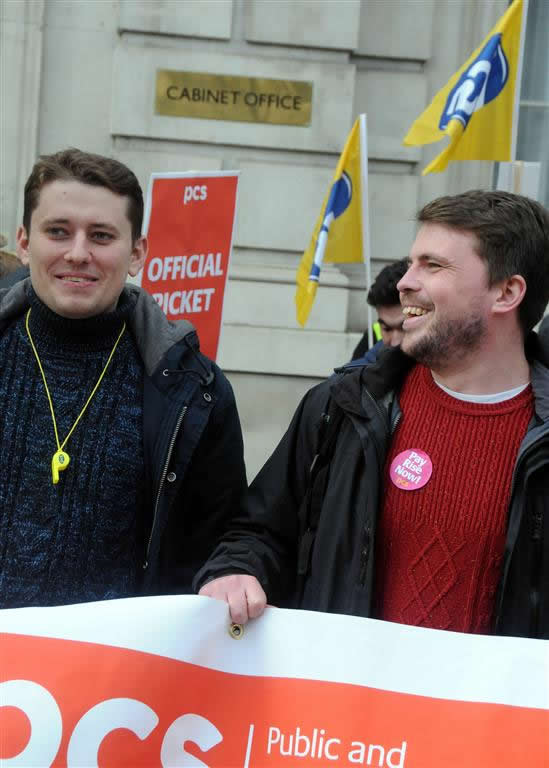

The accelerating strike wave in the public services is being driven by the Tory government’s refusal to negotiate wage increases that are in line with inflation. They are offering around 4-5% which amounts to a pay cut considering the inflation figure of 11%.
Mick Lynch, the RMT rail union general secretary, told the London rally: “We are the working class,and we are back…we are here and we are demanding change, we refuse to be bought, and we are going to win for our people on our terms.”
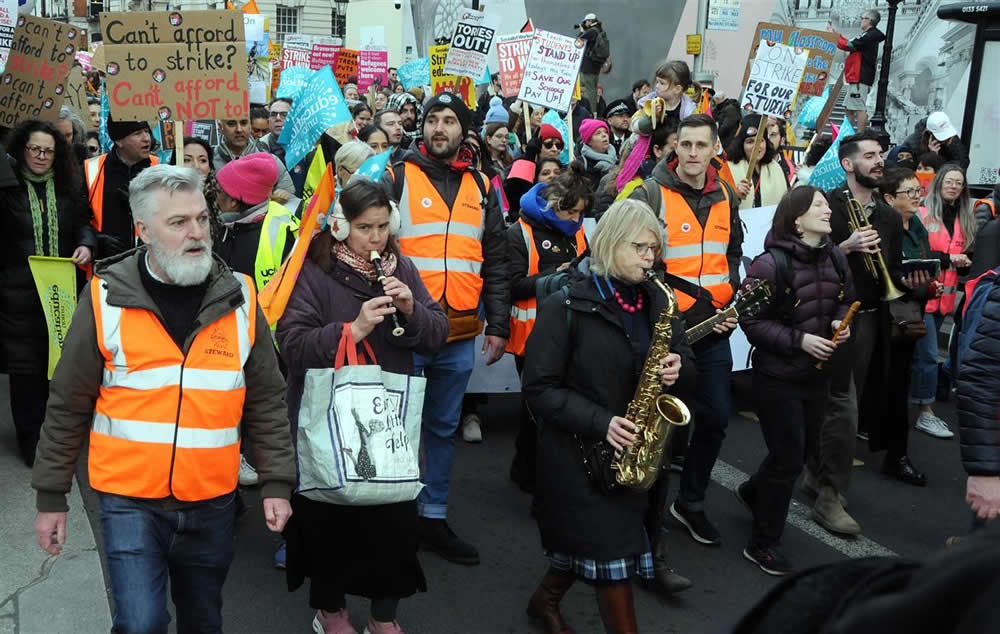
The general secretary of the PCS union, Mark Serwotka, told the rally that 40,000 members of his union had been forced to turn to food banks to get enough to eat for themselves and their families.
The leaders of the NEU, Mary Bousted and Kevin Courtney, described the strike as a “huge statement from a determined membership”. They urged the education secretary, Gillian Keegan, to produce “concrete and meaningful proposals” in time to halt the next strike planned for February 28.
They stated: “It is disappointing that the government prefers to talk about yet more draconian anti-strike legislation, rather than work with us to address the causes of strike action.”
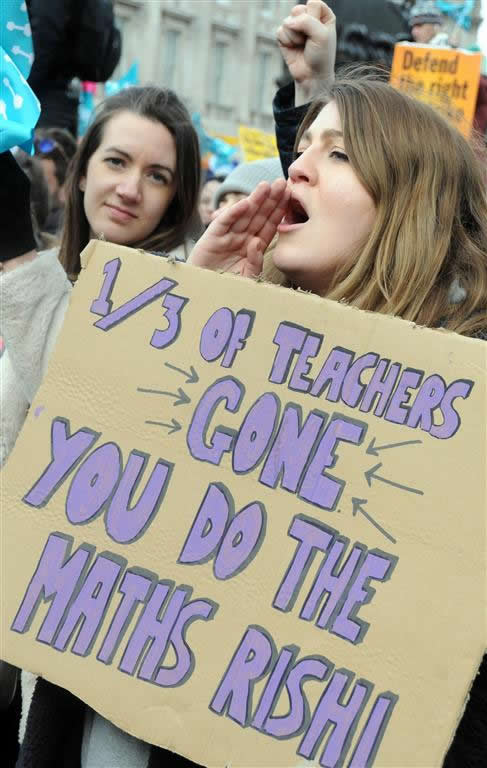
Teachers have lost 23% of their pay in real-terms since 2010, and support staff 27% over the same period. The average 5% pay rise for teachers this year is some 7% behind inflation. In the midst of a cost of living crisis, that is an unsustainable situation.
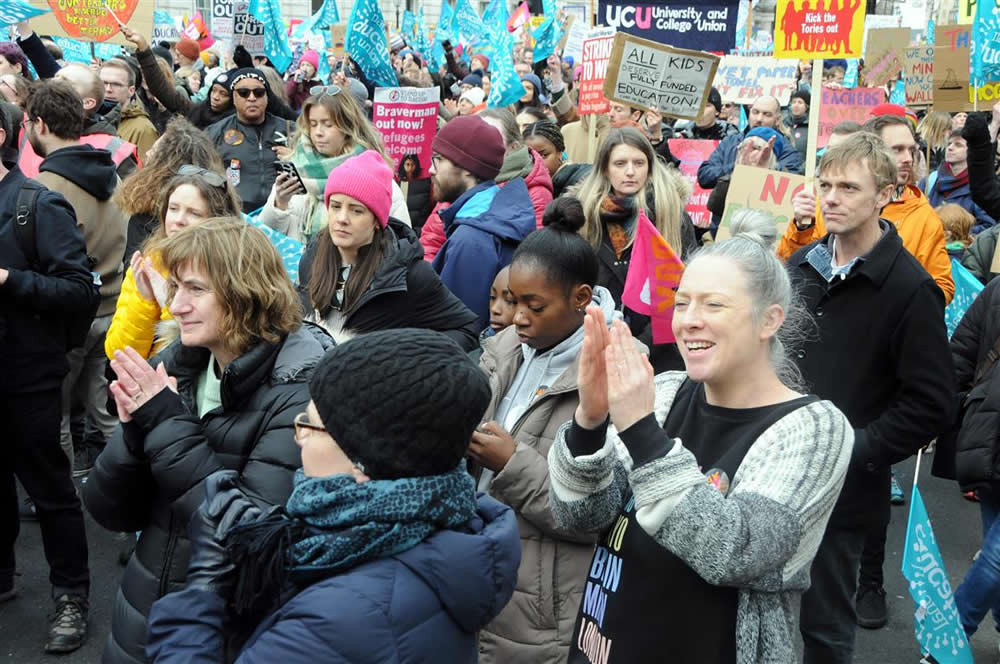
The NEU leaders said that teachers were leaving the profession “in droves”. A third of newly-qualified teachers had quit within five years of starting out.
“This is a scandalous waste of talent and taxpayers’ money, yet the government seems unbothered about the conditions they are allowing schools and colleges to slide into. The reasons for the recruitment and retention crisis are not a mystery.”
Next week the focus for the strikes will shift to the health and ambulance workers in the NHS. The walkout will affect London, Yorkshire, the South West, North East and North West.
Unison also says its members at the Environment Agency will join members of the Prospect union in striking for 12 hours next Wednesday. The action will include workers in flood forecasting and pollution control.
Firefighters have also voted overwhelmingly for strike action in the most powerful wave of industrial action for many decades.
Report & photos: Peter Arkell