The wall-to-wall, deferential coverage of the transition of monarchy following the death of Elizabeth II has a wider significance than reporting on the death of a queen who was on the throne for 70 years. Relentless, sycophantic broadcasting and page upon page in the mainstream media is in practice a systematic state-led reinforcement of the status quo.
The unmistakeable message is: This is how things are and always will be, not just in terms of the head of state but more importantly about the class-based structure of our society and our democratic achievements, all of which are under serious strain.
This is happening at a critical moment for the ruling political class (which clearly includes the Labour leadership as well as the Tories). Contempt for mainstream parties is widespread and the Parliamentary system is well discredited following the antics of Boris Johnson.
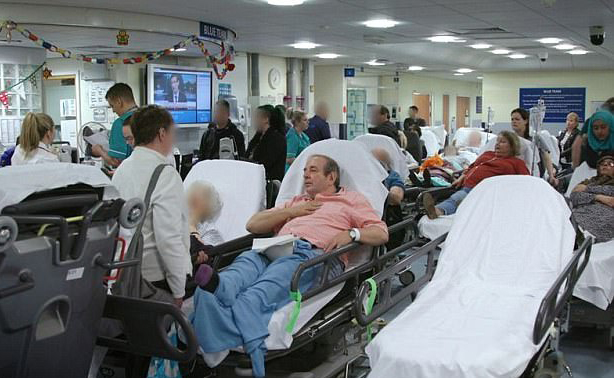
Standards of living continue to plummet, falling faster than at any time over the last 100 years, according to the TUC. Inflation is out of control, the NHS collapsing around our ears and public services crumbling. Into this maelstrom comes a right-wing regime led by the empty-headed Liz Truss and ministers who are about to launch market-led experiments on us all, including the lifting of the ban on fracking.
The government is already coughing up £100 billion a year in interest repayments on the national debt – more than the education budget. Borrowing another £150 billion to hold down energy prices through a subsidy to the supply corporations will add to this burden. One inevitable consequence is wholesale public spending cuts on services still reeling from austerity policies.
So, as uncertainty builds around the future direction of the UK, shown in popular support for the transport and postal cost-of-living/jobs strikes, the opportunity to reinforce a type of constitutional stability more apparent than real was welcomed by our rulers.
A complex process with its roots in feudal rule was set in motion. Privy Councils, Accession Councils, Proclamations, a formal address by Charles III to Parliament – all the paraphernalia of a carefully-orchestrated and planned transition was shown live on TV. The message was clear. The UK has a constitution – uncodified so no one is clear what it signifies – and this is immutable and we would have chaos without it.
It brought to mind the famous statement by Antonio Gramsci, the Italian revolutionary who died in prison where he was jailed by Mussolini, when he wrote that
The state is ‘the entire complex of practical and theoretical activities with which the ruling class not only justifies and maintains its dominance but manages to win the active consent over whom it rules’. [emphasis added]
He developed the concept of hegemony, or domination, to show how the ruling classes use ideology and their distorted, one-sided version of our common history to sustain themselves in power. That’s what we are witnessing since the death of the monarch.
To this our answer is counter-hegemony, in theory and practice. The pomp and circumstance will pass and the mystique of monarchy will not fare so well in the hands of the tetchy and arrogant Charles.
Reality will return with a vengeance sooner rather than later. We face a winter like no other since the early post-1945 years and a government that is strong on dogma but hasn’t got a clue what to do.
This is a crisis of how we are governed, about state power, about how we lack the wherewithal to create an equitable society in place of profit-driven capitalism and a democracy that looks goods on paper but offers little (look at the arrests of those protesting against the new monarch).
Counter-hegemony has to embrace going beyond the present constitution of 1688-9 which obscures where real economic and political power lies under the guise of representation, which is what we should be satisfied with.
The hold over people’s thinking is increasingly fragile. Challenges are building – Black Lives Matter, climate campaigns, non-growth economic models, community actions and widespread strikes are just some aspects of resistance.
Let’s campaign for new forms of truly democratic rule like Citizens’ Assemblies and conventions on the constitution which would draw up a plan of action to transform the present state and give people direct access to power for the first time.