The next General Election campaign is well under way, although the date for holding the poll is as yet undecided. Both major parties are manoeuvring for position on various issues. One consequence is “convergence”, or the coming together of key Tory and Labour policies. Which begs the question about who to vote for when the election actually takes place.
It was once a given that after a long period of destructive right-wing rule at Westminster, you would urge people to “vote Labour to get the Tories out”. That made sense when there was a clear divide between the parties. But what about now, in the wake of “convergence”? Would electing Keir Starmer’s party actually mean “getting the Tories out” and make a difference?
Of course, the parties are not identical. The Tories are unashamedly a party intimately connected with big business and the ruling classes and go back to the 1840s. Labour was founded by the trade unions in 1900. So, theoretically, they should represent different class interests. But British politics is not that straightforward.
The class pressure from dominant capitalist interests has always exerted considerable influence inside Labour, especially at times of crisis. Infamously, for example, Ramsay MacDonald led a large section of his party into a national government with the Tories in the wake of the financial turmoil that followed the Wall Street crash of 1929. https://www.theguardian.com/politics/2017/aug/25/national-government-formed-ramsay-macdonald-1931
Another Labour prime minister, James Callaghan, agreed to an IMF bail-out in 1976 in exchange for swingeing public spending cuts.
The Blair/Brown governments of 1997-2010 took the initiative and openly facilitated the now dominant neo-liberal capitalist model. Investment banks were further deregulated, the Bank of England taken out of government control, markets introduced into the NHS, education and universities and swathes of existing public services turned over to private finance. The state subsidised low wages with tax credits and reduced income and corporation tax levels.
After the global financial meltdown of 2008, the Tories won and introduced austerity cuts which have wrecked whole areas of public services. The UK economy, like the rest of the capitalist world, has not recovered from the crash. Growth is low to non-existent and inflation rampant, partly as the result of the relentless printing of money to try and stimulate consumer purchases.
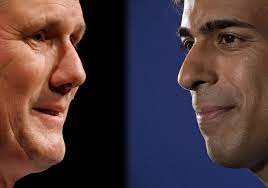
Into this maelstrom, comes Sir Keir Starmer who replaced Jeremy Corbyn, the party’s only left-wing leader elected (twice) by the membership. Starmer promised much to secure the leadership but has since abandoned all of those pledges. In March, George Eaton, senior editor of the left-of-centre New Statesman, wrote: “British politics will soon enter election mode. All the talk will be of ‘big choices’, ‘forks in the road’ and ‘dividing lines’. But as the rhetoric escalates, a more banal reality is revealing itself: convergence between the Conservatives and Labour.”
After explaining that the Tories and Labour both endorsed the same tax and spend policy, Eaton added: “Both parties are committed to making Brexit ‘work’ rather than reversing or radicalising it. Both favour higher defence spending, Trident retention and are almost indistinguishable on Ukraine policy. Both support tougher controls on illegal migration and – for economic purposes – loose controls on legal migration. Both are inclined towards authoritarianism on crime and civil liberties.”
Inside Labour, the purge of the left continues apace. Corbyn remains suspended as a member, meaning he can only defend his seat standing as an independent. Diane Abbott, Corbyn’s close colleague, also remains suspended pending an inquiry that shows no sign of taking place, which could mean she can’t stand as a Labour candidate either.
Jamie Driscoll, current mayor of North of the Tyne, was blocked from standing as the party’s candidate for the new North East regional authority. The excuse – he had interviewed the renowned film maker Ken Loach who himself had been expelled by Starmer. Neil Lawson, director of the democracy campaign group Compass, is being investigated for a tweet several years old which urged people to unite to prevent a Tory winning a by-election. His 44 years of membership is in danger, while many rank-and-file activists have either been thrown out on the flimsiest grounds or have left in despair.
Enter Sharon Graham, the new general secretary of the Unite union who has turned her organisation into an effective fighting force once more. Her union is using some of the money earmarked for Labour to launch grassroots campaigns in constituencies across the UK demanding more radical policies on energy, steel and green jobs.
Her efforts are certain to fall on deaf ears. Starmer is committed to a right-of-centre outlook to woo former Tory voters who have had enough of the Johnson/Sunak chaos. The question remains: should you vote for this? Is getting the Tories out enough? Wouldn’t we do better putting our efforts into creating a real democracy through popular assemblies in place of our corrupt political system? What do you think?
The eternal question. I favour voting Labour, very reluctantly. Once in power, the unions, the common people, will be better able to see what the Labour leaders really represent. They can put demands on the government, as the difference between what the labour leaders are actually doing and what they should be doing becomes obvious. The conditions for forming a new kind of movement will open up–and not only for the left. Reformist governments the world over have always stepped in to save the status quo ie the capitalist system, while pretending to be on the side of the people. Starmer has abandoned almost all the promises he made while campaigning to get elected as leader. The last thing he will do is to lead a government that challenges the real power in the UK. There are no more reforms of this system to be had…the cupboard is bare. Its either a regime of repression or the forming of a new movement to change the system itself. With a huge vote against the Tories, the task of forming a new movement is made easier. As an individual, it is tempting to vote for the Green Party, but what could that achieve? It would split the vote and in any case the Green Party is a reformist party…it doesn`t stand for ending the power of the corporations and the banks. The campaign for a real democracy and popular assemblies must carry on whatever government is in power.
In a marginal seat where the Tories might win vote for the party most likely to beat them, Labour or LibDem. In a seat where the Tories stand no chance vote Green.