Andy Burnham, who has become the UK’s seventh prime minister in a decade after a ‘coronation’ by his party’s MPs that prevented any sort of election, either by Labour members or voters generally, believes that there is a case for creating a written constitution for the UK.
The present constitution – about how state institutions like government and the judiciary relate to each other and how they rule over people – is a scattered collection of conventions, legislation and decision-making powers transferred from the monarchy by Parliament in the late 17th century.
There are plenty of remnants of the previous arrangements. For example, the armed forces and the police both take an oath of allegiance to the crown, as do ministers when they assume office as part of His Majesty’s Government; the unelected House of Lords can hold up legislation; a PM is appointed by the monarch, but this state office exists by convention alone.
Because the UK’s constitution, unlike the overwhelming majority of other countries, is uncodified, it’s extremely difficult (and expensive) to mount a legal challenge to the state’s decisions and power. There is no constitutional court in the UK, for instance.
Acts of parliament carry absolute authority that are outside the scope of judicial intervention. That is how the constitution changes. The right to protest and demonstrate is curtailed by new laws; militant actions are characterised as ‘terrorism’ by a minister, using powers under existing laws; ancient rights to a jury trial are being abolished by an act of parliament.

The decision to reject local objections and the decision of Tower Hamlets to block an unwanted AI data Centre in Brick Lane, in East London, was overturned by Angela Rayner, back in the cabinet as secretary of state for housing. But before you get carried away, none of this is what exercises Burnham and his support for a written constitution.
Burnham has embraced his predecessor Keir Starmer’s support for the promise that AI will transform a stagnant economy, despite data centres’ immense use of power and water, while employing just a handful, at most, of workers. It’s business as usual, with the environment coming second to the promise of elusive ‘growth’ made by global tech corporations.
Burnham puts down the issue of entrenched inequality in the UK, in part to a centralised state that somehow simply ‘evolved’ from a ‘feudal state’. So, it follows that his ‘solution’ is to devolve some central government powers to regional mayors and give more control to other nations of the UK – Scotland, Wales and Northern Ireland which already have their own parliaments or assemblies, themselves created by Westminster.
Like all other Labour PMs, who love nothing more than wielding existing state power, Burnham, has nothing to say about the class nature of the present state itself. For his information, the modern state resulted from a 17th century civil war, the execution of a king and the toppling of the Stuarts by a Parliament in 1688 in what is euphemistically known as the ‘Glorious Revolution’.
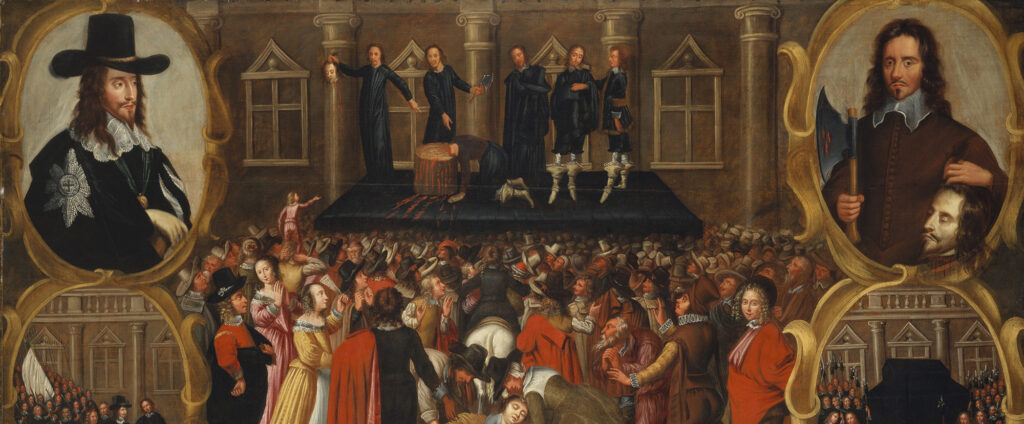
A capitalist type of state then established its hold over the economy and society by the mid-19th century, facing down mass resistance by the Chartist movement and others who fought for access to power. The state went on to create and to manage the biggest colonial empire the world had ever seen.
Then as now the state enforces private ownership of production and the exploitation of workers for profit. In the neoliberal period, it facilitated inward investment, outsourcing and privatisation. The result is a low-wage economy, declining public services and a sharp growth in inequality.
From empire building to managing capitalism, the existing state has itself ‘evolved’ or rather changed in response to new conditions. Once able to have influence over the national economy, the state is a willing servant of global economic and financial forces, unable and unwilling to direct resources towards local and regional health and care needs or take action on climate change.
The state now serves one master – the corporations, hedge funds, landowners and financial markets that have driven the inequality Burnham refers to. The social compromise that was the post-war ‘consensus’ long went out of the Westminster window. The crisis of neoliberalism and the beginnings of a trade war add to the sense of an end point for parliamentary democracy.
Merely devolving state power will not alter this fact. Transferring actual political and economic power to communities represented in a new, truly democratic system, with popular assemblies replacing the present arrangements, is now a practical solution. So, while Burnham muses on how to rearrange the deckchairs of the state, we should demand a people’s convention on a new constitution rather than simply bringing the present one together.
Such a convention would be asked to consider a truly democratic alternative to a political system that has lost the support of millions of voters, thus opening the door to far-right parties who aspire to replace a failing system with outright authoritarian, racist power. The convention would have to consider how to enshrine in a constitution an economy that harnesses the immense power of new technology to meet society’s needs.
Achieving that in practice will be challenging. Tim Bale, a professor of politics at Queen Mary University of London, said introducing a written constitution would be a “huge departure” for the UK. Historically, most countries did it “in the wake of a revolution or a war that has removed or delegitimised the former regime”. Well, the regime we live under is already delegitimised. Time to move history on and establish the power of the people, which, after all, is what democracy is supposed to be about.