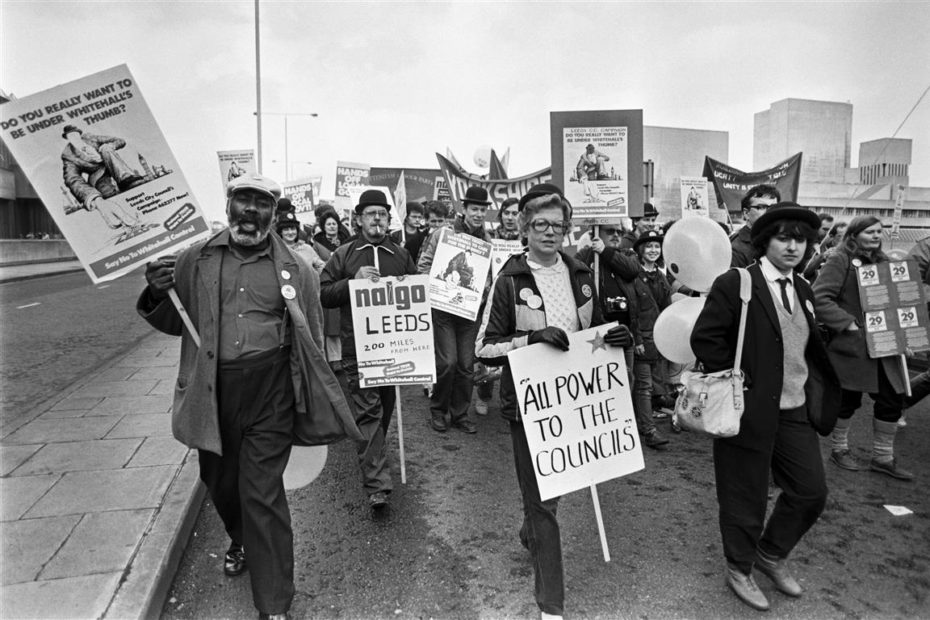
Forty years ago this spring, a number of Labour-led councils confronted the Thatcher government over spending cuts. Their resistance stands in complete contrast to councils today as they prepare to implement yet another round of brutal attacks on vital services.
Back to 1984, the Tory government had a number of reasons to launch attacks on key Labour councils. For Thatcher, the Greater London Council, Lambeth and Liverpool were viewed, rightly, as centres of opposition to their policies.
The idea behind capping how far rates could increase combined with reduced government grants, was to force councils to cut their budgets. Prior to that, rather than cut essential services, councils had raised rates well above inflation to make up the money lost in grants.
At one stage, local authorities in Lambeth, Liverpool, Islington, Greenwich, regional metropolitan boroughs like Merseyside and the GLC led by Ken Livingstone came together and declared they would not make cuts budgets and defy rate-capping.
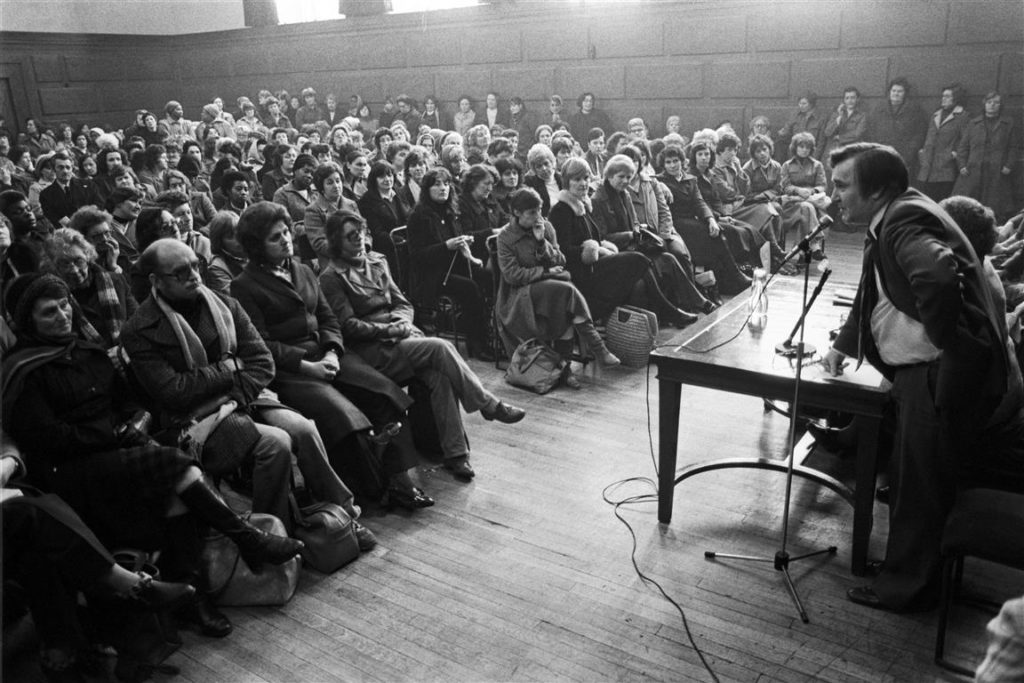
Photo: Peter Arkell
In time, state-run district auditors threatened legal action and most councils retreated. But Lambeth and Liverpool held the line. Led by Ted Knight, a veteran of many battles in and outside the Labour Party, Lambeth mobilised the community against Tory cuts. Large public meetings were held, demonstrations organised and a special newspaper highlighted vital services under threat. The trade unions backed the council leadership at mass meetings.
The borough was a typical inner-city area, with pockets of wealth alongside real poverty in places like Brixton.
Three years earlier, Knight had refused to condemn local youth who had rioted after the police had imposed a blanket stop and search operation in Brixton aimed at the African-Caribbean community.
In April 1981, the Metropolitan Police began Operation Swamp 81, a plainclothes operation to reduce crime (named after Thatcher’s 1978 assertion that the UK “might be rather swamped by people of a different culture”).
Uniformed patrols were increased in the area. Officers from other Metropolitan police districts and the notorious Special Patrol Group were dispatched into Brixton, and within five days, 943 people were stopped and searched, with 82 arrested, through the use of what was known as the “Sus law.” Brixton was followed by riots in Toxteth, Liverpool, and other cities that summer.
An inquiry by senior judge Lord Scarman into the Brixton riots concluded that “complex political, social and economic factors” created a “disposition towards violent protest”. His report highlighted issues of inner city decline. “Urgent action” was needed to prevent racial disadvantage becoming an “endemic, ineradicable disease threatening the very survival of our society”.
As the rate-capping battles came to a head in the spring of 1984, miners went on strike against pit closures. Labour leader Neil Kinnock refused to back either struggle, actually condemning the miners for walking out in defiance of the anti-union laws.
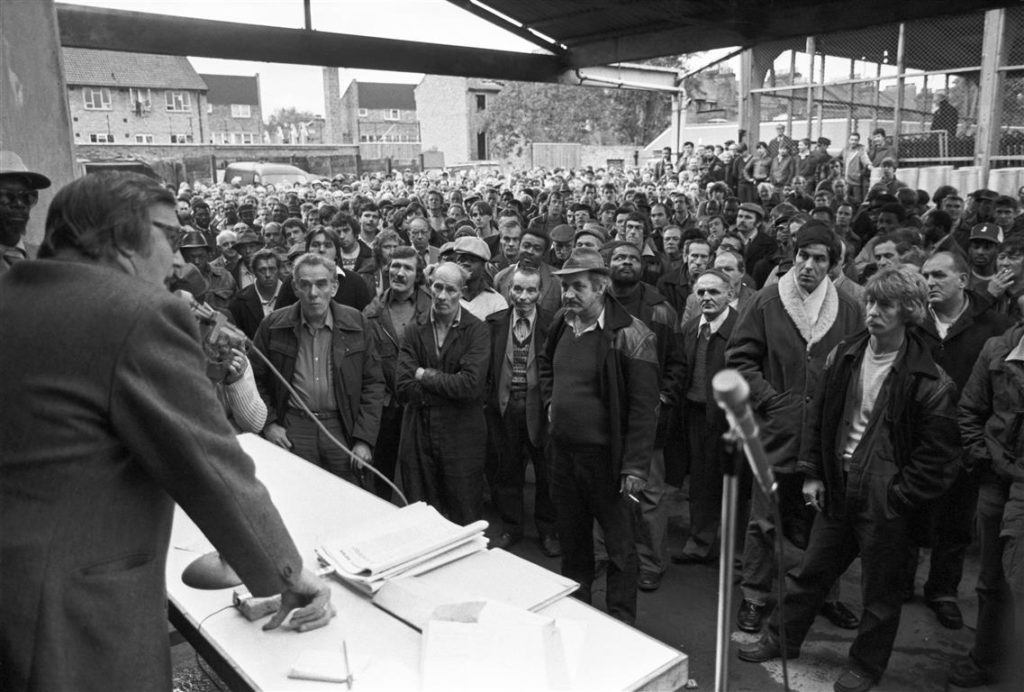
Photo: Peter Arkell
But Lambeth Council’s Labour group stood firm. They voted not to make a budget for 1984-85 until the government provided more funding. Eventually, the government found extra cash and the budget was finally agreed.
However, the state took its revenge. The district auditor ruled that the delay in making the budget had resulted in lost revenue. The councillors were held personally liable for £250,000.
The labour movement rallied round to raise the money. But there was a sting in the tail. Councillors had been accused of “wilful misconduct”, which carried an automatic ban from being a councillor.
When the courts upheld the auditor’s ruling, Knight and his fellow councillors were removed and barred from contesting the resulting borough election and any other public office for five years.
Fast forward 40 years and Labour councils don’t even offer verbal resistance to another round of cuts let alone defiance. Since the austerity of 2010, they have simply carried out the diktat of the Tories. As a result, councils in England and Wales are now £5 billion worse off while council tax has soared.
A recent survey reveals that since 2010, net spending per person on cultural services has been cut by 43% in real terms, roads and transport by 40% and housing by 35%.
Yet there is no record of any group of councillors saying that the further cuts now on their way will make life intolerable for many communities who depend on local services. They simply wring their hands – and then announce the cuts.
They could, for example, raise council tax higher than the 4.9% limit this year imposed by Whitehall – except they would have to face a referendum to do so. That would be a great opportunity to explain and campaign. No Labour council has even threatened to go down the referendum road.
In York it’s £40 million off the budget, with library closures imminent. In nearby Leeds, it’s £64m and over 300 jobs. Birmingham, the largest local authority in Europe, went bankrupt rather than defy the Tories. Government officials then took over and are preparing substantial cuts while authorising an eye-watering 10% council tax rise so the government can blame the council.
As Starmer is committed to Tory spending levels, there will be no salvation from that direction were Labour to win this year’s general election. The cuts will continue, services like social care will continue their collapse while poverty and inequality grow

Photo: Peter Arkell
This is a democracy-free zone. Elected councils have no independent powers which they can use to prioritise the needs of their communities. They are simply the agents of the central Westminster state.
Locally, voters have little or no democratic voice and this is reflected in extremely low turnouts at council elections. The new combined authorities like the one in the North East, are even less democratic, with their presidential system of decision-making.
Lambeth’s legacy is in the mobilisation of the community, with rallies, marches and the support of the trade unions. Ultimately, this the only way to go. The present capitalist state at national and local level does not and cannot serve the people.
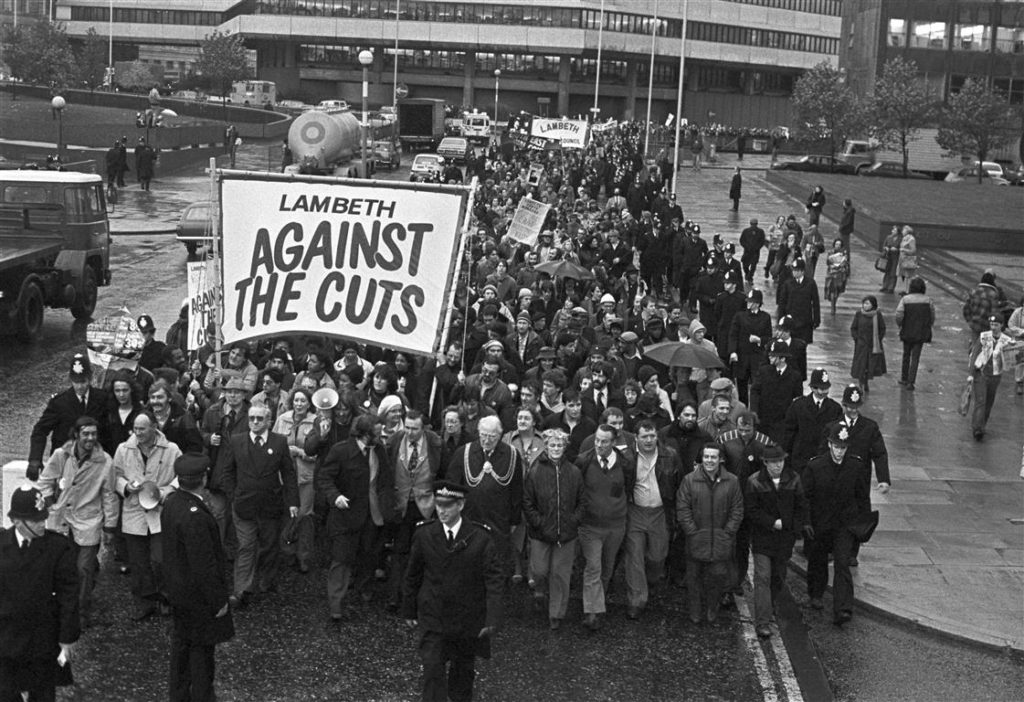
Photo: Peter Arkell
The UK is a wealthy country. It’s just that control over resources is in the wrong hands, used to create new opportunities for the corporate sector. The UK Government spends £251.5 billion per year on outsourcing and contracting, nearly 14% of the total value of goods and services or GDP.
A real democracy would see representative popular assemblies with power over resources and decision-making in control as a part of a transformed political and economic system. One thing is certain – the present road offers no future to the vast majority. It’s time to make capitalism history.