
The system crashed – reboot with real democracy
The aftermath of the fire at Grenfell Tower has shown that the state is no longer fit for purpose. It cannot help its citizens. It… Read More »The system crashed – reboot with real democracy
The aftermath of the fire at Grenfell Tower has shown that the state is no longer fit for purpose. It cannot help its citizens. It… Read More »The system crashed – reboot with real democracy

The unpredictable political and constitutional crisis sweeping the UK is a sure sign that we have to remake our democracy from top to bottom. Building… Read More »Remake democracy to end Toryism

Tomorrow we face a crisis election The Tories want a massive majority to impose a Brexit fashioned to suit the corporations and the financial markets… Read More »Stop May’s plan for rule by decree by voting Corbyn
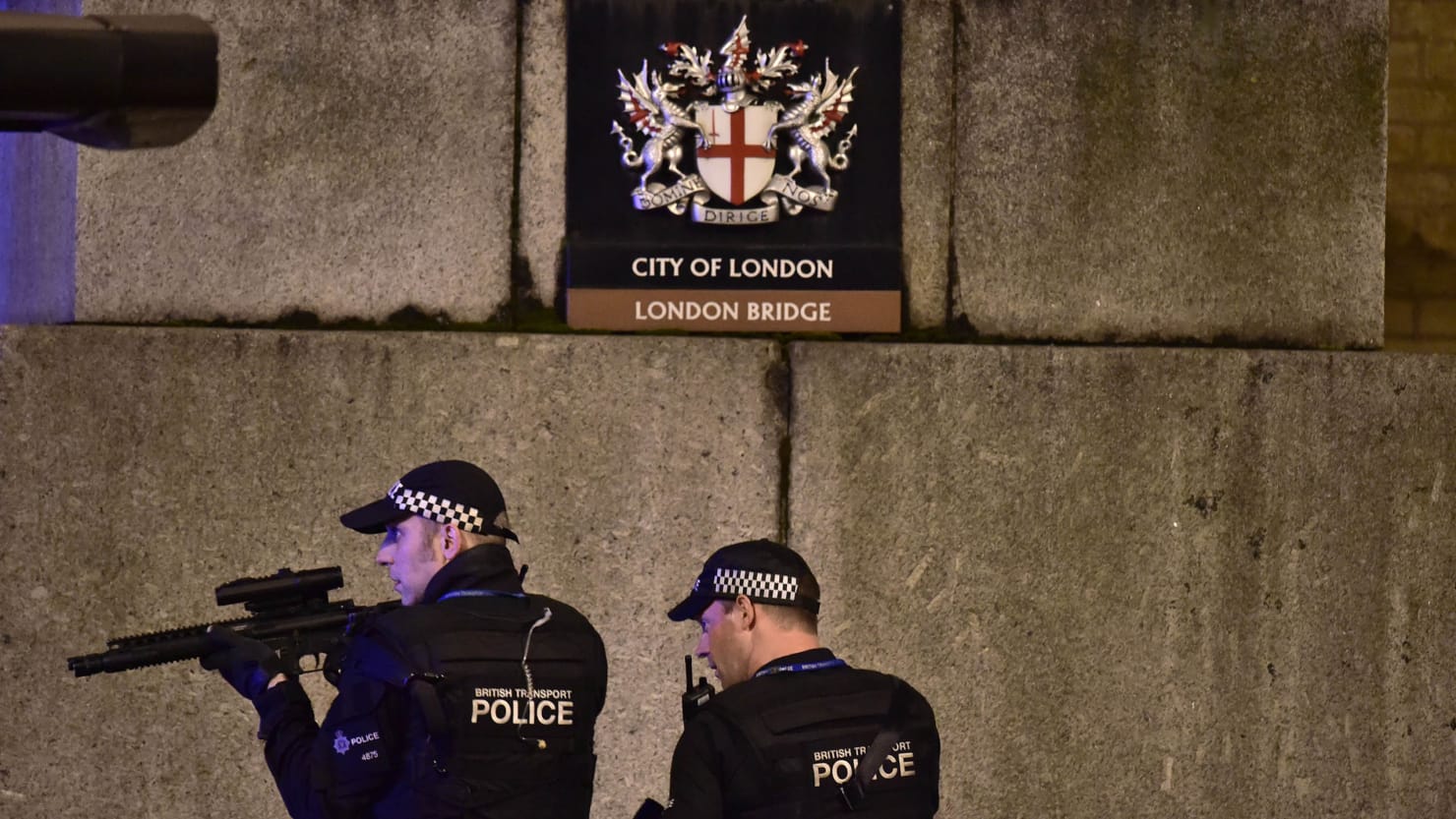
If they demonstrate one thing above all else, the horrific terror attacks in London and Manchester are proof that policies pursued by successive governments have failed. Now it’s time to give Jeremy Corbyn’s approach a chance.
Since 2000, there have been no fewer than 13 pieces of legislation related to the “war on terror”. Yet UK’s citizens are today far more likely to be victims of indiscriminate terror than they were before the state decided that a crackdown was the way to go.
The first major piece of legislation – New Labour’s anti-terror Act of 2001 – was discriminatory from the outset. David Blunkett, then home secretary, had to withdraw the UK from provisions of the European Convention of Human Rights to enforce his plans.
Detention without trial was introduced for the first time in mainland Britain since the entirely different circumstances of World War Two. But this applied only to foreign nationals – and for that reason was eventually ruled unlawful by the courts, who also held that it was incompatible with the Human Rights Act.
Tony Blair, meanwhile, devoted his time to co-organising the illegal invasion of Iraq on a pretext and trying to extend the time a terror suspect can be held without being brought before the courts. He and Blunkett suffered a major defeat in 2005 when the Commons rejected the plan for 90 days pre-charge detention.
There can be little doubt that the actions of the state since 2000 at home and abroad have increased the perception among the Muslim community that they are a general target. A half-baked “anti-extremism” strategy that stretches to primary schools where teachers are expected to detect would-be terrorists under the Prevent policy, is typically demeaning and adds to Islamophobia.
Corbyn’s approach is a repudiation of both Blairite and Tory warmongering in favour of a foreign policy based on a peaceful, negotiated approach and a block on arms sales to the Saudis and others who use UK weapons to suppress their own people.
On the other side are Tories and some in the PLP urging Corbyn to say he would press the nuclear trigger, which would signify that the world was already heading towards Armageddon. Very helpful advice!
Corbyn is absolutely right to point to the UK’s aggressive, militaristic, foreign policy – with the feudal monarchy of Saudi Arabia among its allies – which without thinking identifies Muslims in general as the problem, as a contributory cause.
Of course, there are other factors involved. These include the collapse of secularism in countries like Iraq, Libya and Syria and the subsequent turn to militant forms of Islam to settle ancient disputes with other Muslims.
Although harder to prove, there is an argument that the intensive, corporate-driven globalisation of the last 30 years, driven politically by the United States and UK governments, helped destabilise secular states in the Middle East and parts of Africa.
They relied heavily on state ownership and controls which global capitalism and its agencies conspired to end. When the Arab spring broke out in Tunisia and spread to Egypt and other countries, the hope of a new dawn was destroyed by intervention in Libya and the restoration of military rule in Egypt with the support of Washington.
Other countries like Syria became pawns as the major powers competed for influence in the region at the expense of the people. Over 9,000 US troops remain in Afghanistan. The Iraqi state is broken into areas of influence.
Corbyn will have to face the wrath of the entire military-industrial-security complex who are committed to a system where corporate and financial power rules in their own interests. These are the forces that subvert our democracy, day in, day out.
Tackling these forces with an agenda for extending democracy in new ways can inspire alienated generations in the UK and other countries because there is patently no security/police solution to terror attacks.
To defeat ISIS and other terror groups, you have to have a vision for peace, as Giles Fraser explained a couple of years ago.
Could this happen? Corbyn’s best chance could be heading up a minority government in a hung Parliament. But, be warned, there are plenty in the establishment and even within his own party, who will try their best to stop him if the Tories lose their majority.
So let’s get ready to launch popular assemblies and other gatherings to defend Corbyn after June 8.
Read More »After London Bridge terror, Corbyn offers a vision of peace

If Labour wins next week’s general election, a Jeremy Corbyn government would come under immediate assault from the political establishment, the secret state and the financial markets to name just a few enemies of the people. We need to plan the resistance now.
Corbyn’s manifesto may not overtly challenge capitalism – in fact the word doesn’t figure in the text – but radical policies on health, education, social care, infrastructure and foreign policy go against the grain of recent decades.
The Blair and Brown governments cut corporation tax and borrowed against expected future revenues; Cameron and Osborne imposed austerity – and cut taxes for business and high wage earners.
New Labour and the Tories made outsourcing and markets a mantra. Corbyn is proposing to do the opposite and bring privatised NHS services back into the public domain, for example.
Blair and Cameron were gung-ho supporters of US-led military intervention and drone killings. Corbyn says he wants neither.
Whereas the Tories see austerity continuing indefinitely, Corbyn and shadow chancellor John McDonnell want to bring it to an early end.
A Corbyn government would be prepared to tax and spend more to pay for its programme.
Whereas Theresa May is ready to “take on Europe” in Brexit negotiations on behalf of big business, Corbyn is sounding more conciliatory and will put the protection of workers’ rights top of his agenda.
All this is anathema to an establishment driven by its embrace of corporate and military power. They will strike back, as surely as night follows day.
Demonstrations and protests will no doubt be organised in the event of a concerted backlash against a Corbyn government. But we will need to do more because what’s at stake is who has the real power in the UK.
The elected government of the day is only the public expression of power. Behind the scenes are state institutions that have grown up alongside capitalism, encouraging its development and its grip on economic affairs.
These include the powerful departments of state, led by the Treasury, like the Ministry of Defence, and includes the Bank of England and other bodies not directly within Whitehall. Added to them are defenders of the status quo like the spy agencies MI5 and MI6, Special Branch and other deep state bodies such as GCHQ.
All these bodies are dedicated to upholding private property in the shape of capitalist forms of ownership and control – by force when and where necessary. They have formed a matrix of working relationships with corporations and financial institutions, who drive policy making at state level.
This is what Corbyn and McDonnell will be up against. So no apologies for returning to Labour’s support for a convention on the constitution, where the manifesto says:
We will consult on its form and terms of reference and invite recommendations on extending democracy. This is about where power and sovereignty lies – in politics, the economy, the justice system, and in our communities. The Convention will look at extending democracy locally, regionally and nationally, considering the option of a more federalised country.
Getting this going would need to be a priority. Why not invite people to volunteer for a convention or conventions (they could be organised regionally, for example) and ensure that they are a reflection of diverse communities and the different countries within the UK?
The convention(s) could devise their own agenda, seeking expert advice where necessary and be given the support of a secretariat. Members could be given time off from work and paid while they deliberate. If there are several conventions, they could come together to make final recommendations.
Identifying where power lies would hopefully lead to recommendations about extending democracy into areas like the workplace, for example, where none exists at present, and reshaping our failing political system.
In other words, a blueprint for real democracy would emerge. With the present state hostile to this idea, a convention on the constitution could also become a starting point for a democratic revolution that transfers power to the 99%.
[content_boxes layout=”icon-with-title” columns=”2″ class=”” id=””]
[content_box title=”Become a supporter” backgroundcolor=”” icon=”fa-check-circle” iconcolor=”” circlecolor=”” circlebordercolor=”” iconflip=”” iconrotate=”” iconspin=”no” image=”” image_width=”35″ image_height=”35″ link=”http://realdemocracymovement.org/register-2/” linktarget=”_blank” linktext=”Register your support and decide what kind of organisation the Real Democracy Movement should be and how we can build it.” animation_type=”0″ animation_direction=”down” animation_speed=”0.1″][/content_box]
[content_box title=”” backgroundcolor=”” icon=”” iconcolor=”” circlecolor=”” circlebordercolor=”” iconflip=”” iconrotate=”” iconspin=”no” image=”” image_width=”35″ image_height=”35″ link=”” linktarget=”_self” linktext=”” animation_type=”0″ animation_direction=”down” animation_speed=”0.1″][/content_box]
[/content_boxes]
Read More »Get ready to defend a Corbyn government from state attack

Yanis Varoufakis lost his 2015 battle with what he calls “Europe’s deep establishment”. Now he’s working to build DiEM 25, a pan-European, cross-border movement of… Read More »Review: How Varoufakis’ dream turned into a nightmare
You couldn’t argue with most of Labour’s manifesto drafted by Jeremy Corbyn and his team. Abolition of tuition fees, extra resources for schools and the… Read More »New democratic constitution key to Corbyn’s plans

The reason we obsess about where to place our vote is a symbol of our disempowerment not our power. I’ve been following/commenting in a LONG… Read More »Voting cypher v. Real Democracy
A critique of the system of representative democracy that has dominated the major capitalist economies and states over the last 150 years is not difficult… Read More »Real Democracy as an ideal whose time has come

When I was ten years old a helicopter crashed in a field next to my house. I was playing in the field at the time… Read More »Alt-facts, fake news and all that jazz!

There’s been a dramatic drop in consumption of basic commodities such as bread and milk in Greece in the first months of 2017, according to… Read More »A new warning from Greece – loud and clear

I must say at the outset that I support Scottish independence. I will continue to campaign for it. However, as the indyref2 campaign continues its… Read More »Beyond “Yes” lies the land of “Aye But…”
Debt from hedge funds to ease the squeeze in the NHS? This madly dangerous proposal comes from Jim Mackey, chief executive of NHS Improvement. His big… Read More »A cooperative model, not hedge-funding for the NHS

We should use the Brexit process to talk about what matters to us rather than what’s good for British business in terms of trade, access… Read More »Another Brexit is possible

By the RDM editorial collective
This will undoubtedly be a decisive year in the struggle for real democracy. The crisis of the system – political and economical – leaves us no choice but to act in an organised, collaborative way to create a different, truly democratic future.
In case there is any doubt about how serious things are, then the fact that climate change has passed a tipping point and has met with inaction on the part of world governments is proof enough that we are in a dangerous political void.
The break-down of the old order – the neo-liberal form of limited democracy – became apparent in 2016. Trump’s victory followed the shock and awe of Brexit. Voters in Britain and the US voiced the upset felt by tens of millions hit hard by years of corporate globalisation and frustrated by the lies and broken promises of the political elites.Read More »Make 2017 the year of real democracy

Finding ways to create real democracy in place of cuts and corporate agendas was at the heart of discussions at Croydon’s Ruskin House on Saturday… Read More »Croydon community building a People’s Plan